For a residential garage, polyaspartic is the better choice in almost every case: it installs in one day, it is UV-stable so it does not yellow, it cures in a much wider temperature range, and it resists hot-tire pickup. Epoxy genuinely wins on two counts — it is the cheaper material and it can be built much thicker in a single pass, which matters for heavy industrial floors and for moisture-mitigating primers. In practice the strongest system uses both: an epoxy primer or base where build and moisture tolerance are needed, with clear polyaspartic topcoats doing the wearing and the weathering.
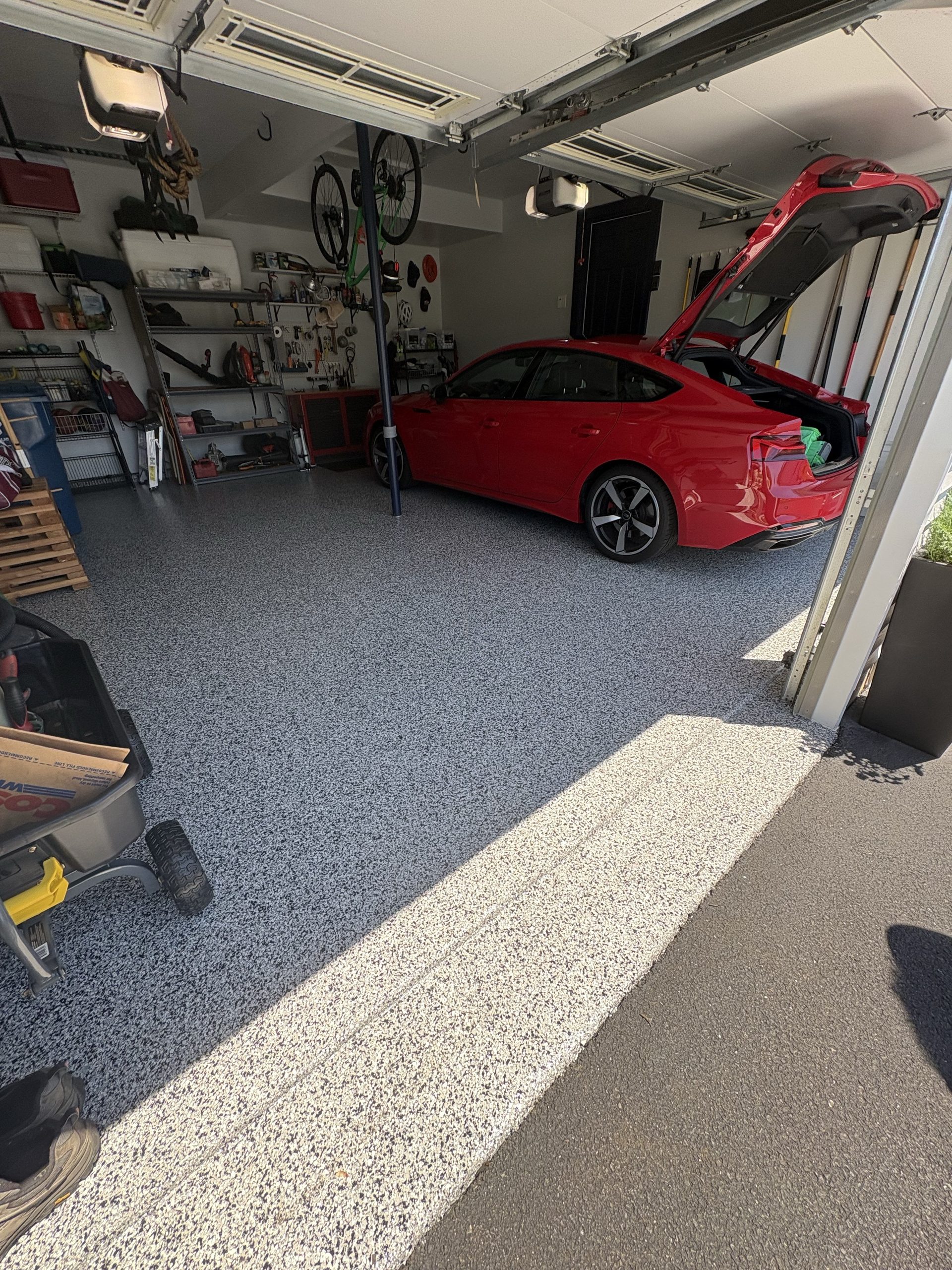
If you are choosing a finish for a home garage, choose polyaspartic. It goes down in one day, it does not amber in sunlight, it cures across a far wider temperature range, and it does not lift under hot tires. That is the short answer. But epoxy is not a bad product, and anyone who tells you it is has something to sell you. There are real jobs where epoxy is the correct material, and the best residential systems actually use both. Here is the even-handed version.
Epoxy is a two-part resin and hardener that cures by a slow chemical reaction into a hard, thick, rigid film. It is the older technology and it is extremely well understood.
Polyaspartic is a type of aliphatic polyurea. It cures much faster, stays slightly more flexible, and — because it is aliphatic — it is inherently UV-stable. That word matters more than it sounds. Most clear epoxies are aromatic, and aromatic resins yellow when exposed to ultraviolet light. That is why a white or light grey epoxy floor near a sunny garage door often goes a warm tan color within a couple of years while the shaded half stays white.
Three places, and they are real.
Epoxy resin is meaningfully cheaper per unit than polyaspartic. On a large commercial or industrial floor that difference compounds fast, and if the floor is indoors, out of sunlight, and the downtime is acceptable, epoxy can be the sensible engineering choice rather than a compromise.
Epoxy can be applied very thick — high-build, self-leveling, even mortar systems with sand in them. That thickness does real work: it fills and levels a badly pitted or spalled slab, and it gives you a substantial monolithic layer over a floor that takes forklift traffic or impact. Polyaspartic goes on comparatively thin per coat. You would not level a ruined slab with it.
The primers rated to hold back vapor emission from a damp slab are almost all dense epoxies. If a moisture test comes back high, the answer is an epoxy moisture-mitigating primer, not a polyaspartic one. This is exactly the situation covered in can you coat a basement floor that gets damp.
It sets fast, which means the installer has a short working window. There is no leisurely correction of a bad pass. A crew that is slow, distracted or under-staffed will produce a worse polyaspartic floor than a careful crew produces with epoxy. The product demands competence. That is a fair criticism of it.
Hybrid. Not because hybrid sounds good, but because each product does what it is best at:
The flake layer is the part people underestimate. It is not decoration. Broadcasting to rejection builds physical thickness into the floor, hides the minor unevenness every slab has, and gives the clear coats a mechanical structure to lock into. It also provides the texture that keeps the floor from being slippery when wet.
A roll-on kit is a thin epoxy paint with a bag of decorative chips and, usually, a bottle of etching acid. The acid is the problem. Etching does not remove laitance, so the coating bonds to the weakest part of the slab. Those floors often look excellent for a season and then lift under the first hot tire of summer. The material is not really the issue; the preparation the kit assumes is.
Neither answer is a number of years, because both products outlive their bond. A coating fails at the concrete, not in the middle of the film. A thin epoxy over an etched slab can fail in a year. A properly ground floor with polyaspartic topcoats can go on indefinitely, which is why we back ours with a lifetime warranty against bond failure — and why it is worth reading what a lifetime warranty actually covers before you compare two of them.
Residential garage, basement, patio, pool deck, interior room: polyaspartic topcoats over a ground and flaked base, with an epoxy primer if the slab's moisture reading calls for one. Heavy industrial floor, badly damaged slab needing significant build, or a shaded indoor space where cost dominates and downtime does not matter: epoxy is a legitimate answer.
The longer side-by-side comparison, including how the two behave in Pennsylvania winters, is on polyaspartic vs epoxy. If you want a recommendation for your specific slab, get in touch and we will look at it before we suggest anything.
Three pages that answer the questions this article usually raises.
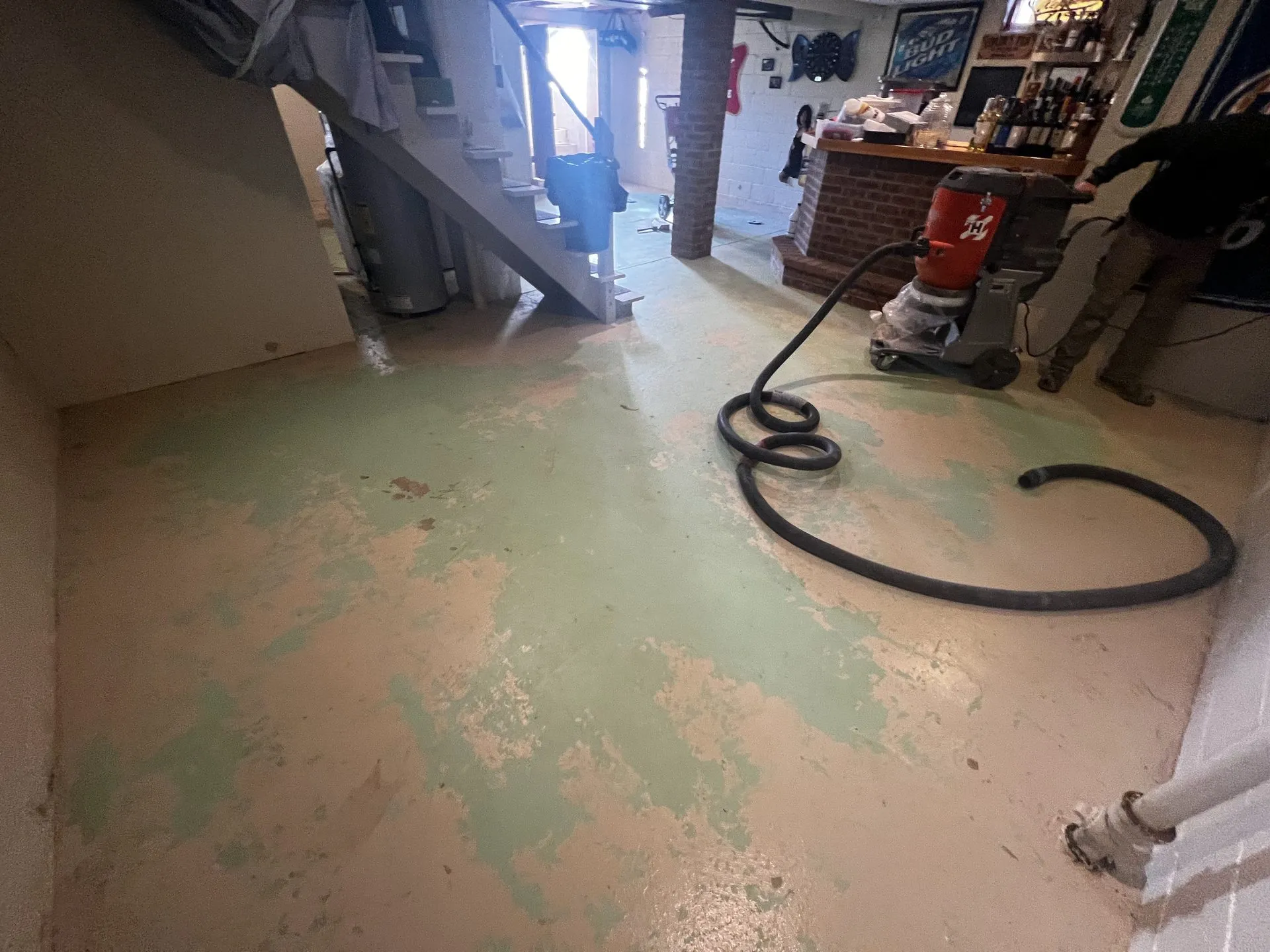
Diamond grinding, crack and joint repair, base coat, flake broadcast to rejection, two clear polyaspartic topcoats — in one day.
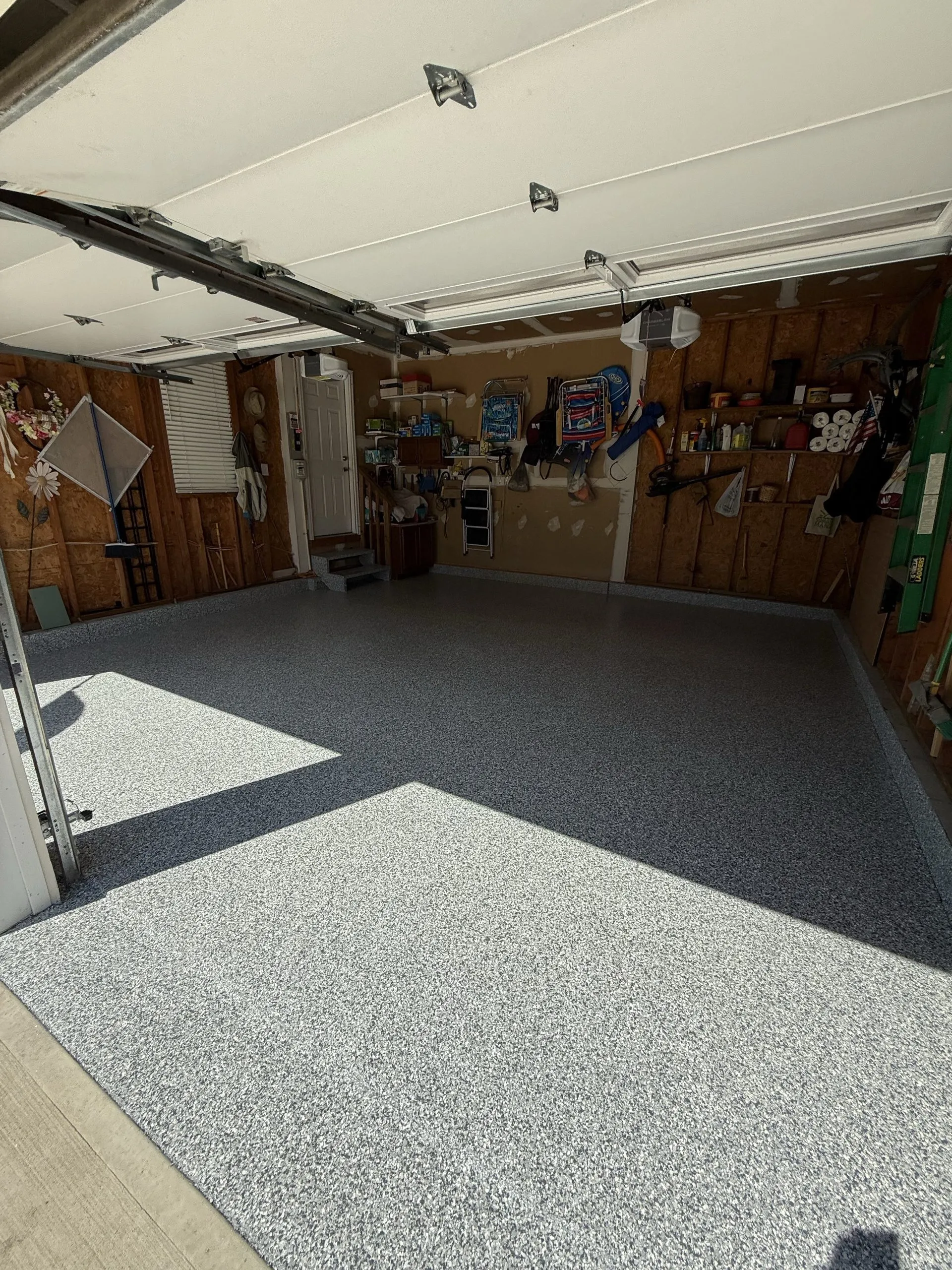
See the blends side by side and how each one hides dust, tire marks and the odd dropped wrench.
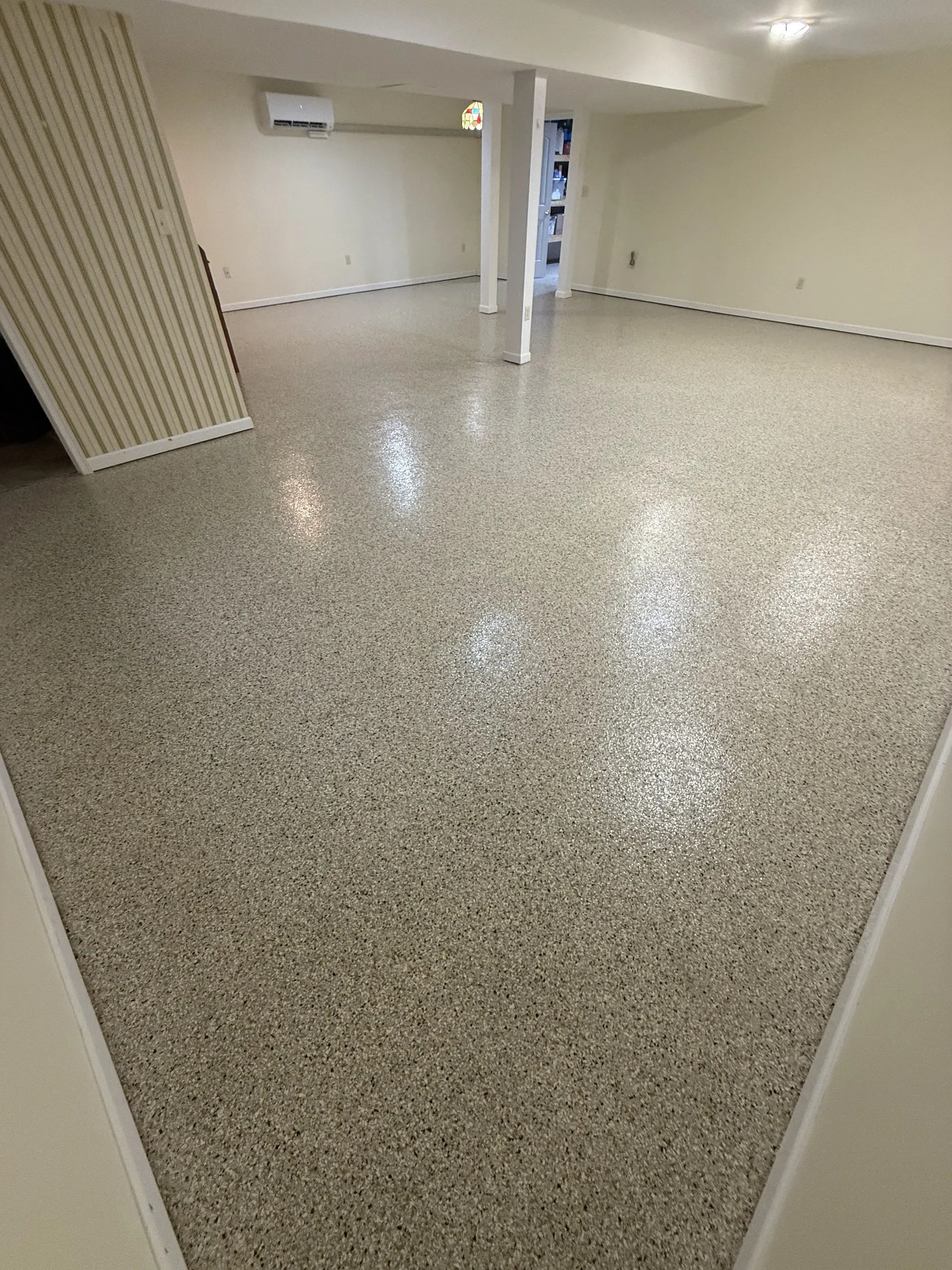
We measure the slab, check moisture and control joints, and give you a firm number at the estimate.
Tell us the room, roughly how big it is and when you want it done. We will measure, look at the slab and give you a price that does not move.
Polyaspartic concrete floor coatings installed in a single day across central Pennsylvania. Every slab diamond ground, never acid etched.
© 2026 Spartic Coatings. All rights reserved.
Serving Lancaster, Chester, Berks, Dauphin, York and Lebanon counties, Pennsylvania.