Everything homeowners in Lancaster, Chester, Berks, Dauphin, York and Lebanon counties ask us about polyaspartic flake floors — the install, the concrete underneath it, what the warranty covers and how to look after it.
A polyaspartic flake floor from Spartic Coatings goes in over a single day for a typical residential garage or basement. The slab is diamond ground rather than acid etched, so the coating keys into the concrete instead of sitting on residue, and flake is broadcast by hand to rejection under two clear polyaspartic topcoats. You can walk on it four to six hours after the final topcoat and park on it the next morning, about twenty-four hours later. The system carries a lifetime warranty and the written warranty document comes with your quote.
The whole sequence happens in one visit, which is the practical difference between polyaspartic and a multi-day epoxy build.
One day for a typical residential garage or basement. The crew grinds the slab in the morning, vacuums it, cuts in the edges, rolls the pigmented base coat, broadcasts the flake by hand, scrapes the cured flake back smooth, and then puts down a clear polyaspartic topcoat — all in the same visit. Very large floors, multi-room basements or slabs that need substantial repair can run into a second day, and we tell you that at the estimate rather than on the morning.
The room needs to be completely empty before we arrive — bare floor from wall to wall. That means cars, shelving, freezers, bikes, gym equipment and anything sitting directly on the slab. We grind and coat the entire surface, so there is nowhere to shuffle boxes to; anything left behind becomes an uncoated patch. Plan where it is all going a day or two ahead, because clearing a full garage always takes longer than people expect.
Far less than you would guess, because the grinders run under shrouds connected to vacuum extraction and the dust is pulled off the slab as it is cut. It is not a dust-free process and we will not claim it is, but it is nothing like open dry grinding, and for a basement job that matters a great deal. We also vacuum the slab thoroughly before any coating goes down, because dust left in the profile is itself a bond problem.
There is an odor while it is going down, but it is much milder than solvent-based epoxy and it clears quickly. Polyaspartic cures fast, which is the reason the smell is short-lived rather than hanging around for days, and we ventilate the room while we work. By the time the floor takes foot traffic four to six hours later, most people no longer notice it.
Yes, in almost every case. A garage install happens behind a closed door to the house and rarely affects anyone indoors. For a basement, stay out of the room itself and off the floor for the day, keep pets away from it, and leave the interior door shut — but there is no need to leave the house. If someone in the home is particularly sensitive to odor, say so when we book and we will talk through ventilation and timing.
We install through most of the year, because polyaspartic cures across a wider temperature range than epoxy does. That is why a garage floor in the cold months is still workable for us when an epoxy installer would be waiting for spring. Exterior work is different: a patio or pool deck needs dry weather and a suitable surface temperature, so those jobs get scheduled around the forecast. We would rather move a date than coat a slab in the wrong conditions.
Coatings do not usually wear out. They fail at the bond, which is why the answers below keep coming back to what happened underneath.
It is built to be the last coating the slab needs, and it carries a lifetime warranty. What determines the real answer is not the material so much as the preparation: a coating mechanically keyed into diamond-ground concrete, with two clear polyaspartic topcoats over a full flake broadcast, has no obvious failure path in a normal residential garage or basement. A coating rolled onto an acid-etched or sealed slab has an obvious one, whatever the label says.
It covers the coating failing to stay bonded to your concrete — delamination, peeling and bond failure. That is the failure mode that matters and the one that is genuinely down to workmanship and materials rather than use. The written warranty document is provided with your quote, so you read the actual terms before you commit to anything rather than taking a sentence on a website for it. If anything in it is unclear, ask us at the estimate and we will walk through it line by line.
Not if the slab was ground properly and was dry when we coated it. Peeling is not a mystery — it is a bond failure, and it has two usual causes: the surface was never opened up so the coating never keyed into the concrete, or there was moisture moving through the slab that pushed the coating off from underneath. Those are exactly the two reasons we diamond grind every floor and moisture test before quoting a basement.
It resists scratching and chipping far better than floor paint or a thin single-coat epoxy, but nothing is indestructible and we will not pretend otherwise. Industrial grad polyaspartic topcoats give you a real wear layer, so normal traffic, rolling tool chests and dropped hand tools do not mark it. Dragging a steel shelving unit across it, or dropping something heavy with a sharp corner, can leave a mark — on any floor coating made.
There is no hot-tire pickup with this system. Hot-tire pickup is the classic failure of a DIY or thin epoxy floor: warm tires soften the coating, grip it, and lift patches away when the car is moved. Polyaspartic does not soften and release that way, so you can pull a car straight off the highway into the garage without thinking about it. It is one of the most common reasons people replace an epoxy floor with this one — there is more on that on the polyaspartic vs epoxy page.
Call us, because polyaspartic can be repaired in place. The material bonds to itself, so a damaged area can be prepared and recoated without tearing the whole floor out, and a flake finish is forgiving about blending because the pattern breaks up the transition. Tell us what happened and we will tell you honestly whether it is a spot repair or something larger — and whether it is a warranty matter or wear and tear.
Almost nothing here disqualifies you from a coated floor. It just changes the preparation, and you hear about it at the estimate.
Yes — cracks are part of the preparation, not a reason to walk away. Static cracks get cleaned out, filled with a repair material and ground flush so the surface is continuous before any coating goes on, and the flake pattern hides the repair well. We will be straight with you about one thing: if a crack is still moving, because the slab is settling or there is something going on beneath it, it can eventually telegraph back through any coating. We tell you which kind you have rather than filling it and hoping.
Spalled concrete gets repaired before it gets coated. Spalling is the top layer of the slab breaking away, and it is most common on a garage apron and just inside the door where road salt and freeze-thaw cycles do their work. We grind back to sound concrete, rebuild the damaged area and then coat over the repair — coating straight over loose, delaminating concrete just means the coating leaves when the concrete does.
New concrete needs to cure before it is coated, typically around twenty-eight days, and we confirm with a moisture test rather than going purely by the calendar. A fresh slab is still giving off a lot of water, and coating it too early traps that moisture under the film. If your pour is recent, tell us the date it went down when you call and we will tell you when it is worth booking the estimate.
We test for it before we quote, and if the reading is high we tell you what has to happen first. Moisture is the single most common reason basement coatings fail: water vapor moving up through the slab builds pressure under the coating and pushes it off from the back, and no amount of good material on top fixes that. Depending on what we find, the answer may be an exterior drainage or grading issue to address, a different system, or simply not the right time. We would rather lose the job than install a floor that lifts. More on the approach is on the basement floor coating page.
Then it needs the structural work first, and we will say so rather than quote you a coating. A floor coating is a wear surface a few millimeters thick; it does not stabilize a slab, bridge a settling section or hold failing concrete together. If what you actually have is a concrete problem rather than a surface problem, coating it puts a nice finish over an issue that is going to keep moving. We will tell you what we are looking at and what order things need to happen in.
Yes, and the grinder takes it off — that is a normal part of the job, not an obstacle. An old coating, a cured sealer or a layer of floor paint is a barrier between the new system and the concrete, so anything that sits on top of the slab gets ground away until we are into sound, open concrete. This is also the clearest illustration of why acid etching does not work: acid cannot remove a coating, so etching over old epoxy leaves the new floor bonded to the old failure.
Color, gloss, texture and layout are all yours to pick. The method underneath them does not change.
You choose a flake blend, and the range runs from grey granite and charcoal through sandstone and warmer tans. The color you see is the flake, not the base coat, so a blend reads as a speckled stone-like surface rather than a flat painted color — which is also why it hides dust and tire marks so well. The current blends are on the colors and finishes page, and we bring physical sample boards to the estimate, because a blend on a screen is not the same thing as one in your hand.
Yes — the clear topcoat can be finished high gloss or satin. High gloss throws light around a garage and makes the space feel brighter, and it is the look most people picture. Satin is quieter, shows footprints and dust less, and tends to suit a finished basement or a living space better. It is worth deciding in the room itself, which is one reason we look at samples where the floor is going rather than at the shop.
The flake surface itself has real texture, so it is considerably less slick than smooth sealed concrete or a plain gloss coating. For a pool deck, a patio, a ramp or a set of steps we can also add an anti-slip grit into the final clear coat to increase the texture further. Tell us where the floor is and how it gets used — bare feet around water is a different requirement from a workshop floor, and we set the texture accordingly.
Yes. A contrasting border around the perimeter, or a darker field with a lighter surround, is a straightforward option and it sharpens up the edges of a garage considerably. Two-tone layouts can also be used to define a parking bay or separate a workshop area from the rest of the floor. Bring it up at the estimate so it is priced and planned into the scope from the start rather than added on the day.
We will get as close as the available flake blends allow, and we will tell you honestly how close that is. Bring us a photo, or better, a piece of the existing material or a sample board, and we will hold our blends against it at the estimate. Matching an adjoining coated room usually works well. Matching tile, stained concrete or a floor installed by someone else years ago is harder, and if we do not think it will look right we will say so before you commit.
There is not much to it. The short version is that water and a soft broom do almost all of the work.
Sweep or dust mop it, and damp mop it with water or a mild pH-neutral cleaner when it needs more. The coating is non-porous, so nothing soaks in — spills sit on the surface and wipe up instead of staining the concrete the way they used to. A garage floor can also simply be hosed down and squeegeed toward the door, which is usually the fastest way to deal with a winter's worth of road grime.
Avoid acidic cleaners, harsh solvents and abrasive pads or steel wool. Acid-based products are the ones to watch in particular, since they attack the finish directly, and citrus or pine-based degreasers used neat can dull the clear coat over time. Skip anything that leaves a film or a wax behind as well — it does nothing useful on a polyaspartic surface and makes it slippery. Soft broom, soft mop, mild cleaner, water.
Salt does not damage the coating, but rinse it off anyway. The reason to hose the floor down through the winter is not the coating, it is everything else: brine sitting on the floor gets tracked around, attacks the underside of your vehicle, and works on any bare concrete it can reach. The coated floor is the easy part of that problem — salt and meltwater sit on top of it and rinse away rather than soaking into the slab, which is exactly what used to make aprons spall.
Yes, and people do it constantly — just spread the load. A jack stand concentrates a lot of weight onto a very small foot, so put a scrap of plywood or a jack pad under each stand and under the jack itself. That protects the finish from point pressure and from the stand twisting as it takes the weight. The same goes for anything else with small hard feet, like a heavy shelving unit or an engine hoist.
Yes, with one caution: move them occasionally rather than leaving the same rubber-backed mat in the same spot for years. Some rubber and vinyl backings can leave a mark on a coated floor where they sit permanently and no air or light reaches the surface. Picking a mat up when you wash the floor is enough to avoid it entirely. Anything with a fabric or felt backing is a non-issue.
Ephrata is the base. The estimate is a measuring appointment. Our own crew does the work.
We cover six Pennsylvania counties from our base in Ephrata: Lancaster, Chester, Berks, Dauphin, York and Lebanon. Most of that area sits within about an hour of the shop, which is what makes the one-day install practical — crew, grinders, vacuums and material all arrive in the morning and the floor is finished before they leave. The county breakdown is on the service areas page, and if you are just outside it, call and ask rather than assuming.
Yes — Spartic Coatings is licensed and insured, and we will provide the paperwork before work starts. Ask to see it at the estimate if you would rather have it up front. It is a completely normal thing to ask a contractor working inside your home, and anyone who bristles at the question is telling you something.
We come to you, measure the actual floor, and leave you with a firm written number. That means real dimensions including the apron and any steps, a look at the slab in the room's own light, a moisture check on a basement, an honest account of what the concrete needs, and physical flake sample boards you can hold up against your cabinets. Nothing gets quoted off a phone call, and the number on the quote is the number on the invoice. Book one on the contact page.
We tell you the current schedule when we call, because it moves with the season and we would rather not publish a number that goes stale. Estimates run Monday through Saturday by appointment. Since polyaspartic cures over a wider temperature range than epoxy, interior work carries on through the colder months rather than stopping for winter — exterior patios and pool decks are the ones that get scheduled around the weather.
Our own crew, and that specifically includes the grinding. Surface preparation is the step that decides whether the coating is still bonded in ten years, so it is not handed to a subcontractor — the people who open up your concrete in the morning are the people who put the topcoats down that afternoon. You can see the sequence they follow on the how it works page.
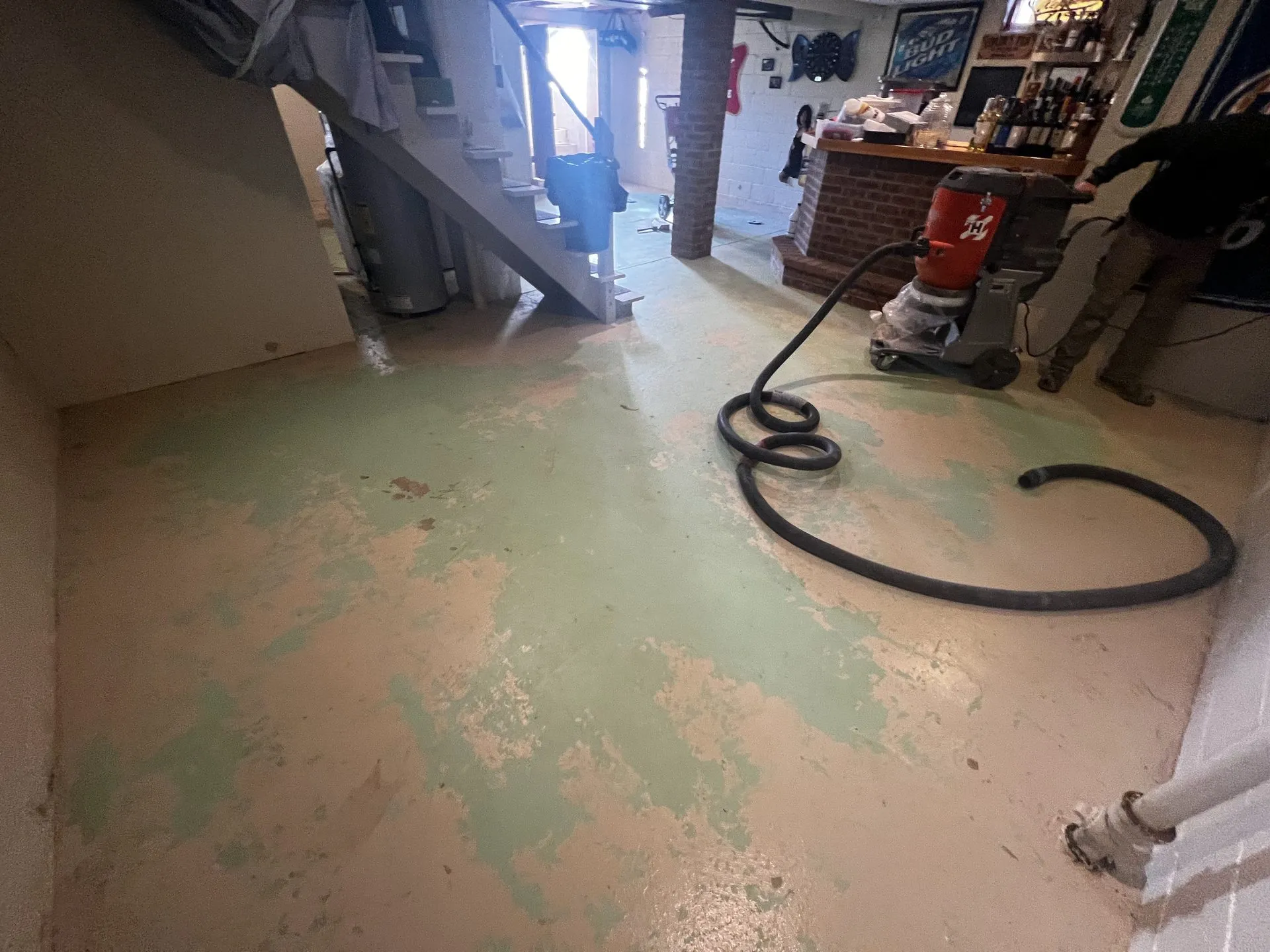
The one-day sequence in order, from the first grinding pass to the second clear topcoat.
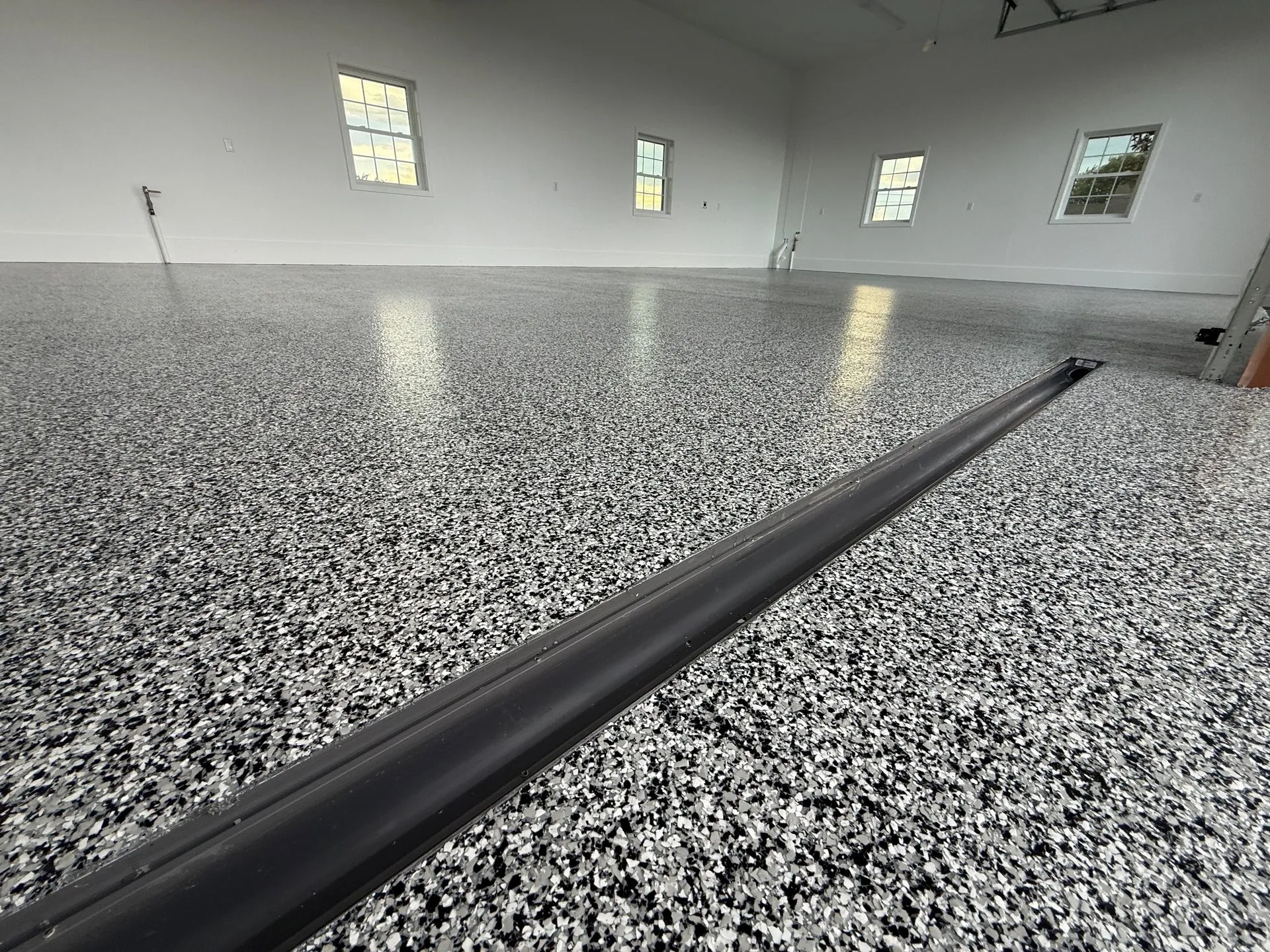
Why hot-tire pickup, ambering and multi-day cures are epoxy problems and not ours.
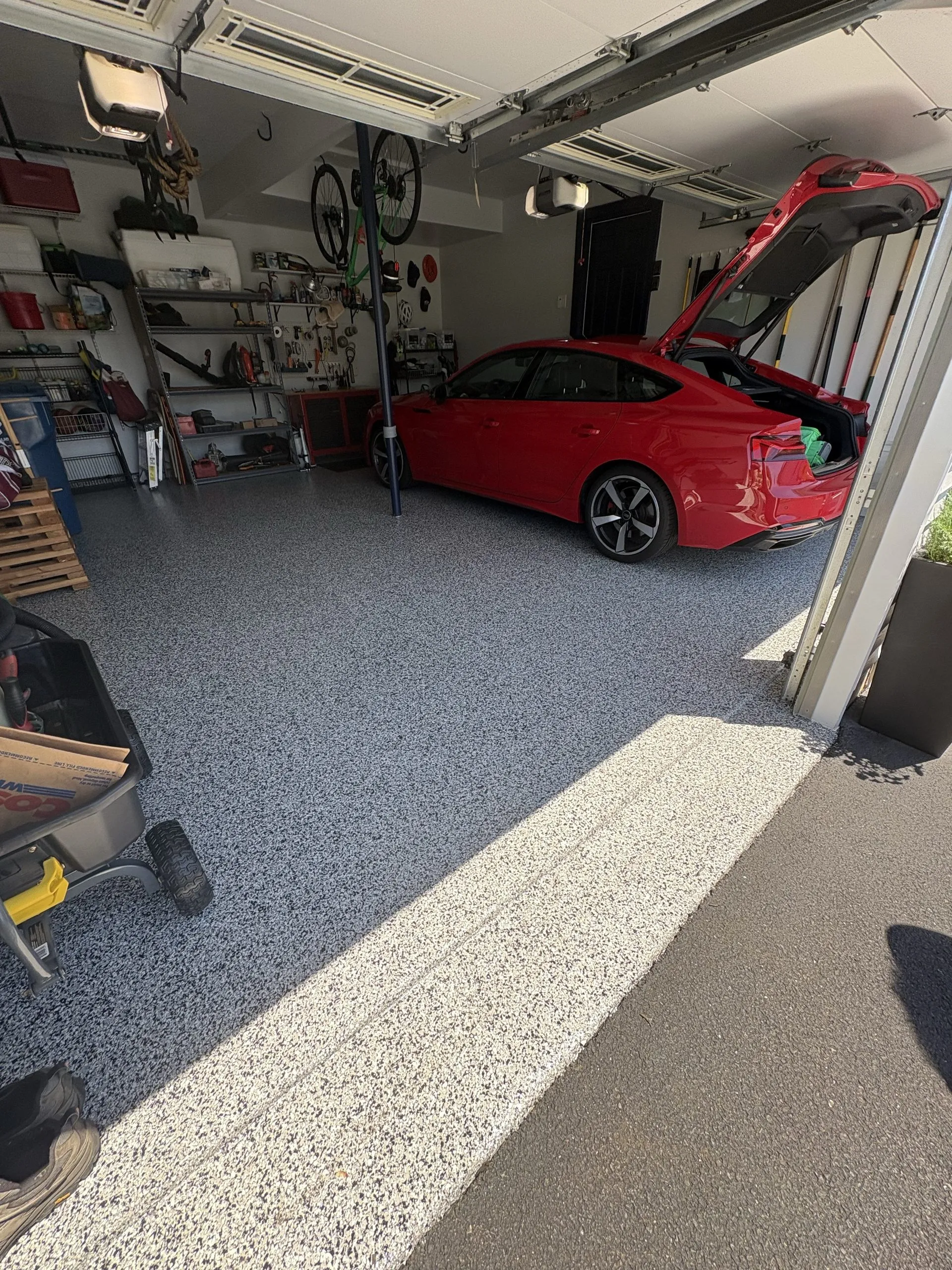
Tell us the room and the rough size and we will come measure and give you a firm number.
Tell us the room, roughly how big it is and when you want it done. We will measure, look at the slab and give you a price that does not move.
Polyaspartic concrete floor coatings installed in a single day across central Pennsylvania. Every slab diamond ground, never acid etched.
© 2026 Spartic Coatings. All rights reserved.
Serving Lancaster, Chester, Berks, Dauphin, York and Lebanon counties, Pennsylvania.