A typical residential garage floor coating is installed in one day. Diamond grinding, crack and joint repair, the base coat, the hand-broadcast flake and two clear polyaspartic topcoats all happen inside a single working day, and you can walk on the floor about 4 to 6 hours after the final topcoat and park on it after about 24 hours. Jobs stretch to two days only when a failed coating has to be removed, when the slab needs extensive repair, or when the space is unusually large.
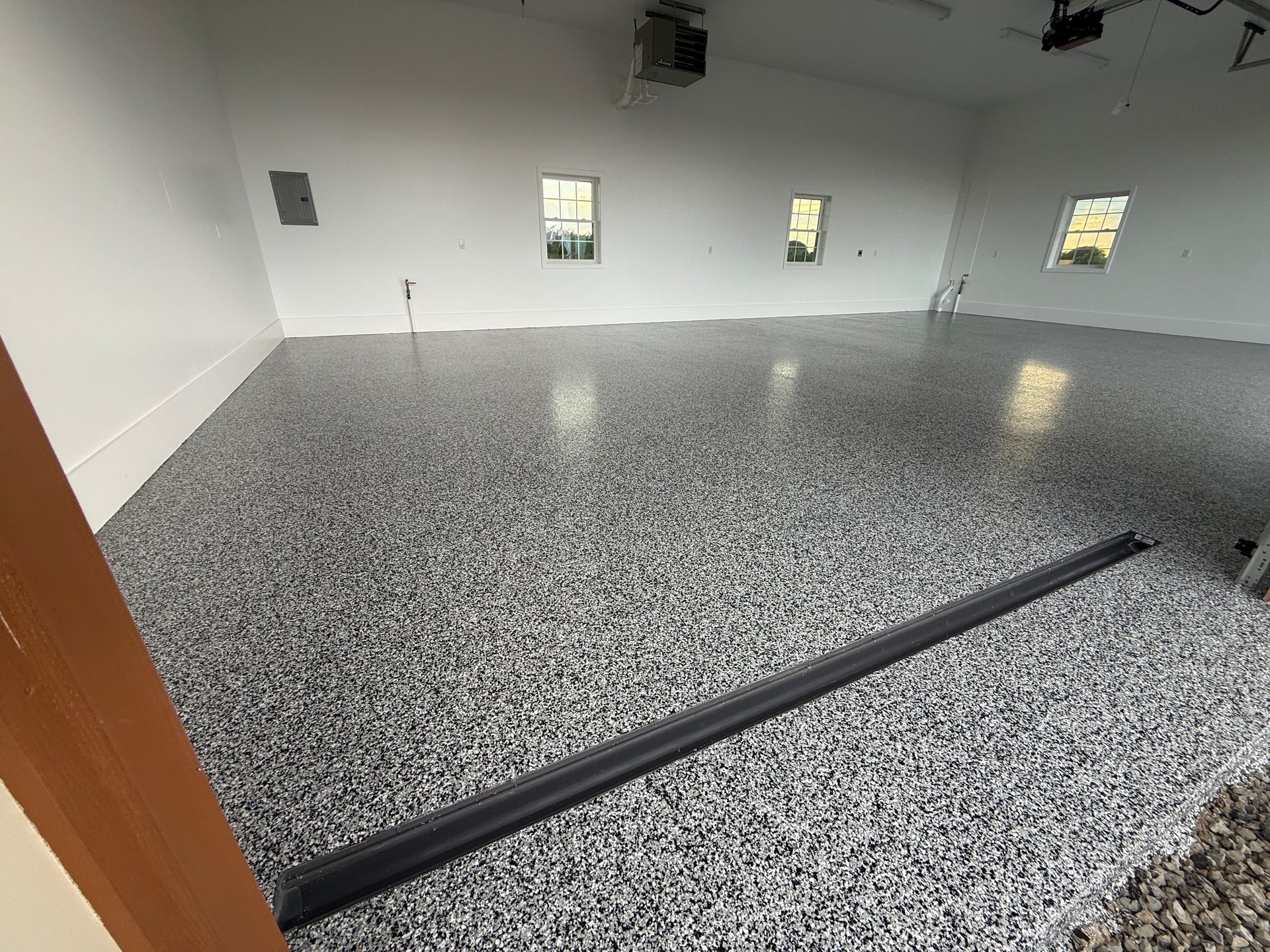
One day. A standard one, two or three-car residential garage is ground, repaired, coated, flaked and topcoated inside a single working day. You get the floor back for foot traffic roughly 4 to 6 hours after the last topcoat goes down, and you can park on it after about 24 hours. That is the whole answer, and everything below explains why it works that way and what makes it slip.
The day is mostly preparation. Coating is the fast part; getting the concrete ready to accept a coating is the slow part, and it is the part that decides whether the floor lasts.
That sequence is described step by step on our how it works page if you want to see it broken out further.
Chemistry. Polyaspartic sets in hours rather than overnight, and it cures across a much wider temperature range than epoxy does. That means the base coat is firm enough to take a topcoat the same afternoon instead of the next morning. A traditional epoxy build with a urethane topcoat generally needs an overnight window between coats, which is how a garage becomes a two or three-day project and how a homeowner ends up without a garage for most of a week.
The trade-off is that polyaspartic gives the installer a short working window. It does not forgive a slow crew or a poorly planned day. That is a real difference between products, and we cover it honestly on polyaspartic vs epoxy.
Set, walkable and fully cured are three different things.
Cool weather slows this down. A 40-degree garage in February will take longer to reach vehicle traffic than the same garage in June. We will tell you on the day what the actual window is rather than reciting a brochure number.
Four things, in order of how often they come up.
If there is old epoxy, a sealer, a paint or a showroom-style roll-on product on the slab, it has to be removed, not coated over. Grinding a failed coating off is slower than grinding bare concrete, and the residue clogs tooling. A garage with a peeling coating on it is the most common reason we book two days.
Deep spalling, a wide settlement crack, a broken apron at the door line, or a slab where the surface has been eaten by road salt all need repair material that has its own set time. You cannot rush a patch and expect the coating over it to behave.
If the slab is passing water vapor up through itself, coating it on schedule is the wrong move. A moisture test comes first, and if the reading is high the honest answer is to deal with the water before anything goes down. The same logic applies below grade — see basement floor coating for how we handle it.
A four-car garage, a long attached workshop, or a space broken up by cabinets, steps and mechanical equipment takes more grinding time and more hand work at the edges. That is a scheduling question, not a problem.
Yes, completely, before the crew arrives. Every shelf unit, every bike, every bin, the refrigerator, the lawn equipment. If it is on the floor, the floor cannot be ground under it. Cabinets that are fixed to the wall and lifted off the slab can usually stay, and we grind and coat up to them. Plan a place to put everything for about 24 hours.
Ask this of anyone quoting you, because it is where quotes quietly differ. The apron is the strip where the garage floor meets the driveway, usually outside the door line. It takes the worst of the weather and the road salt, and it is also the first thing you see. It can be coated, and it should be quoted explicitly one way or the other so you are not surprised. It is one of the questions on our list of nine questions to ask before hiring a floor coating contractor.
Longer than the install conversation suggests. A flake floor that was diamond ground into an open profile, broadcast to rejection and sealed with two clear polyaspartic topcoats does not peel under hot tires and does not amber in sunlight the way some clear coats do. Maintenance is a broom and a neutral cleaner. There is nothing to reseal and nothing to wax.
If you want to talk through your specific garage — its age, its condition, whether it has been coated before — get in touch and we will give you a firm number and a firm date at the estimate.
Three pages that answer the questions this article usually raises.
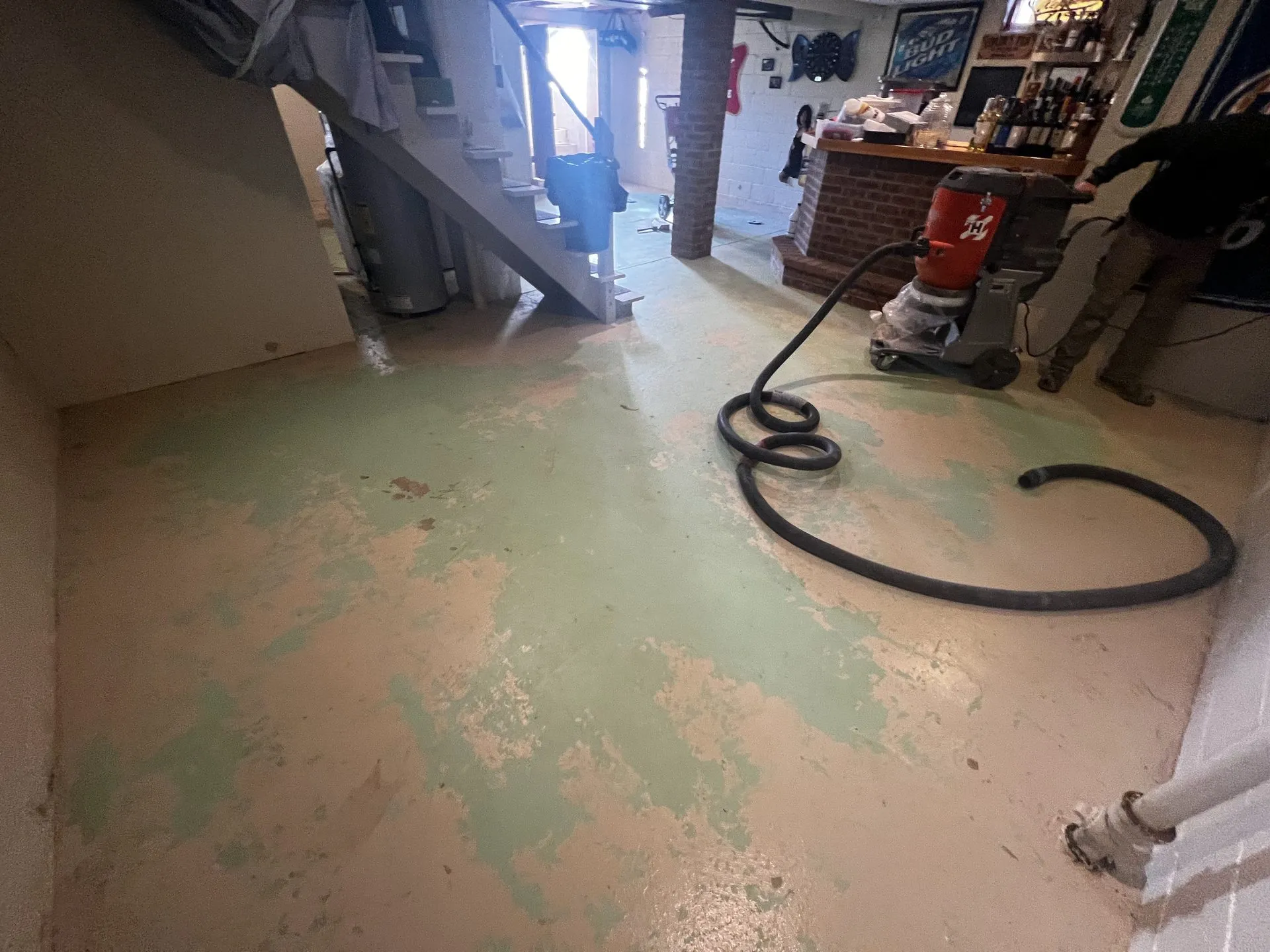
Diamond grinding, crack and joint repair, base coat, flake broadcast to rejection, two clear polyaspartic topcoats — in one day.
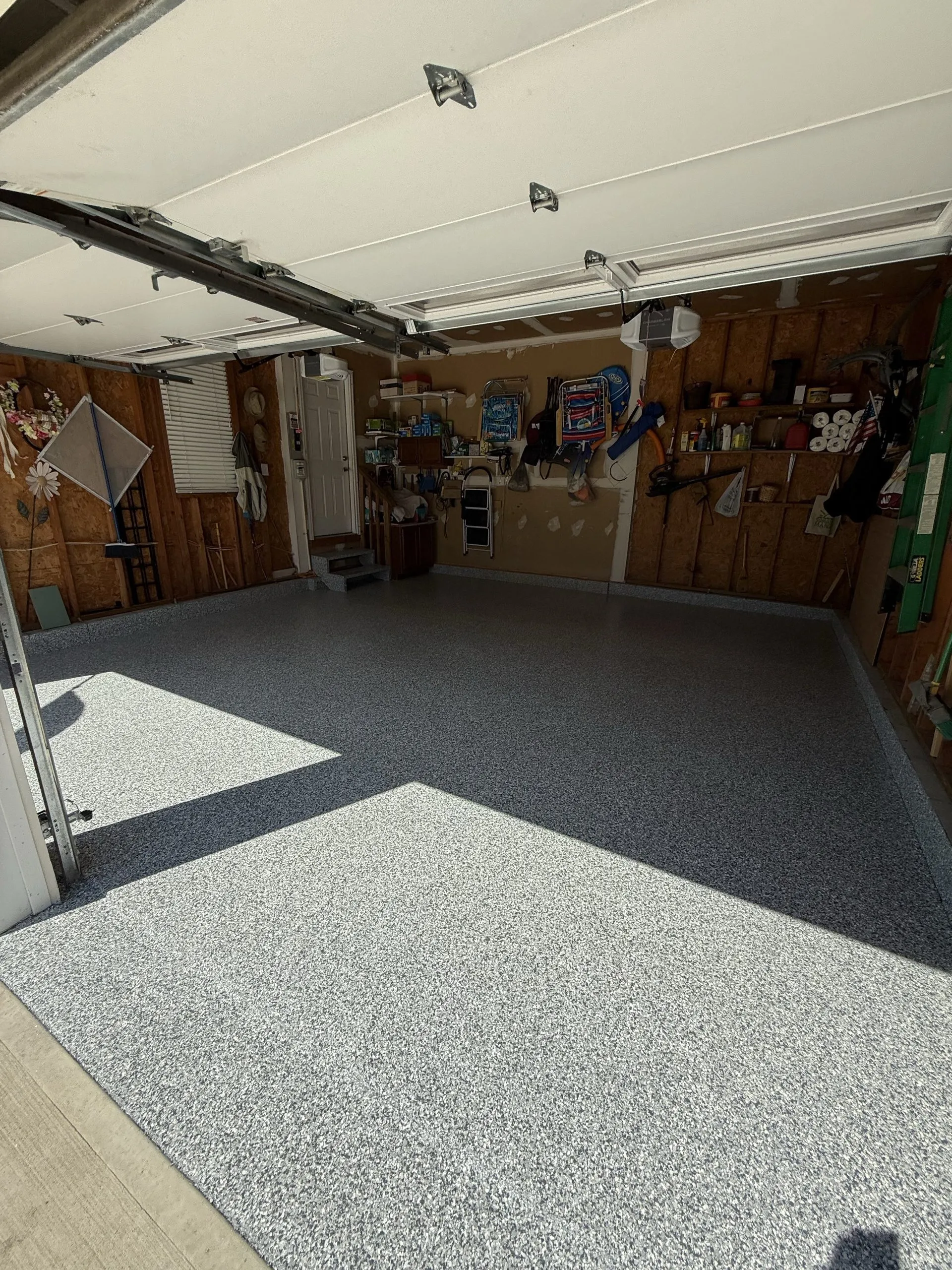
See the blends side by side and how each one hides dust, tire marks and the odd dropped wrench.
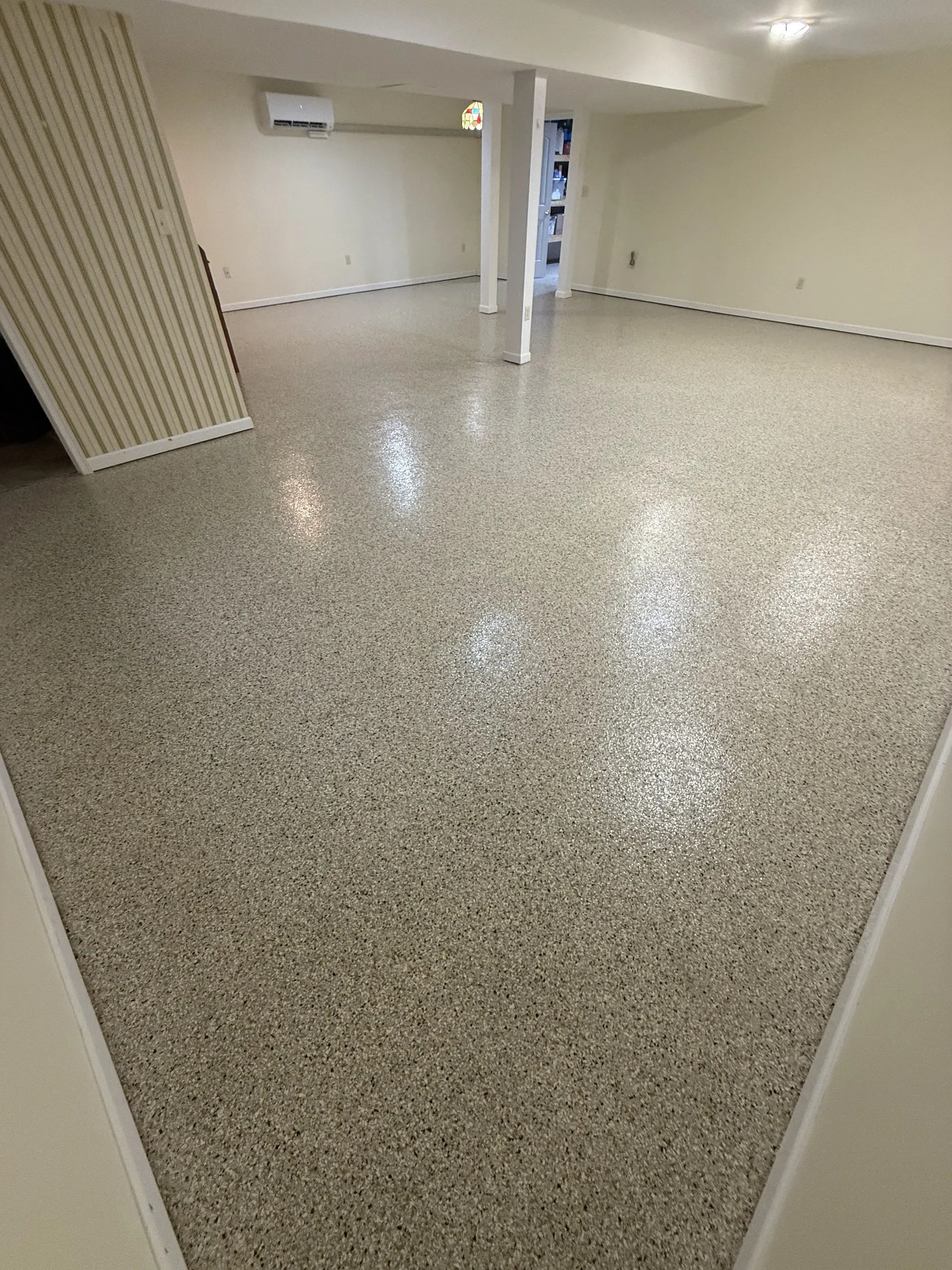
We measure the slab, check moisture and control joints, and give you a firm number at the estimate.
Tell us the room, roughly how big it is and when you want it done. We will measure, look at the slab and give you a price that does not move.
Polyaspartic concrete floor coatings installed in a single day across central Pennsylvania. Every slab diamond ground, never acid etched.
© 2026 Spartic Coatings. All rights reserved.
Serving Lancaster, Chester, Berks, Dauphin, York and Lebanon counties, Pennsylvania.