You can coat a bare basement slab, and in most homes it is a one-day job. We diamond grind the concrete, broadcast flake by hand, and seal it with two clear polyaspartic topcoats — so the floor stops shedding dust and the room starts reading as living space instead of a utility slab. Based in Ephrata and working across Lancaster, Chester, Berks, Dauphin, York and Lebanon counties.
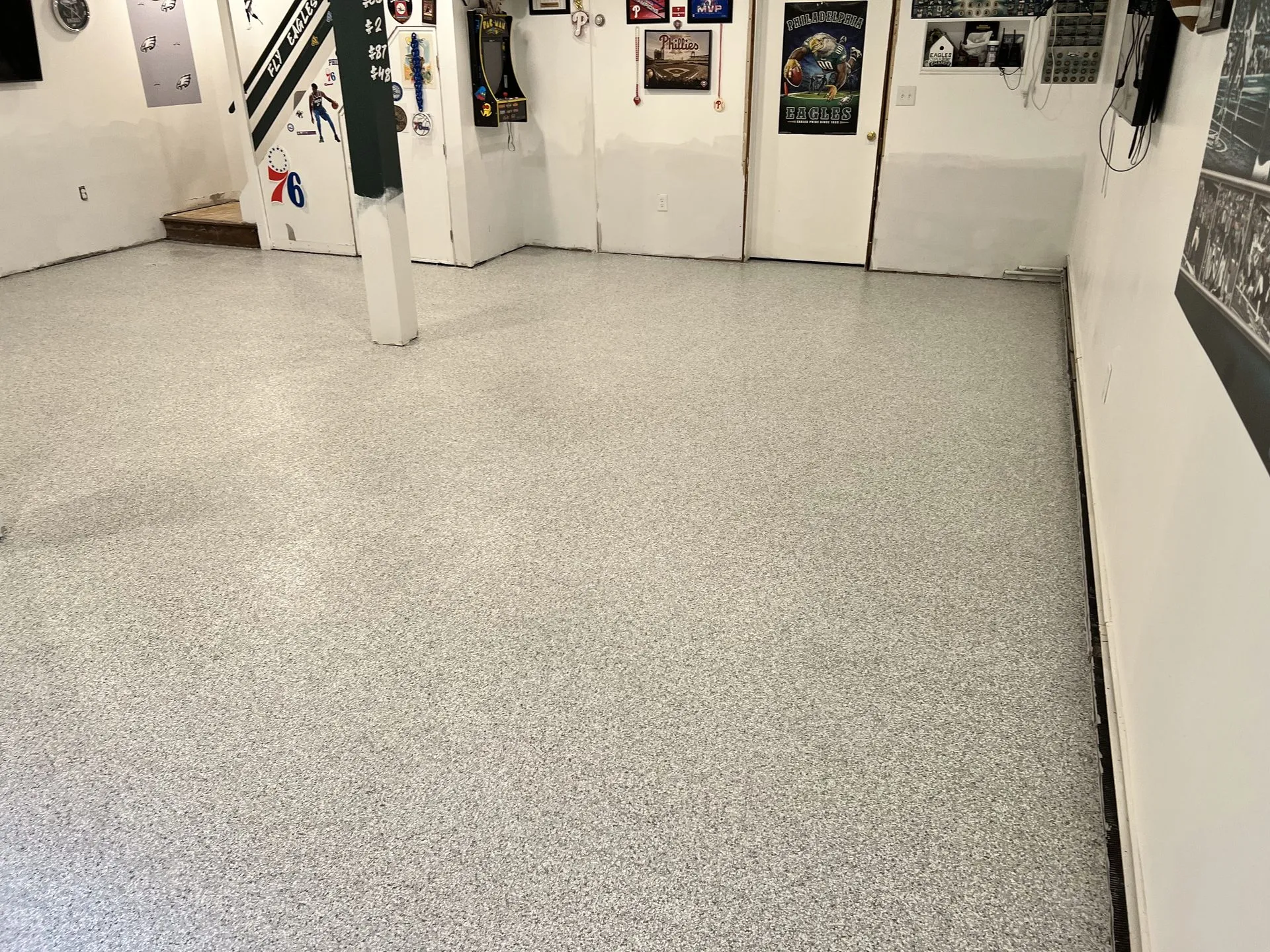
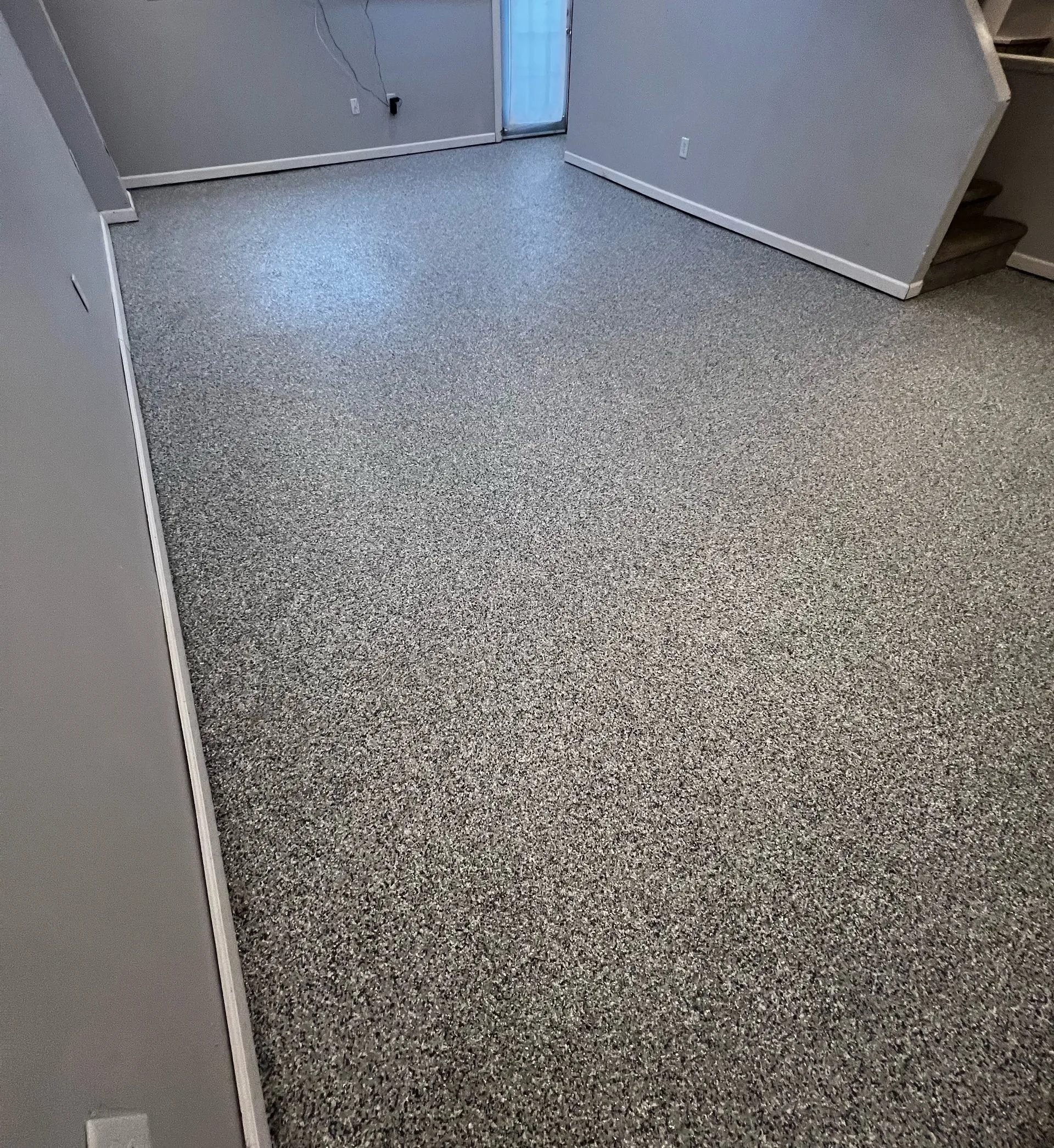
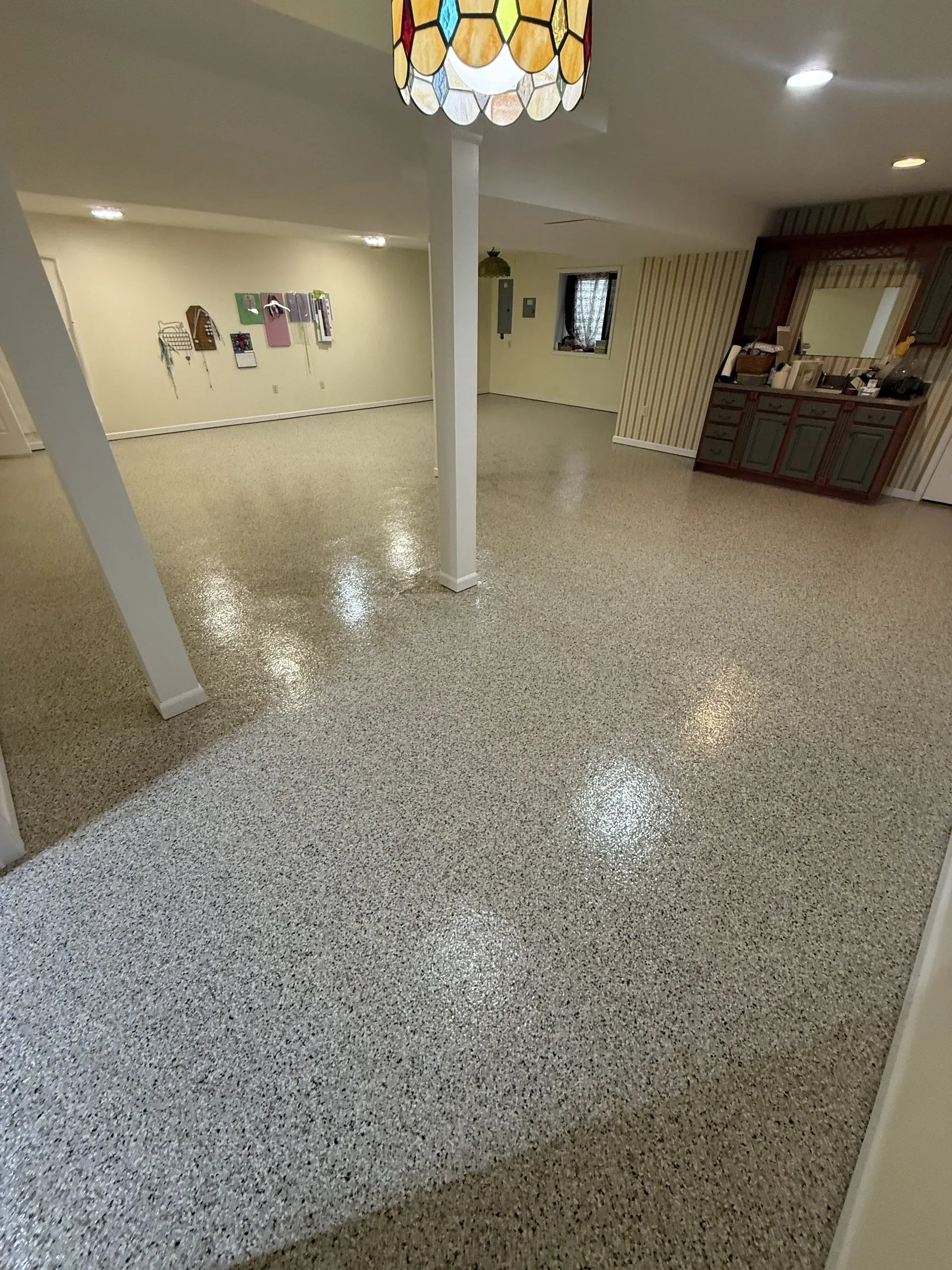
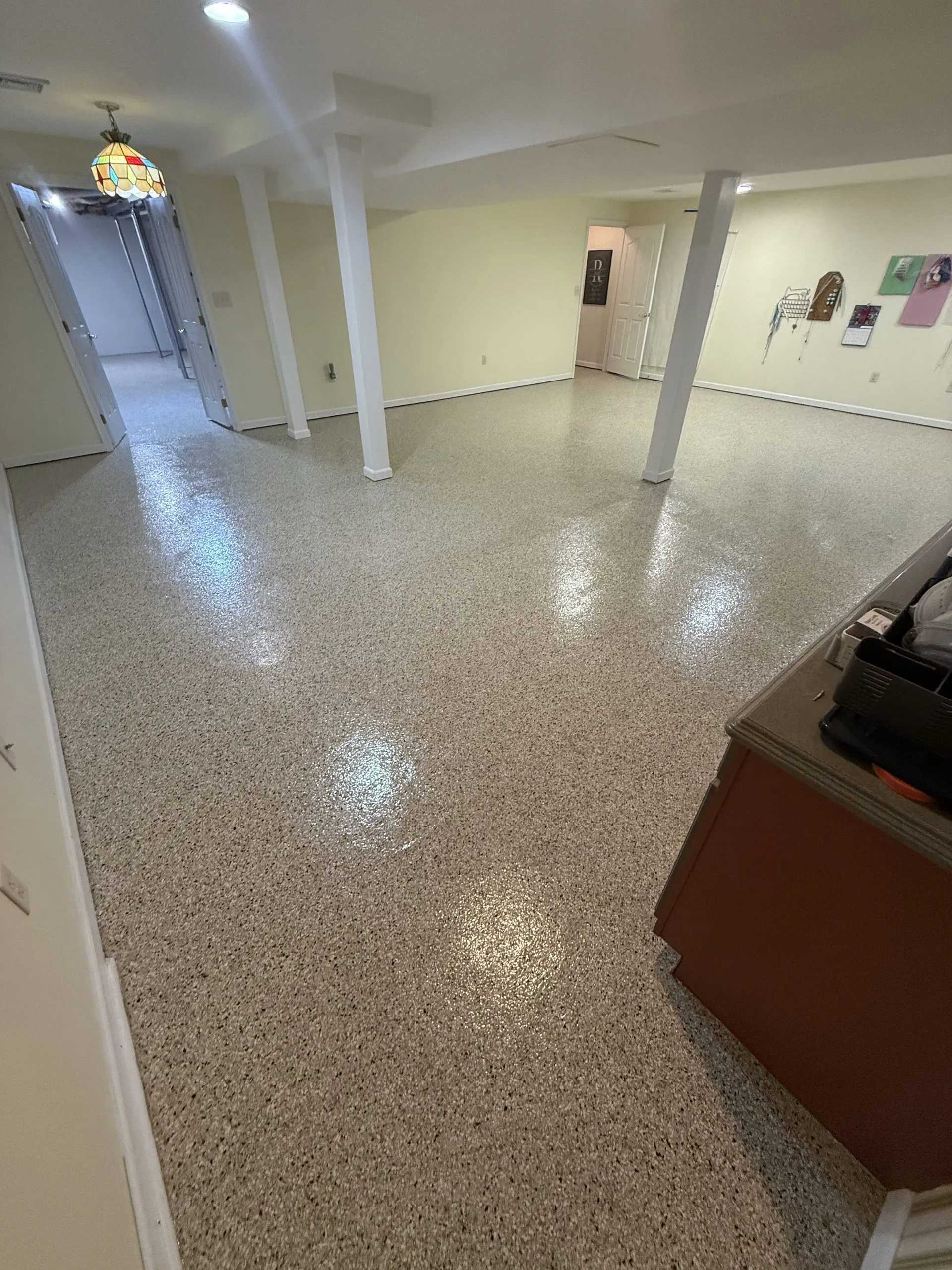
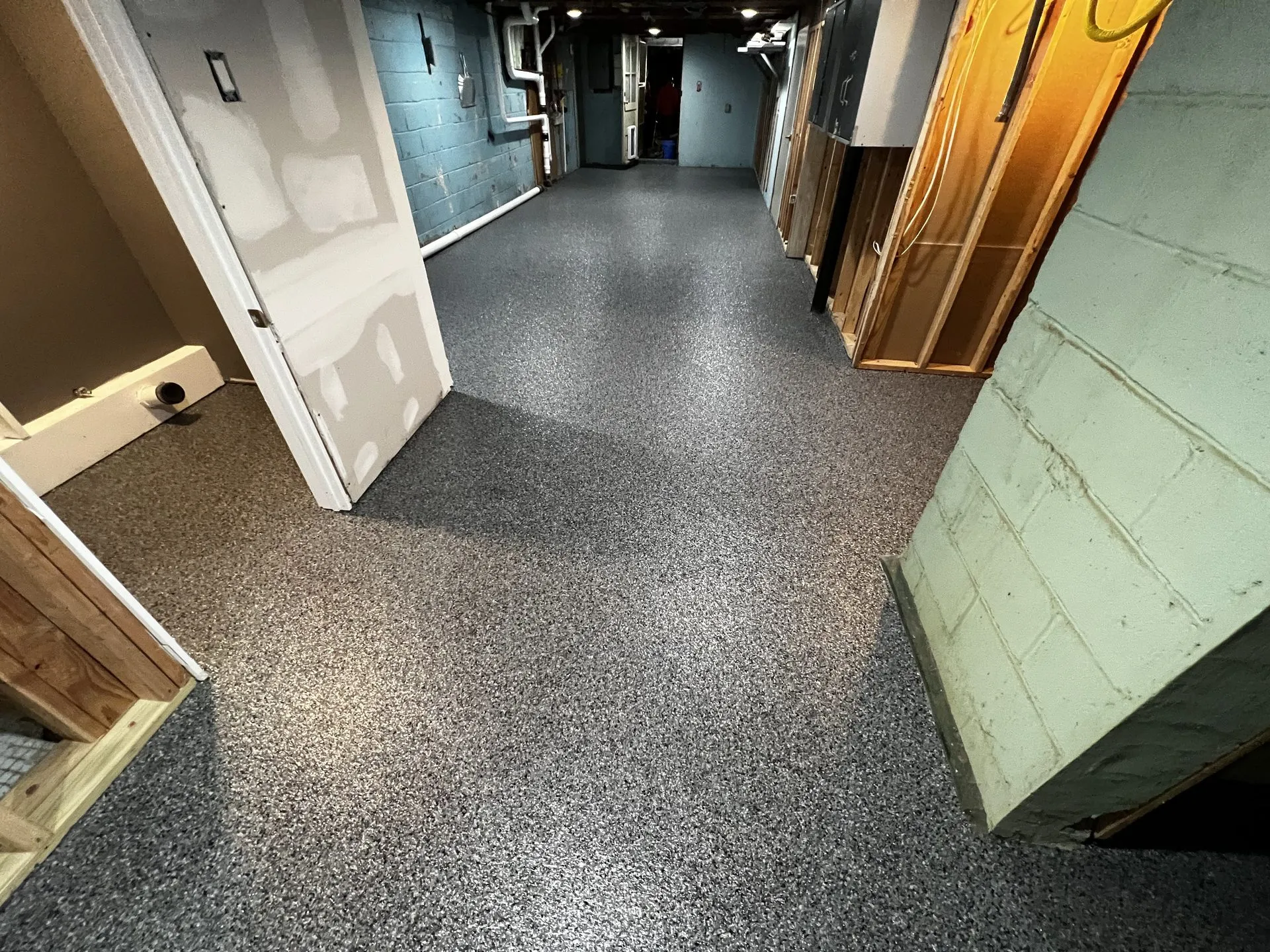
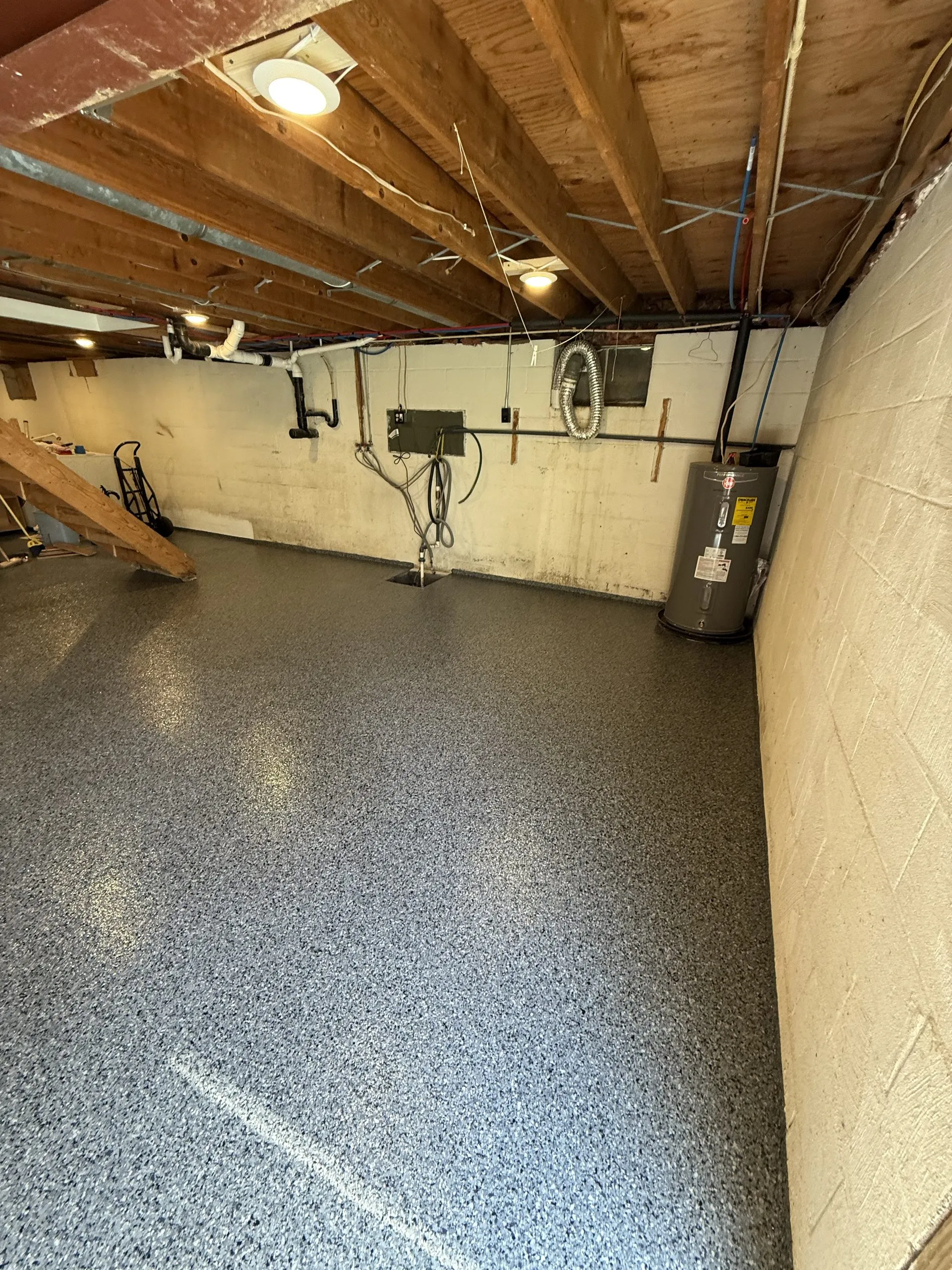
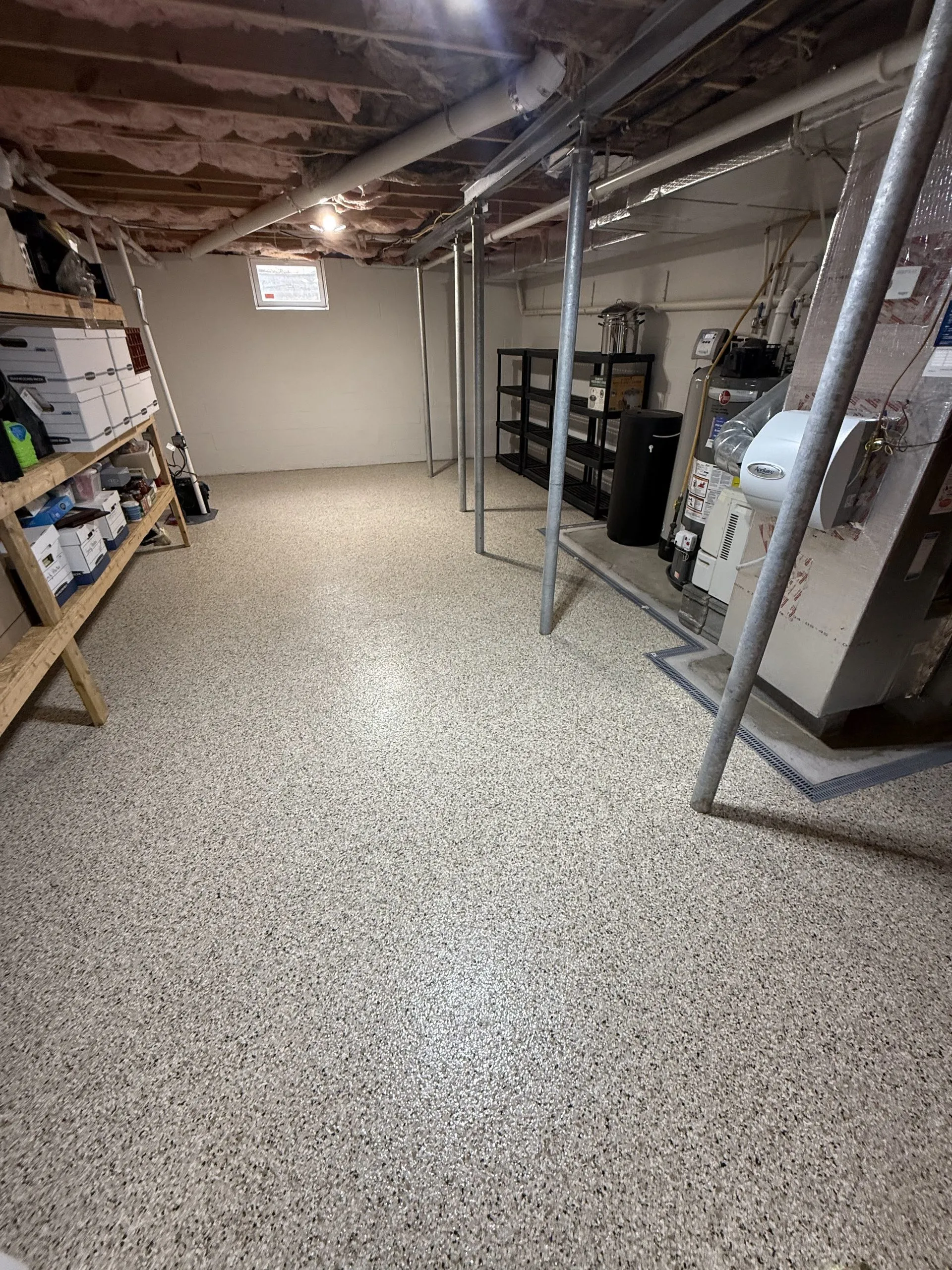
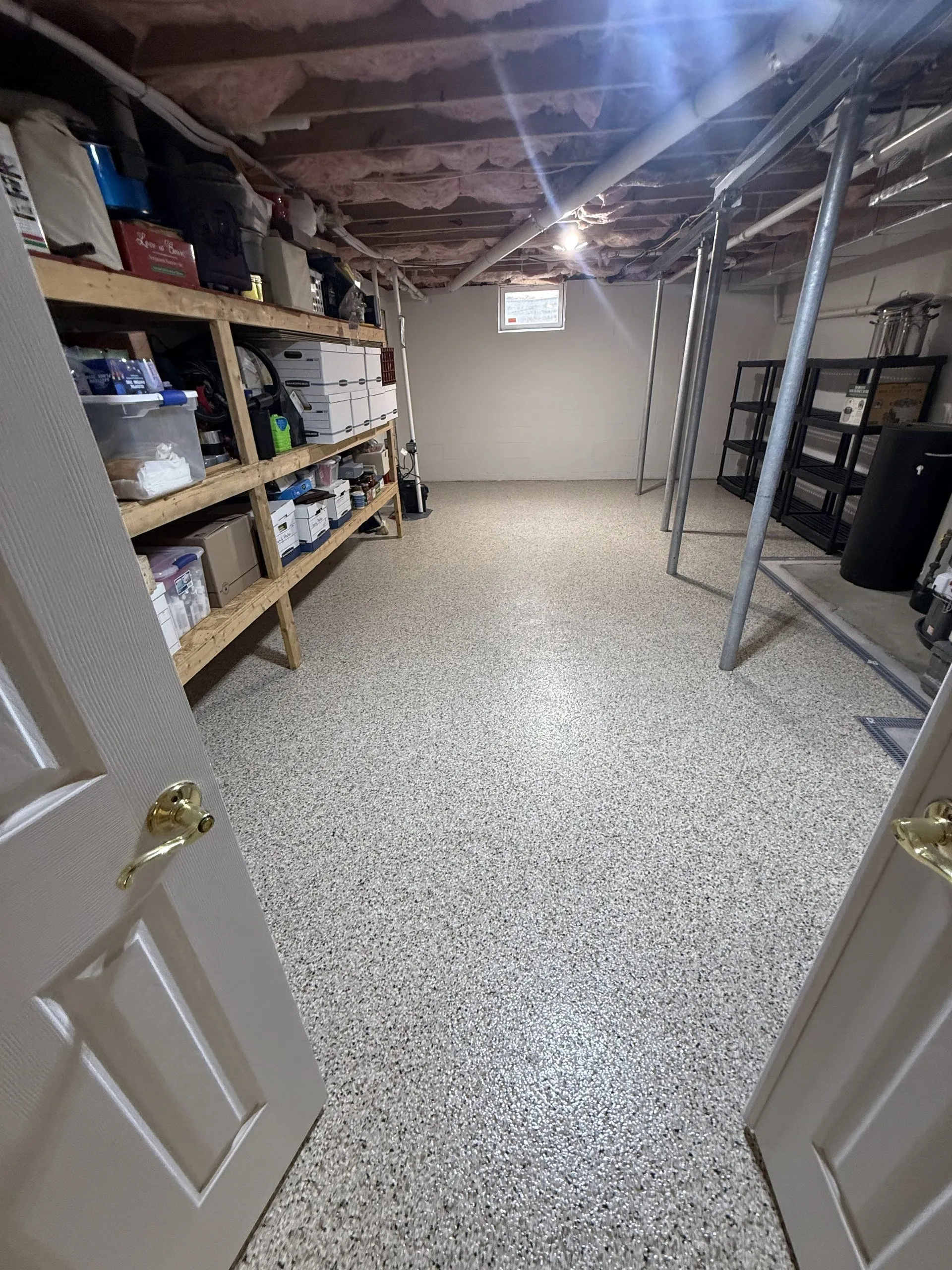
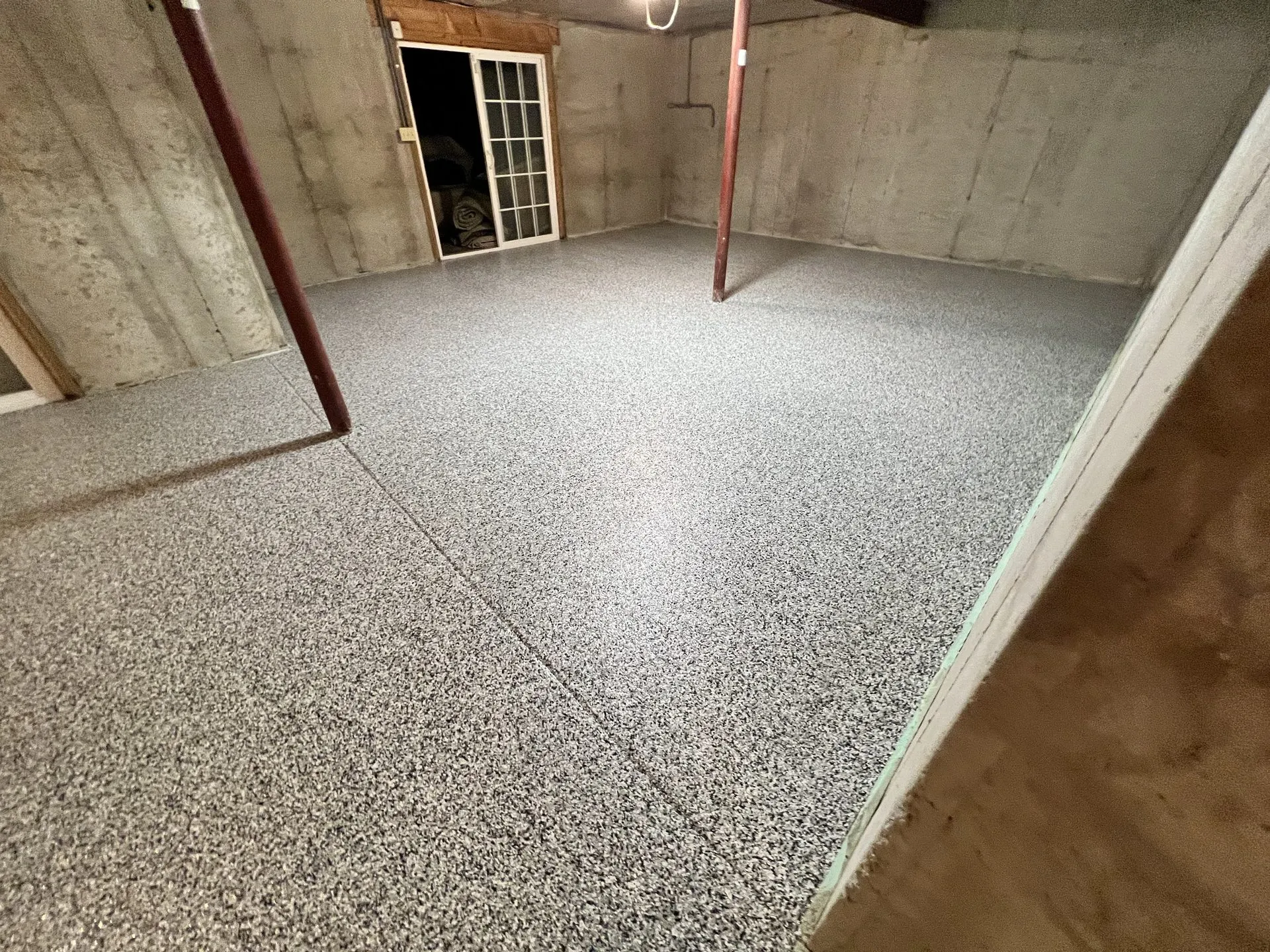
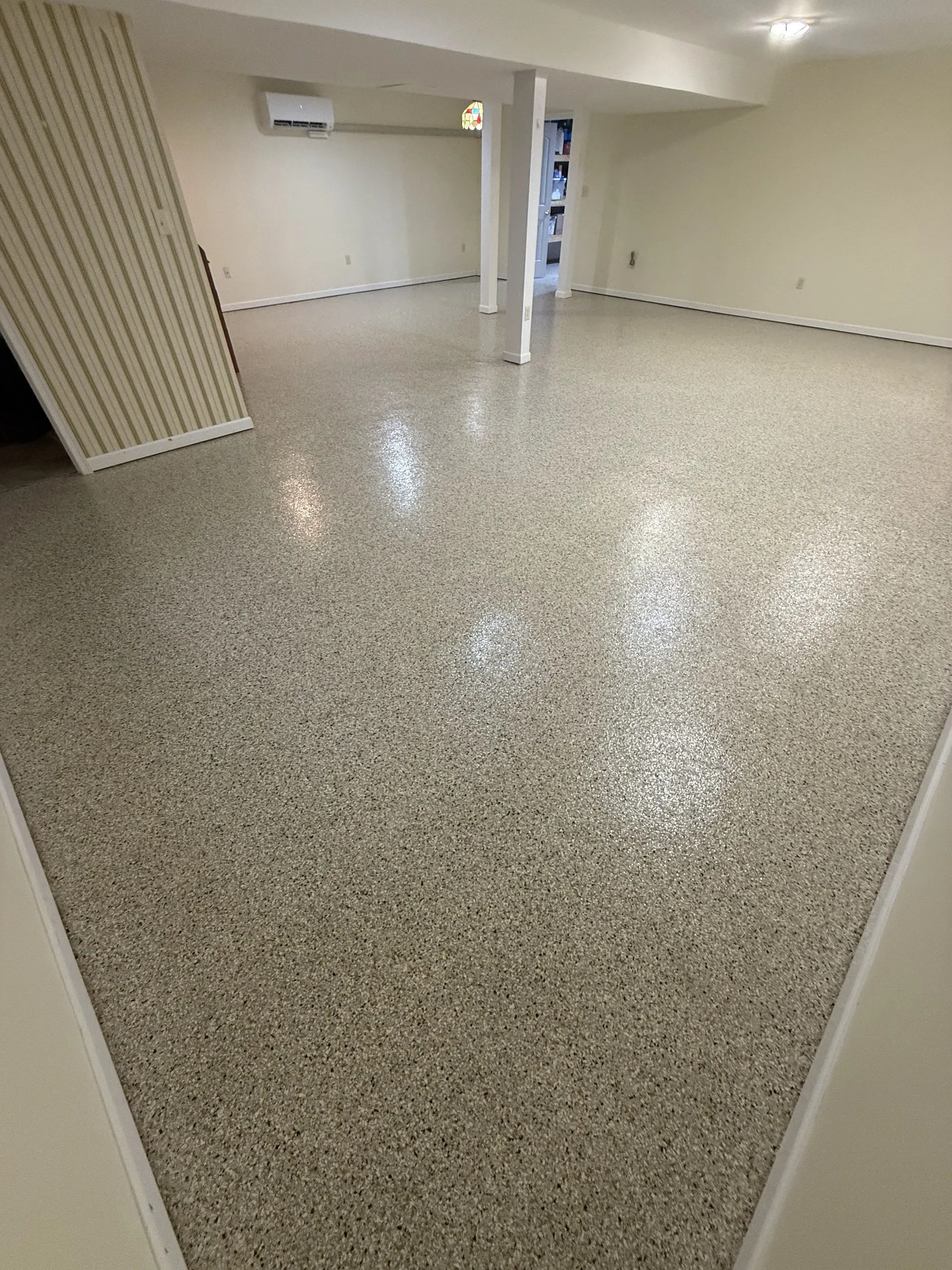
These four photos are the same basement room on the same job, shot at four stages. Nothing here is a different house and nothing is staged — this is the whole sequence, from a stained bare slab to a sealed floor.
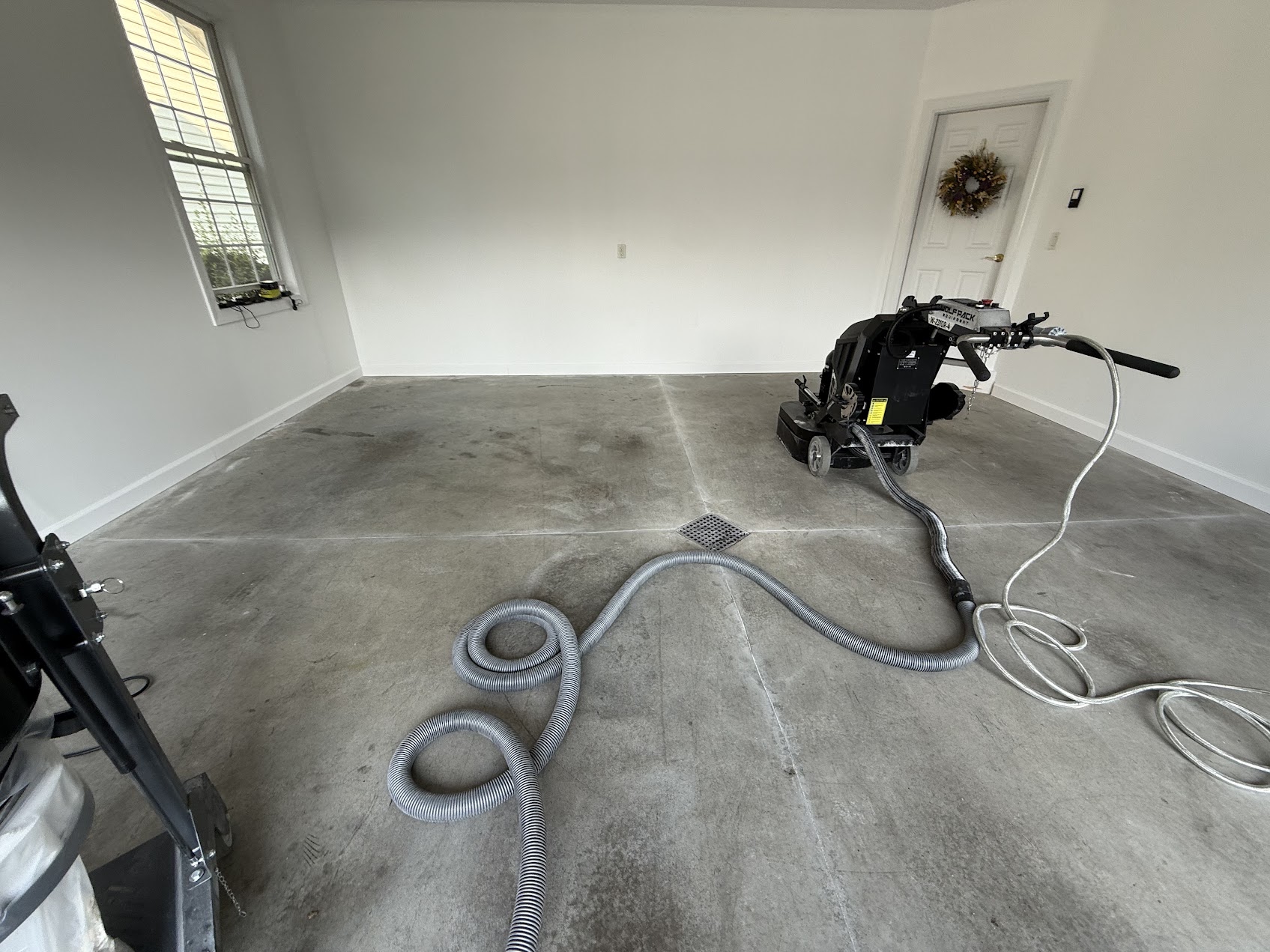
A bare, stained slab. Open concrete that sheds dust and soaks up whatever gets spilled on it.
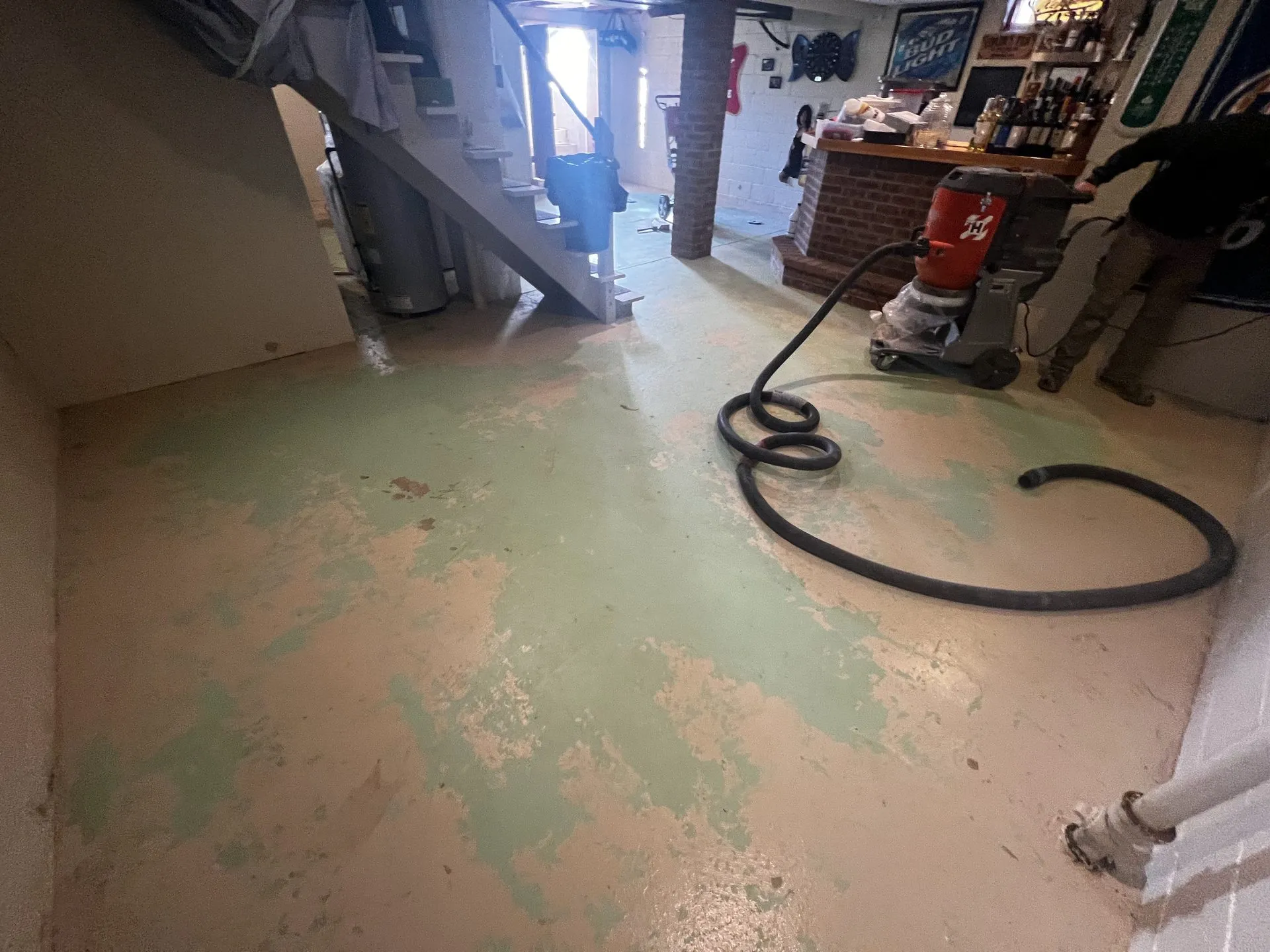
Diamond grinding. The weak top layer and any old sealer comes off and the concrete is opened up.
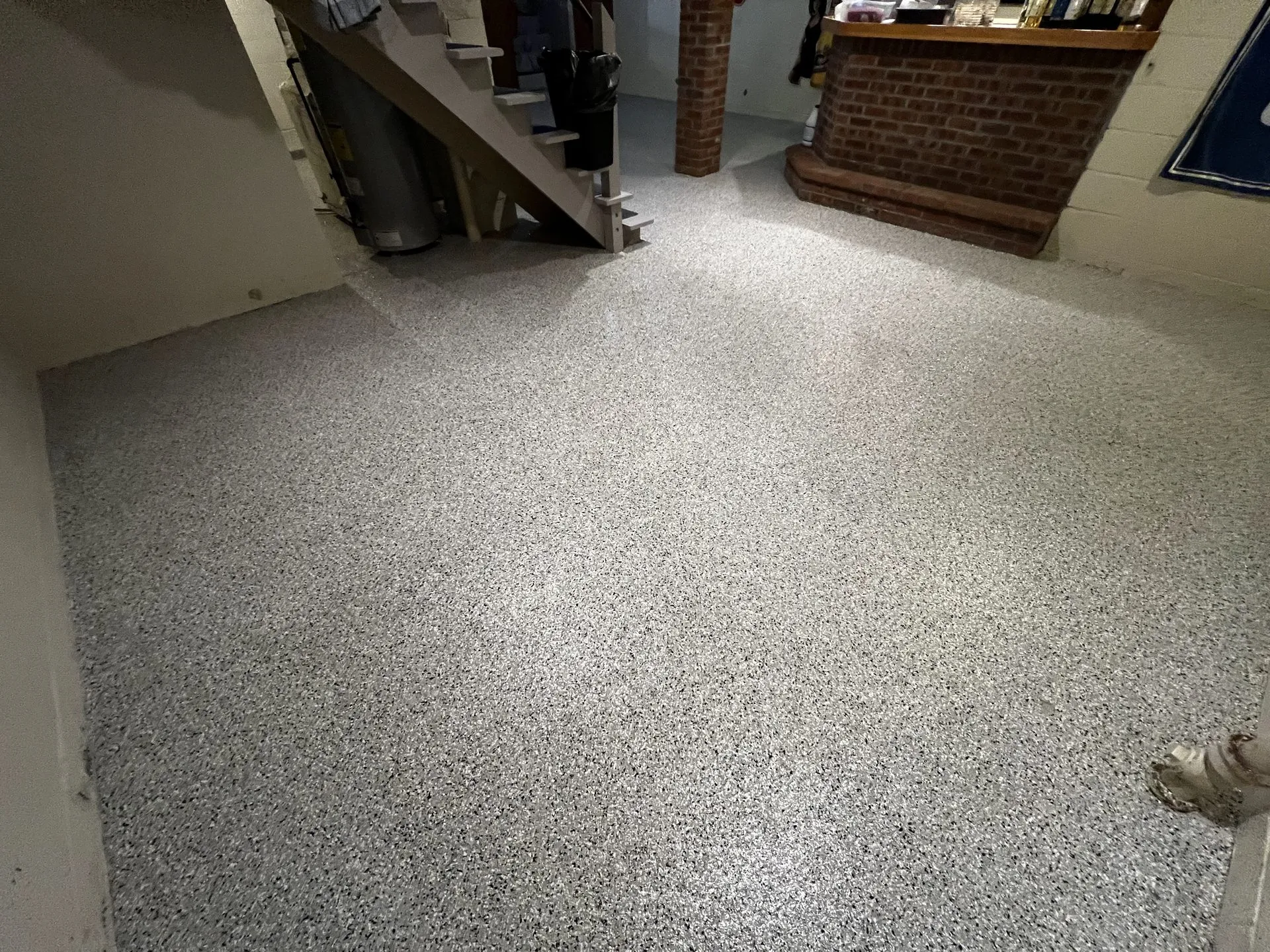
The same floor, ground clean and profiled. Cracks and control joints get filled at this point.
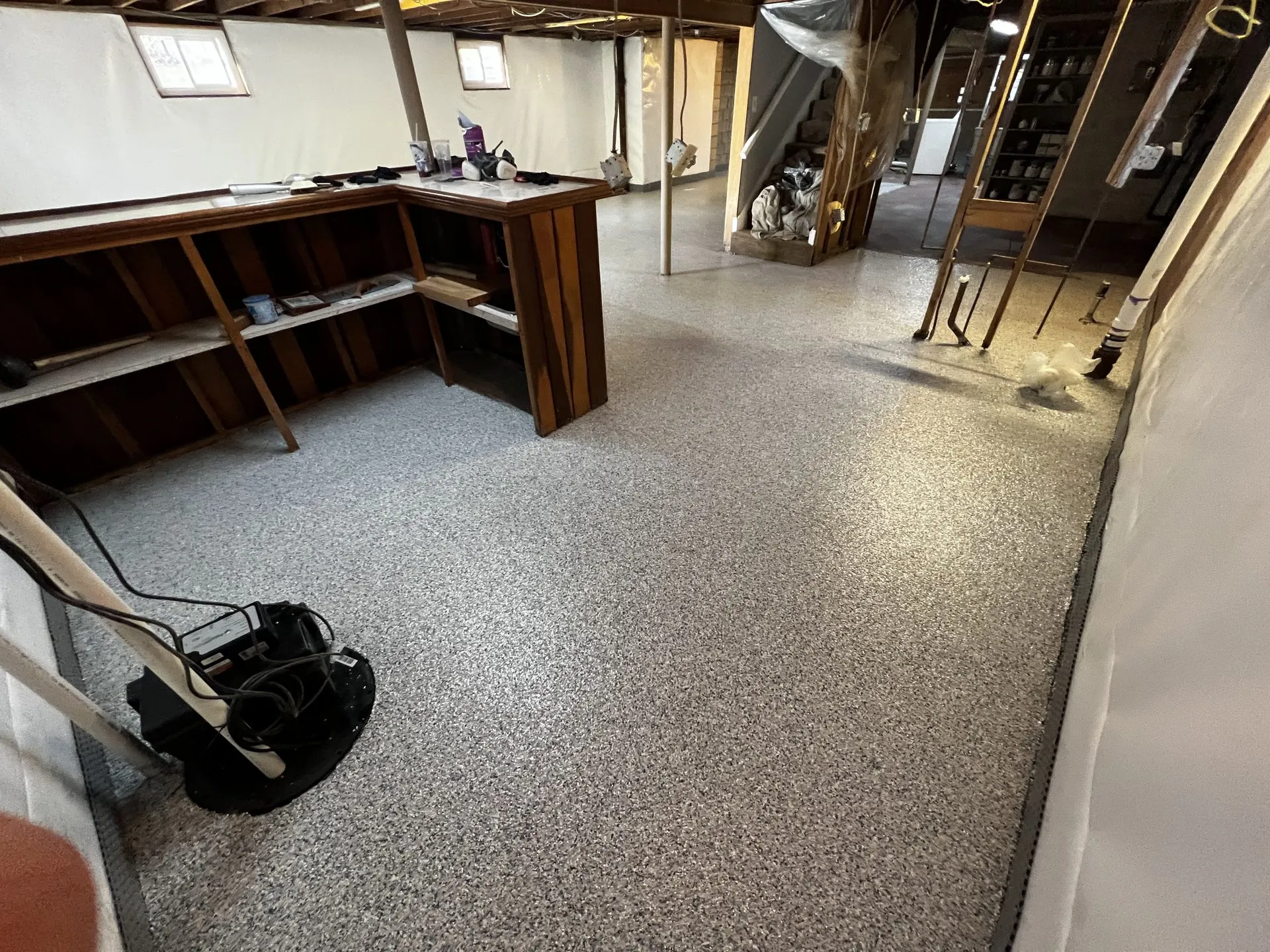
Flake broadcast by hand to rejection, then two clear polyaspartic topcoats over the top.
One room, four stages of a single install. Flake blend and color vary by job — see colors and finishes.
Rec rooms, corridors, utility rooms, storage areas and unfinished basements. The same system works across all of them.
More finished work is on the projects page, and the same system on garage floors is shown on the garage floor coating page.
Five specific problems, all of them caused by the slab itself being open and porous.
A basement starts differently from a garage: before anything else happens, we establish what the slab is doing with moisture. Everything after that is the same disciplined sequence.
Before a grinder touches the floor we read the slab. If it looks or feels damp, we run a calcium chloride test or a relative humidity probe so we are working from a number, not a guess. If the slab is passing too much water, we say so and deal with the water first.
The slab is diamond ground, never acid etched, which opens the concrete so the coating keys into it. Cracks, pitting and control joints are filled and the whole floor is vacuumed clean. Furnace, water heater and posts get worked around and cut in by hand.
The pigmented base coat goes down and vinyl flake is broadcast by hand to rejection while it is wet, so the color is even edge to edge. Once it sets, the excess flake is scraped back and vacuumed to leave a consistent texture.
Two clear polyaspartic topcoats seal the flake and take the wear. Polyaspartic cures over a wider temperature range than epoxy, which matters in a cool basement. Light foot traffic is usually fine about four to six hours after the final coat.
Here is the straight version. A floor coating is not a vapor barrier and we will not sell it as one. Concrete slabs on grade pass water vapor upward, and a coating sits on the top of that path. If the slab is passing a lot of moisture, the coating can be pushed off the concrete from underneath — that is where blisters and delamination come from, and it is why a cheap coating over a wet slab fails.
So we test rather than hope. If the slab reads damp we run a calcium chloride test or a relative humidity probe and work from the result. If the number is fine, we coat. If the slab has an active hydrostatic problem — water pushing in from outside, a failed drain, a spring under the house — the answer is to fix the water first. Grading, gutters, downspout runs, an interior drain or a sump are plumbing and drainage problems, and no coating fixes them.
Polyaspartic is more vapor-tolerant than epoxy and cures in a wider temperature range, which is why we use it on basements. It is not a cure for standing water. If we look at your slab and think it needs the water sorted out before a floor goes down, we will tell you that at the estimate rather than after.
A sealed surface has no loose concrete left to shed, so stored items, shelving and the air handler filter stay cleaner.
Spills sit on the surface instead of soaking into porous concrete. A mop or a shop vac handles what used to be a permanent stain.
A typical residential basement is done in a single day, with light foot traffic about four to six hours after the last topcoat.
Diamond ground preparation and two polyaspartic topcoats, covered by a lifetime warranty. We are licensed and insured.
If yours is not here, call (814) 424-4535 or read the full FAQ.
It depends on how damp, and that is a measurement rather than an opinion. A slab that feels slightly cool and passes a normal amount of vapor is fine to coat. A slab with water actively coming through it is not, and we will test with a calcium chloride or relative humidity method before committing. If the reading is high, the water gets fixed first — grading, gutters, a drain or a sump — and then the floor is worth doing.
No, and you should not treat it as a radon measure. Radon is handled by a sub-slab depressurization system installed by a radon contractor, and by sealing cracks and penetrations as part of that system. Our coating does fill and seal surface cracks and control joints as part of normal preparation, but it is a wear surface, not a soil gas barrier. If you have a radon system, tell us where the suction point and pipe penetrations are so we can work around them cleanly.
Yes, and a lot of people do exactly that. A coated slab makes a clean, sealed, dust-free base for luxury vinyl plank, an engineered floor or a floating subfloor panel system later on. Check the flooring manufacturer's instructions, because some adhesives want to bond directly to bare concrete rather than to a coating — a floating installation avoids that question entirely.
For most basements a coated floor is the safer choice. Carpet and carpet pad hold moisture against the slab, and if the basement ever takes water — a washer hose, a water heater, a heavy storm — carpet has to come out and usually gets thrown away. A coated floor takes water and dries. If you want the softness, put down area rugs you can pick up and move.
It is noticeably less cold than bare concrete but it is not a heated floor. The coating and flake build a film over the slab that does not pull heat out of your feet the way open concrete does, and it does not hold the damp film that makes a slab feel colder than it is. If you want genuine warmth underfoot you are looking at in-floor heat or an insulated subfloor over the coating.
There is a solvent smell while we are applying, which is more noticeable in a basement than a garage because there is less natural airflow. We ventilate with fans and, where we can, run air out through a window or an egress opening. The strong smell goes off as the topcoat cures; most homeowners say it is essentially gone within a day or two, faster with windows open and a fan running. Plan to be out of that part of the house on install day.
We coat right up to them and cut the edges in by hand. Mechanical equipment stays where it is — we do not move a furnace, water heater or laundry hookup — and we grind and coat around the base of it, around support posts and around any floor drain, leaving the drain itself clear. Anything you can move off the floor before we arrive, move; anything you cannot, tell us about and we will work around it. We serve Lancaster, Chester, Berks, Dauphin, York and Lebanon counties — see service areas.
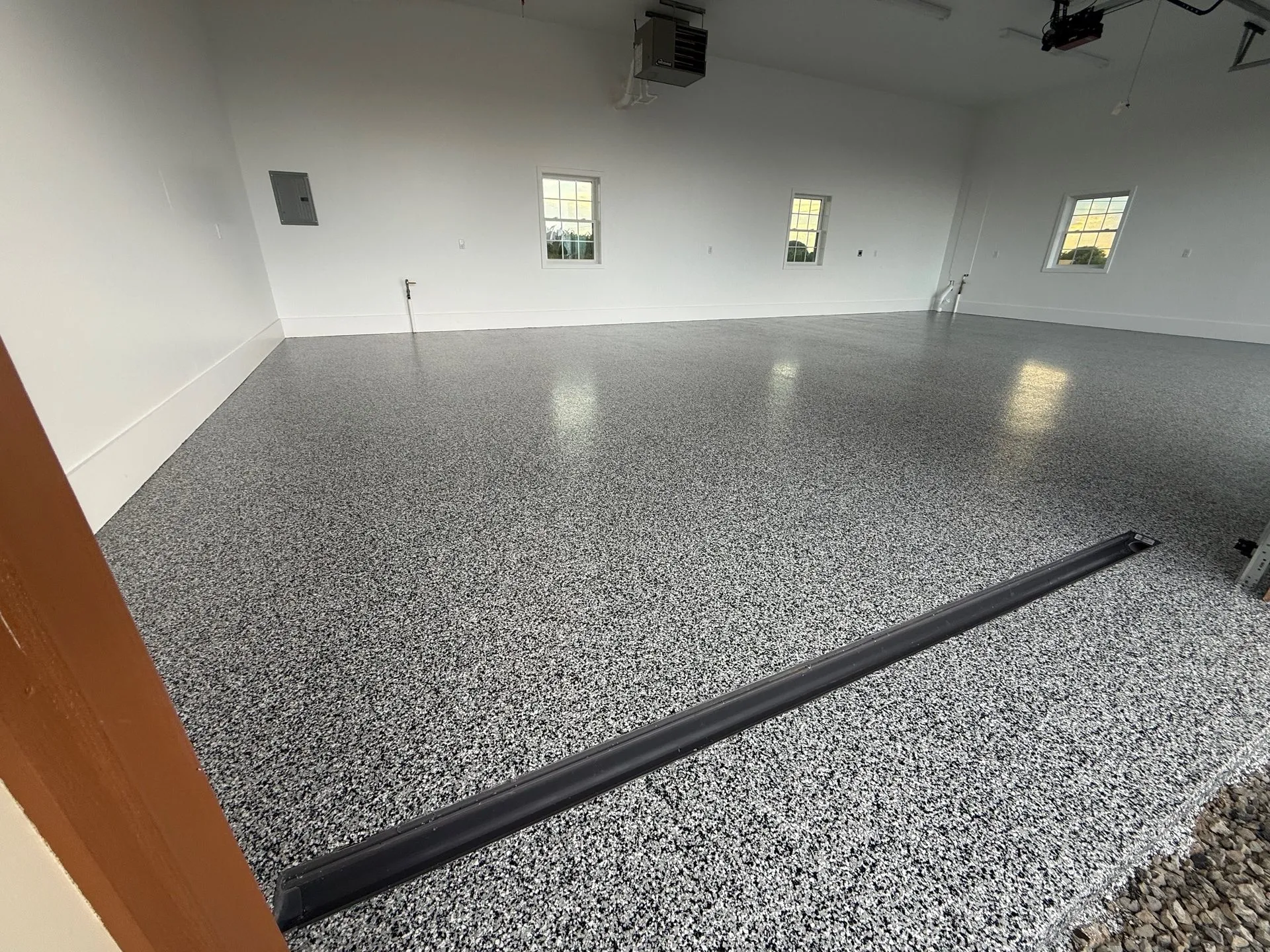
The same diamond ground flake system on a garage slab, including the apron where the door meets the driveway. No hot-tire pickup.
See the flake blends side by side before you choose. Darker blends hide dust in a working basement; lighter ones brighten a low room.
Based at 33 Lee Aly in Ephrata and working across Lancaster, Chester, Berks, Dauphin, York and Lebanon counties.
Tell us the room, roughly how big it is and when you want it done. We will measure, look at the slab and give you a price that does not move.
Polyaspartic concrete floor coatings installed in a single day across central Pennsylvania. Every slab diamond ground, never acid etched.
© 2026 Spartic Coatings. All rights reserved.
Serving Lancaster, Chester, Berks, Dauphin, York and Lebanon counties, Pennsylvania.