Polyaspartic floors for shops, warehouses, showrooms and commercial kitchens across Lancaster, Chester, Berks, Dauphin, York and Lebanon counties. Ground, coated and back in service overnight, across a weekend, or bay by bay in phases.
The cure time is the whole argument. Everything else about a commercial floor coating follows from how fast the material comes back to service.
Polyaspartic cures fast enough that the productive part of your day never has to stop. Foot traffic returns in roughly four to six hours after the final topcoat. Vehicle, forklift and rack traffic returns at about twenty-four hours. That window is short enough to fit inside the hours you are already closed, which is why the work happens at night, on a weekend, or a section at a time.
Epoxy cannot do that. A multi-day cure means the floor is unusable while it hardens, and there is no way to schedule around a shutdown you cannot shorten. If you have been told a coated floor means closing for a week, you were being quoted epoxy. We go into the difference in detail on polyaspartic vs epoxy.
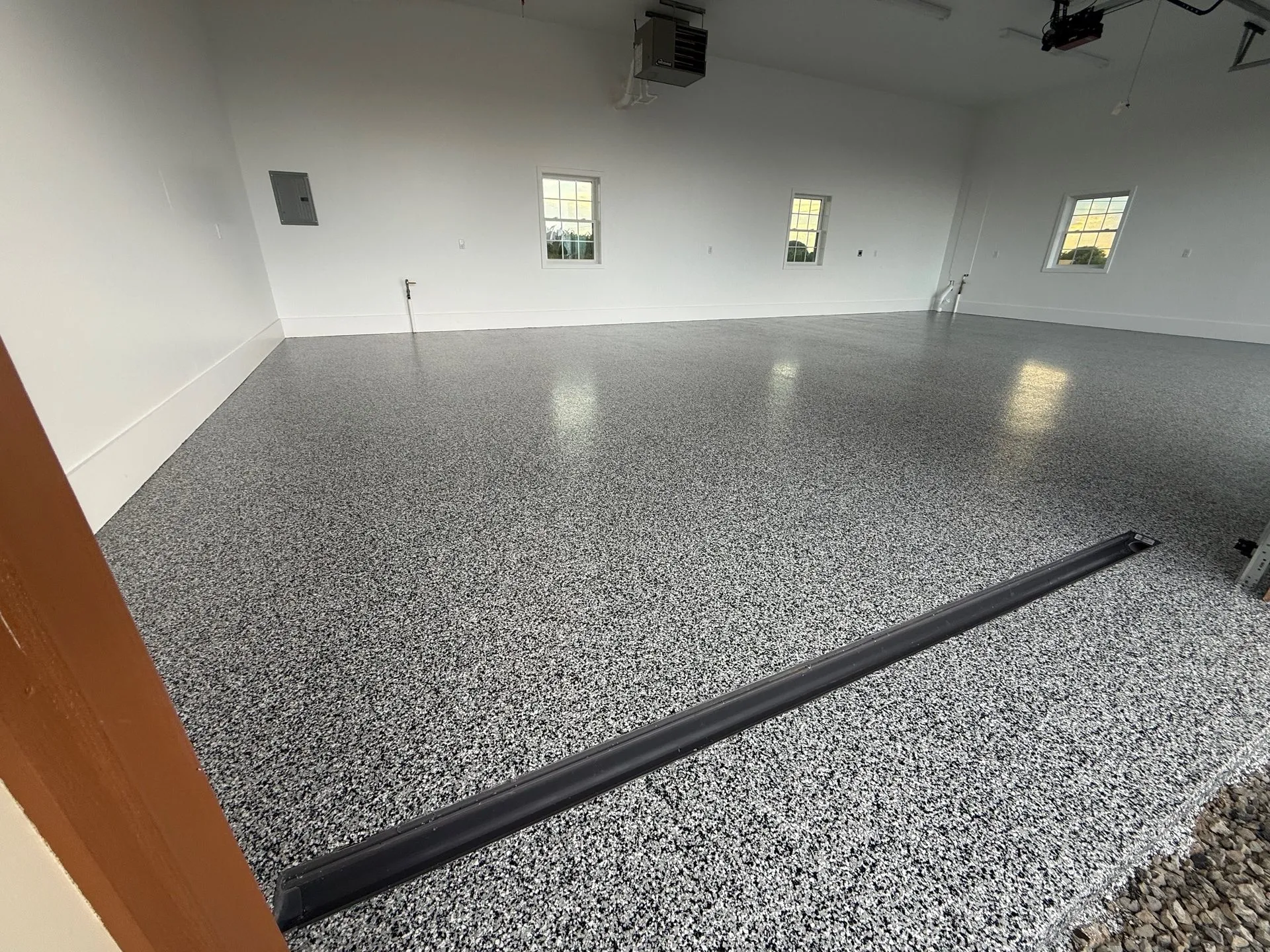
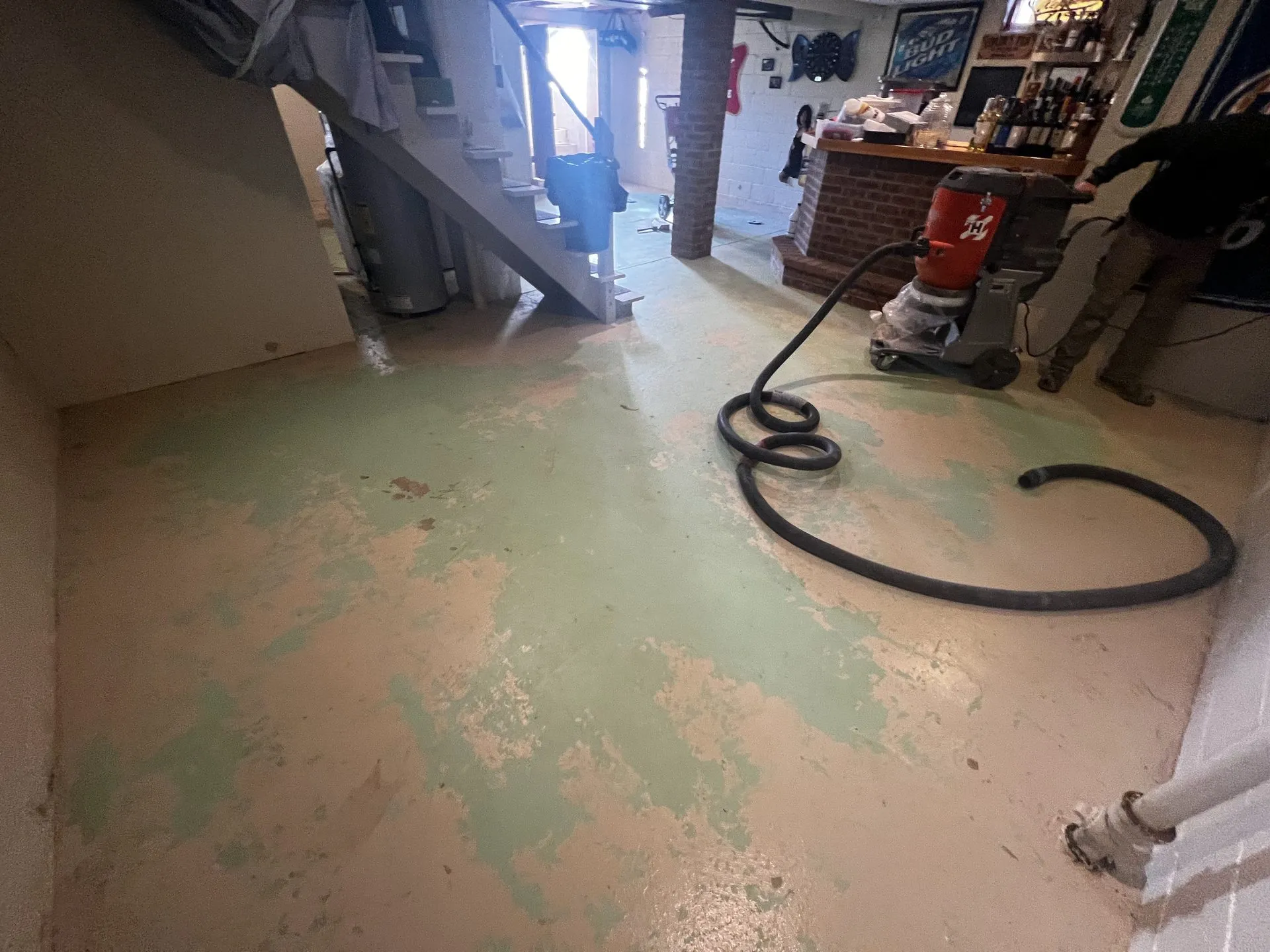
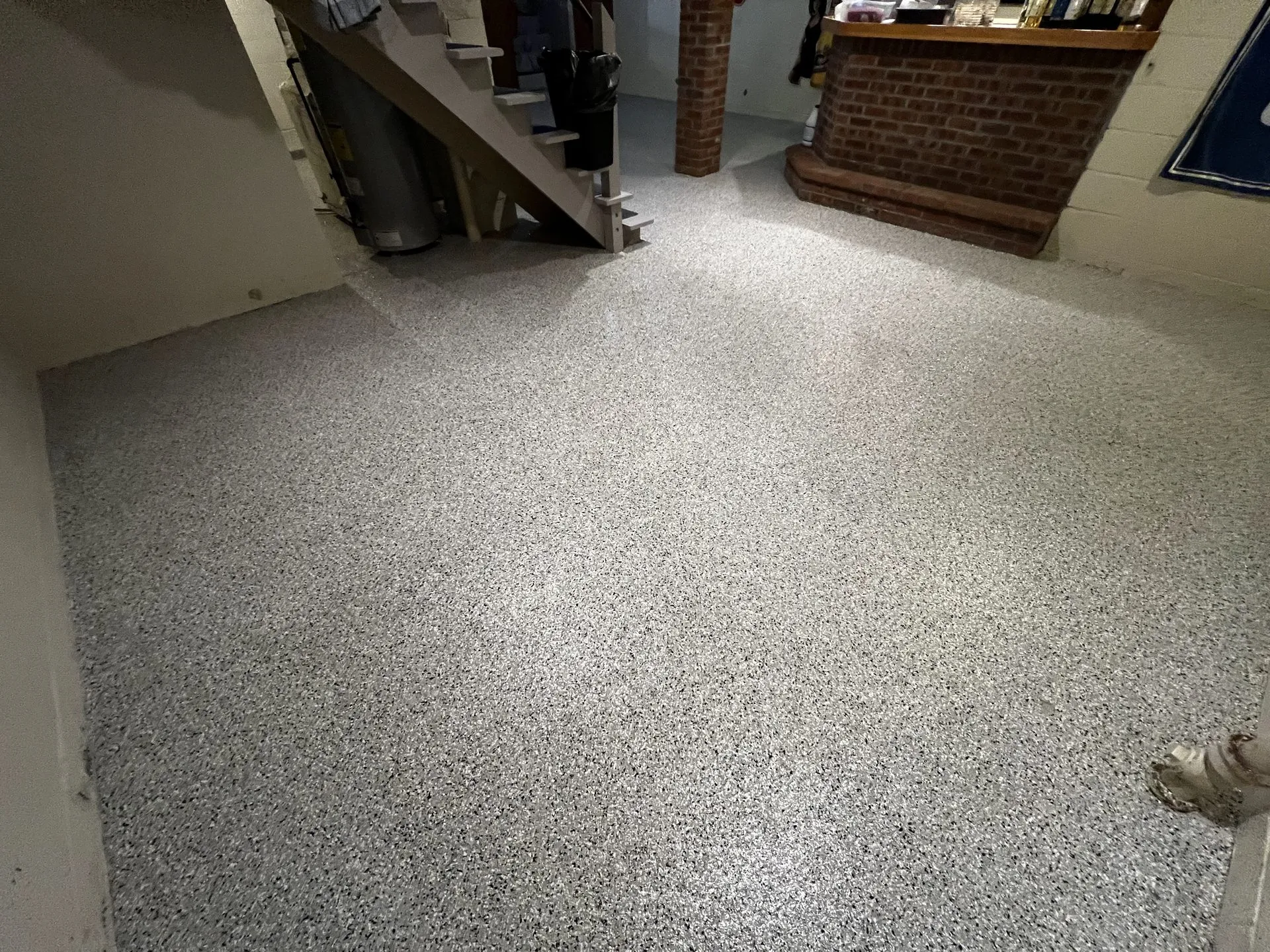
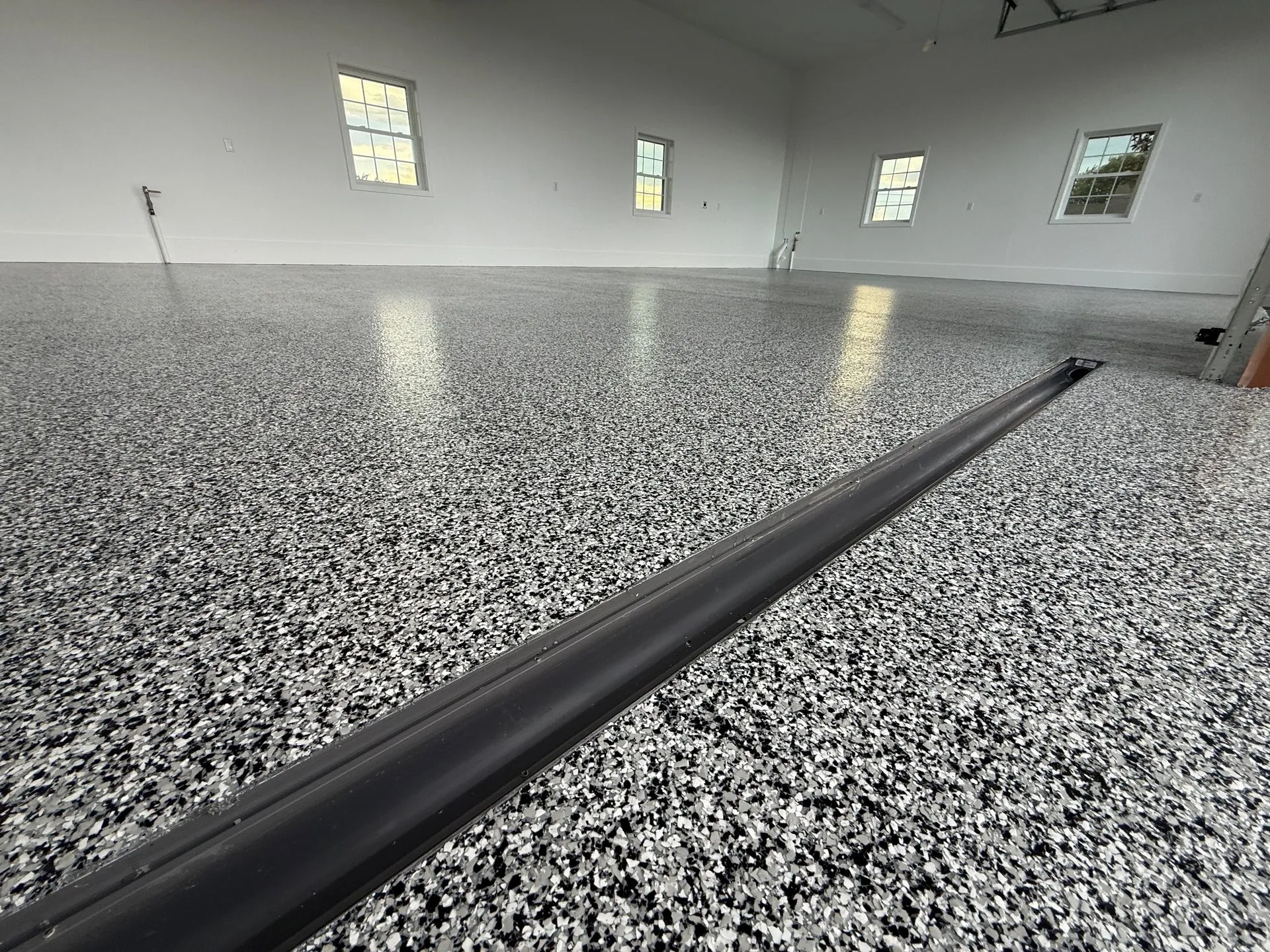
Shown: a residential workshop garage. Commercial and warehouse project photography is being added to this page — we are not going to pass off a garage as a distribution center.
Every one of these environments beats on a floor differently. The specification changes with the demand.
Dropped tools, hot tires parked on the same spot every day, and solvents and brake fluid that eat an unprotected slab. Polyaspartic does not lift under hot-tire pickup the way a thin coating does.
Pallet jack wheels and rack legs concentrate load into small points, so the coating has to be bonded into a ground profile rather than sitting on the surface where a point load can shear it off.
Here the floor is part of what you are selling. Gloss level controls how much of your overhead lighting bounces back up into the room, and flake hides the traffic pattern that a plain color would show.
Sanitation, hot water and grease. A seamless coating with no grout lines gives water and grease nowhere to sit, and anti-slip aggregate is specified into the topcoat because those floors are wet by design.
A commercial slab is a different job from a two-car garage, and not only because it is bigger. The scheduling and the testing come first, because a failure across a large floor is not a repair — it is a re-do.
We walk the slab with you, note existing coatings, sealers, cracks, spalling and control joints, and run a moisture test. Larger slabs get tested first as a matter of course: moisture driving up through ten thousand square feet of concrete will push a coating off, and at that size you are not patching a corner, you are redoing the floor.
Before anything is ground, we build the calendar around your hours. Which shifts have to keep running, where trucks come and go, which sections can go offline together, and whether this is an overnight, a weekend, or a phased job. You get the plan before we mobilize.
Each section gets diamond ground to open the concrete profile, cracks and joints repaired, then the pigmented base coat, flake broadcast by hand to rejection, and two clear polyaspartic topcoats. HEPA vacuums run on the grinding tooling so dust is captured at the head instead of settling on your inventory.
Foot traffic at about four to six hours after the final topcoat. Vehicle, forklift and rack traffic at about twenty-four hours. We walk the finished section with you, confirm the edges and thresholds, and hand it back. The system carries a lifetime warranty.
Three decisions do most of the work on a commercial job, and all three are easier to make before the crew arrives than after.
Color and flake blend options are on colors and finishes. If you want the install itself explained stage by stage, that is how it works.
The full install, stage by stage: moisture test, diamond grinding, crack repair, base coat, flake broadcast and two clear topcoats.
Cure time, UV stability and hot-tire pickup compared side by side. This is the page that explains why epoxy means a shutdown.
Tell us the square footage, the traffic it takes and the hours you can give us. We will give you a firm number at the estimate.
In most cases, no. Polyaspartic takes foot traffic about four to six hours after the final topcoat and vehicle, forklift or rack traffic at about twenty-four hours, so the work fits into hours you are already closed. We run commercial jobs overnight, across a weekend, or in phases where we section off part of the floor and leave the rest working. The shutdown problem belongs to epoxy, which needs several days to cure.
Large slabs are handled by phasing rather than by trying to do everything at once. We break the floor into sections sized to what the crew can grind, repair and coat inside one work window, then move to the next. The honest answer on your specific building comes from the site walk: square footage, slab condition, access and the hours available all set how many phases it takes. Tell us the footprint and we will tell you the schedule.
Yes, and on commercial work that is usually the plan rather than the exception. Night and weekend installs are the reason polyaspartic suits working buildings: the cure window is short enough to finish inside the time you are closed. We build the calendar around your shifts during the site walk, before anything is mobilized.
Forklifts and pallet jacks are a point-load problem, not a wear problem. Small hard wheels concentrate weight into a few square inches, which will shear a coating that is only sitting on the surface. That is why the slab is diamond ground rather than acid etched — grinding opens a profile the coating keys into, so the load is carried by the bond into the concrete. Vehicle and rack traffic returns at about twenty-four hours after the final topcoat.
Yes, and they are laid into the coating system rather than painted on top of it. Paint applied over a finished floor is a wear item: the same forklift traffic the line is there to direct is what scrubs it off. Markings built into the system wear at the same rate as the floor around them. Aisle lines, bay numbers and safety markings are all specified before we start.
The finished surface is seamless, with no grout lines or joints for water, grease or debris to sit in, so it cleans with a mop or an autoscrubber and hot water. For a kitchen or food prep area we also specify anti-slip aggregate into the final topcoat, because those floors are wet by design. If your operation has to satisfy a specific USDA, FDA or health department standard, bring that specification to the site walk and we will confirm in writing what the system meets before you commit — we are not going to claim a certification on a web page.
A damaged area is repaired in place. Because the coating is bonded into a ground profile, we can grind back the affected patch, rebuild the base coat, flake and topcoats, and blend the repair into the surrounding floor rather than recoating the whole building. The system carries a lifetime warranty, so call us and we will come look at it.
More general questions are answered on the FAQ page. Counties served are listed under service areas.
Tell us the room, roughly how big it is and when you want it done. We will measure, look at the slab and give you a price that does not move.
Polyaspartic concrete floor coatings installed in a single day across central Pennsylvania. Every slab diamond ground, never acid etched.
© 2026 Spartic Coatings. All rights reserved.
Serving Lancaster, Chester, Berks, Dauphin, York and Lebanon counties, Pennsylvania.