Sometimes, and the answer depends entirely on why it is damp. A basement that feels humid in August is usually fine to coat. A slab passing measurable water vapor may need a moisture-mitigating primer or may need to wait. A slab with standing water or active hydrostatic pressure should not be coated at all until the water is dealt with, because no coating holds a bond against water pushing up from below. The way to tell the difference is a calcium chloride or relative humidity test, not a look and a guess.
The honest answer is: it depends on what kind of damp. "Damp basement" describes three completely different physical situations, and only one of them is a real obstacle to coating. Before anyone quotes your floor, someone should establish which one you have — with a test, not an opinion.
The basement smells musty in summer, the walls feel cool and clammy, maybe there is condensation on the cold water lines. This is warm, humid air meeting cool surfaces below grade. The slab itself may be perfectly dry. This is the most common complaint and it is almost never a reason not to coat. A dehumidifier fixes the air. Interestingly, a coated slab usually makes the room feel drier, because a bare slab holds and releases moisture and dust in a way a sealed one does not.
Water vapor is moving up through the concrete from the soil underneath, either because there is no vapor barrier under the slab or because the one there was compromised. There may be no visible water at all. You might see a faint dark ring that comes and goes, or efflorescence — a chalky white mineral bloom left where moisture evaporated off the surface. Efflorescence is a tell: something is carrying dissolved minerals to the surface. This situation is measurable and often manageable.
Liquid water is being pushed up through the slab or in at the wall-floor joint by a water table or by poor drainage outside. You see it after heavy rain or snowmelt. Water seeps at the perimeter, a crack weeps, the sump runs constantly. No coating on the market bonds against liquid water pushing up from underneath. This one has to be solved before anything goes on the floor.
Two tests matter, and they measure different things.
A calcium chloride test (ASTM F1869) places a pre-weighed dish of anhydrous calcium chloride under a sealed dome on the bare slab for about 72 hours. Weigh it again, and the weight it gained tells you the moisture vapor emission rate — how many pounds of water the slab gives off per 1,000 square feet in 24 hours. It measures what is coming out of the top inch or so of concrete.
A relative humidity probe test (ASTM F2170) drills a hole to 40% of slab depth, seats a sleeve, lets it equilibrate, then reads the humidity inside the slab. This is the more honest measurement on a slab that has been sealed, painted, or has dried unevenly from the top, because it tells you about the whole slab rather than just the surface.
Both give you a number. That number tells you whether the coating system you are considering is inside its manufacturer's tolerance, whether you need a moisture-mitigating primer rated for that reading, or whether you are outside the range where any coating is a good idea. The test also costs almost nothing compared to redoing a failed floor, which is why skipping it is a bad trade.
The failure is predictable. Vapor rises through the concrete, hits a coating that is less permeable than the slab, and collects at the bond line. Pressure builds. First you get blisters — small domes that eventually pop. Then the coating delaminates in sheets, and if you pick up a chip the underside is clean, with no concrete stuck to it. That is the signature of moisture failure, and we describe the other failure signatures in why do garage floor coatings peel.
It rarely happens immediately. It usually shows up in the first wet spring, after the installer's phone number has gone stale.
We will tell you to stop and deal with the water when any of the following is true:
The work in that case is not ours to do — it is grading and downspout extensions outside, gutters that actually discharge away from the foundation, a sump and pump, an interior perimeter drain, or a crack injection. Once the water has somewhere to go and the slab has dried, we retest and coat. Walking away from a floor we could have sold you is cheaper for everyone than installing a floor that blisters.
This is the most common real-world case, and it is workable. A slab that reads above the coating's plain tolerance but well below the danger zone gets a moisture-mitigating primer — a dense, low-permeability epoxy primer specifically rated to hold back a stated vapor emission rate. It goes on the profiled slab first and the rest of the system goes on top of it. It adds a step and it adds time. It does not add uncertainty, because the primer is rated to a number you have already measured.
The prep is the same and the grinding matters more. Basement slabs are often old, often power-troweled very smooth, and frequently carry a legacy of paint, carpet adhesive, tile mastic or an old sealer. All of it has to come off. Diamond grinding takes the slab down past the contamination and opens a profile, and dust extraction on the grinders is what makes that possible in a finished basement without coating the whole house in concrete dust.
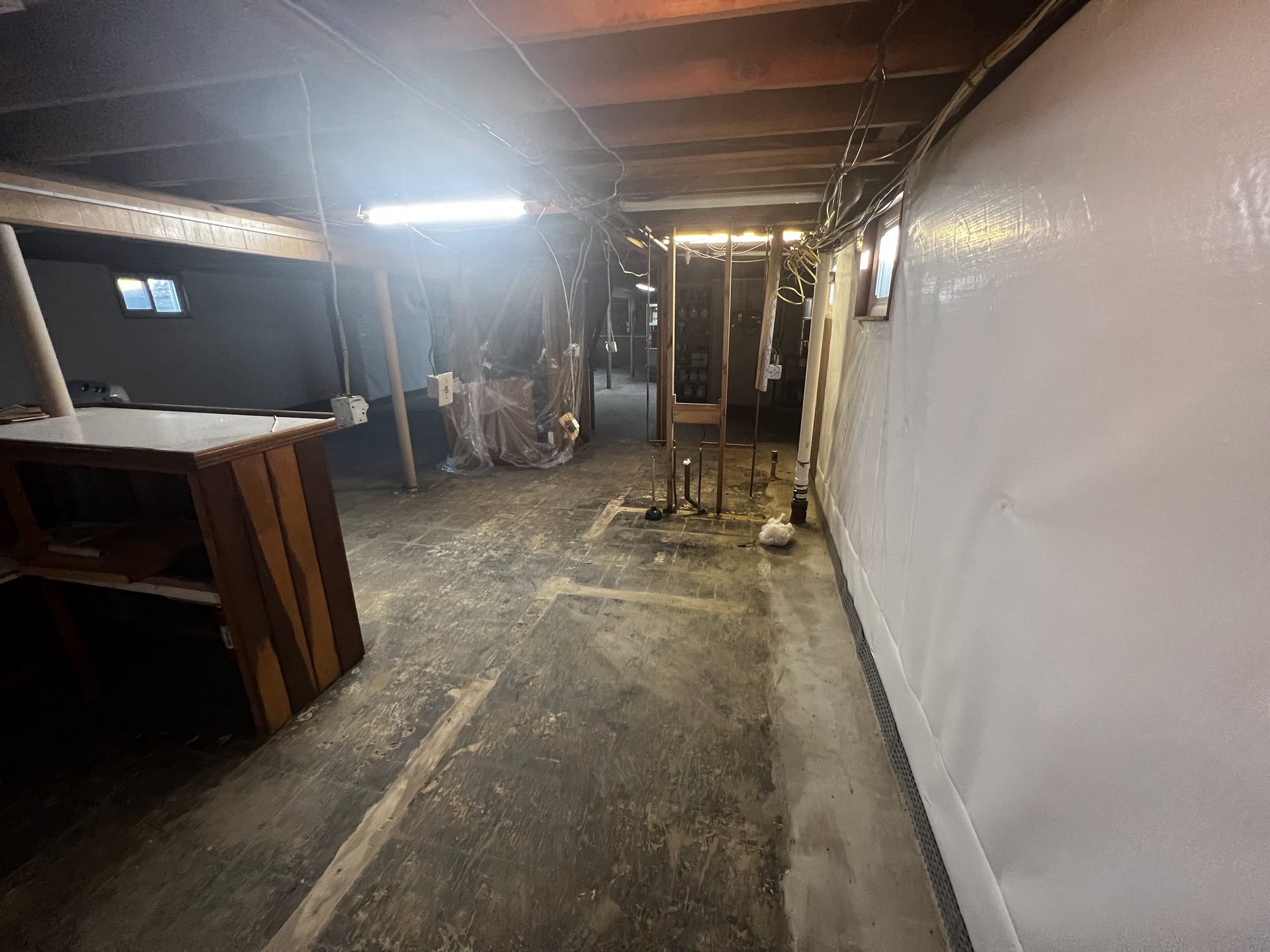
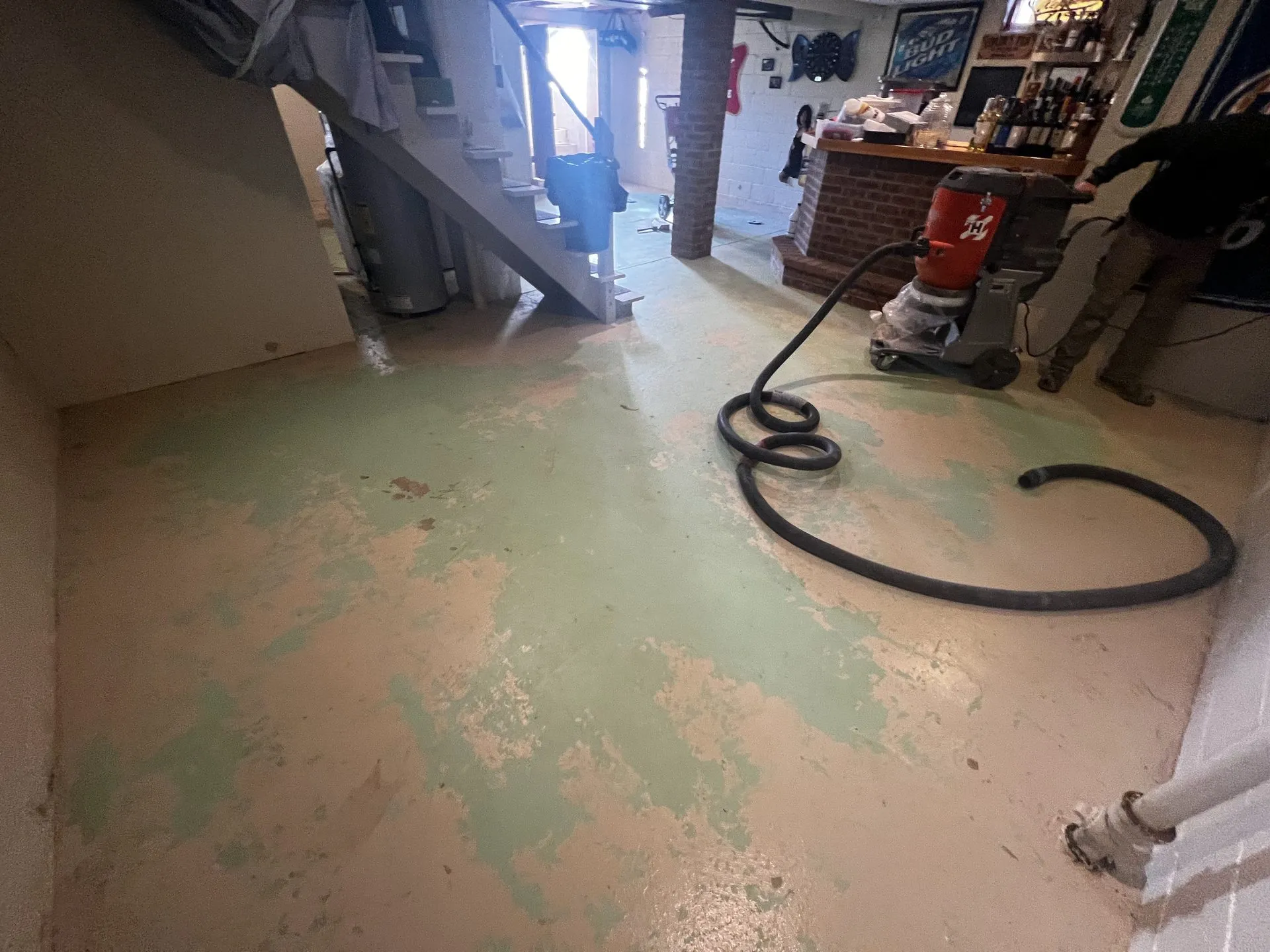
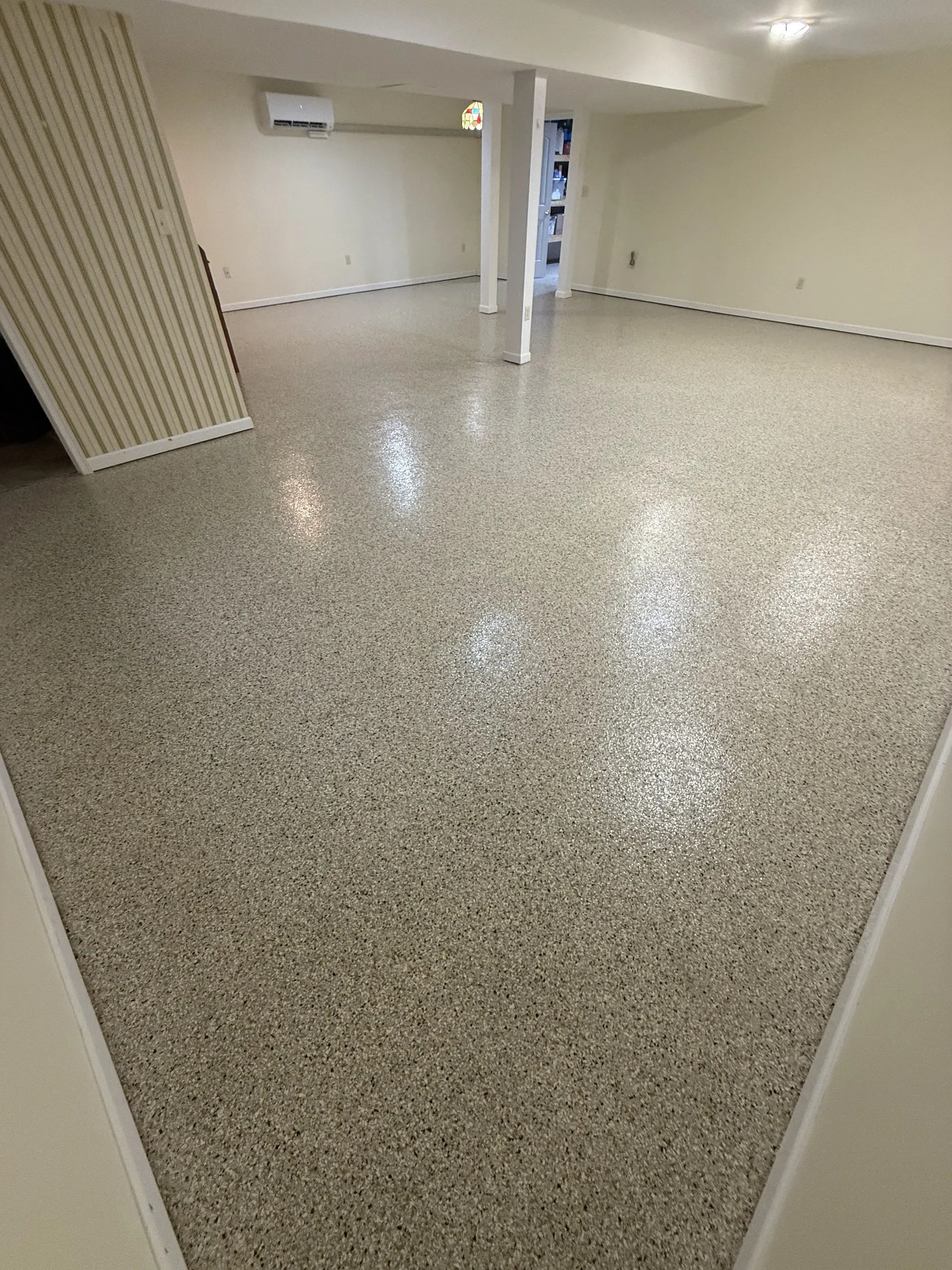
You can see this in our own photos: the same room bare and stained, mid-grind, freshly ground down to open concrete, and then coated. That sequence is the whole argument for mechanical prep in four pictures. More on the full system is on our basement floor coating page.
Because bare concrete below grade is a dust source and a stain magnet. It holds spills, it releases fine dust into the air continuously, and it cannot be cleaned properly. A coated slab wipes clean, does not hold odors, and takes a dropped weight or a rolling chair without marking. It also makes a basement usable as a room rather than as storage, which is the reason most people call us in the first place. Color and texture choices are on colors and finishes.
If your basement gets damp and you want a straight answer about whether it can be coated, get in touch. We would rather test it and tell you to wait than coat it and come back.
Three pages that answer the questions this article usually raises.
Diamond grinding, crack and joint repair, base coat, flake broadcast to rejection, two clear polyaspartic topcoats — in one day.
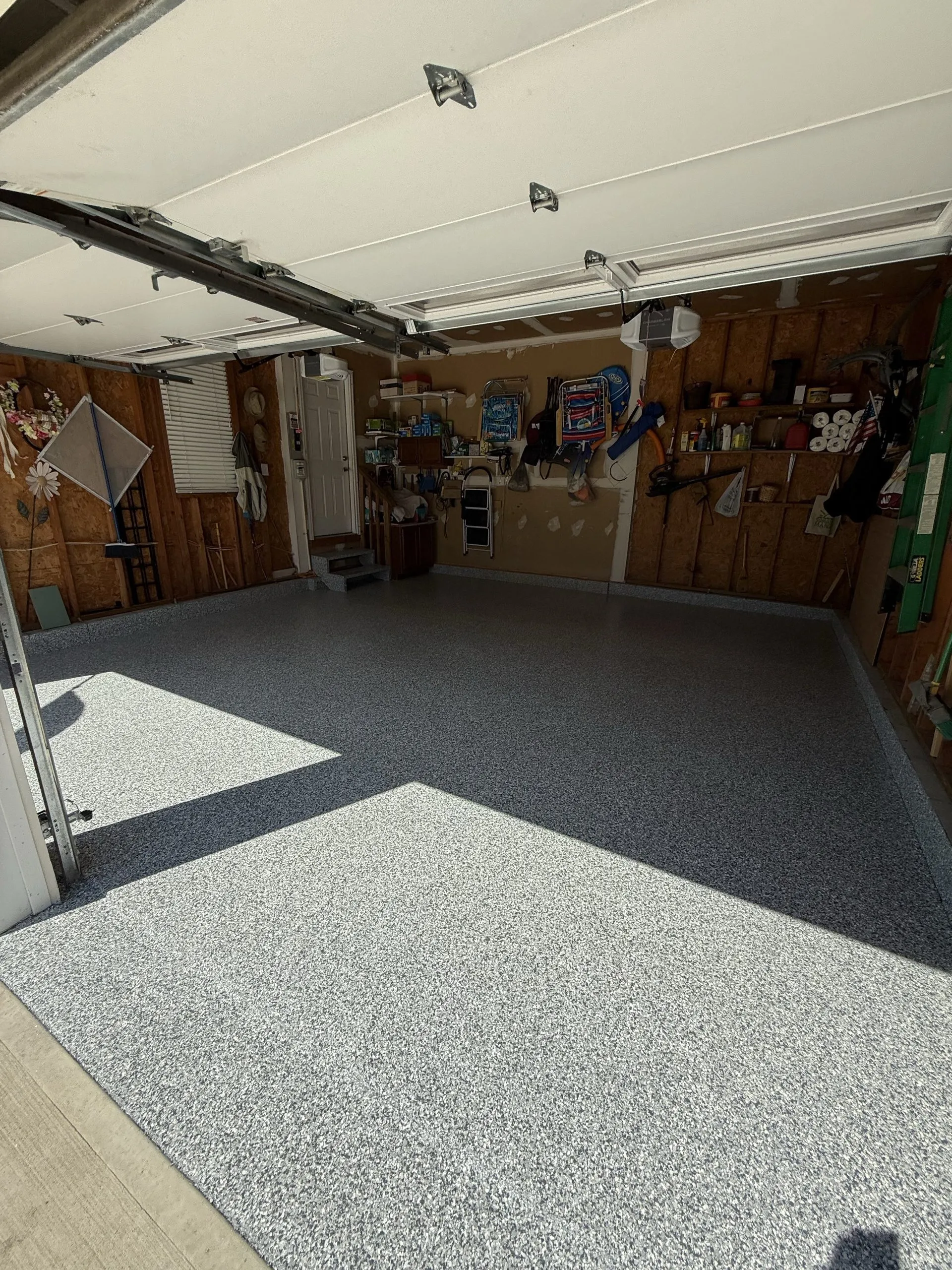
See the blends side by side and how each one hides dust, tire marks and the odd dropped wrench.
We measure the slab, check moisture and control joints, and give you a firm number at the estimate.
Tell us the room, roughly how big it is and when you want it done. We will measure, look at the slab and give you a price that does not move.

Polyaspartic concrete floor coatings installed in a single day across central Pennsylvania. Every slab diamond ground, never acid etched.
© 2026 Spartic Coatings. All rights reserved.
Serving Lancaster, Chester, Berks, Dauphin, York and Lebanon counties, Pennsylvania.