Polyaspartic is one of the most demanding materials in the industry. It cures fast, leaves no room for error, and rewards true craftsmanship. At Spartic Coatings, flawless results are the standard. Explore our decorative flake collection.
Ten signature colorways, from cool, classic grays to warm earth tones and bold statement blends. Every one is installed in true polyaspartic over diamond-ground concrete and backed by our lifetime residential warranty. Flake reads differently across a whole floor than on a small chip, so we bring physical samples to your estimate.
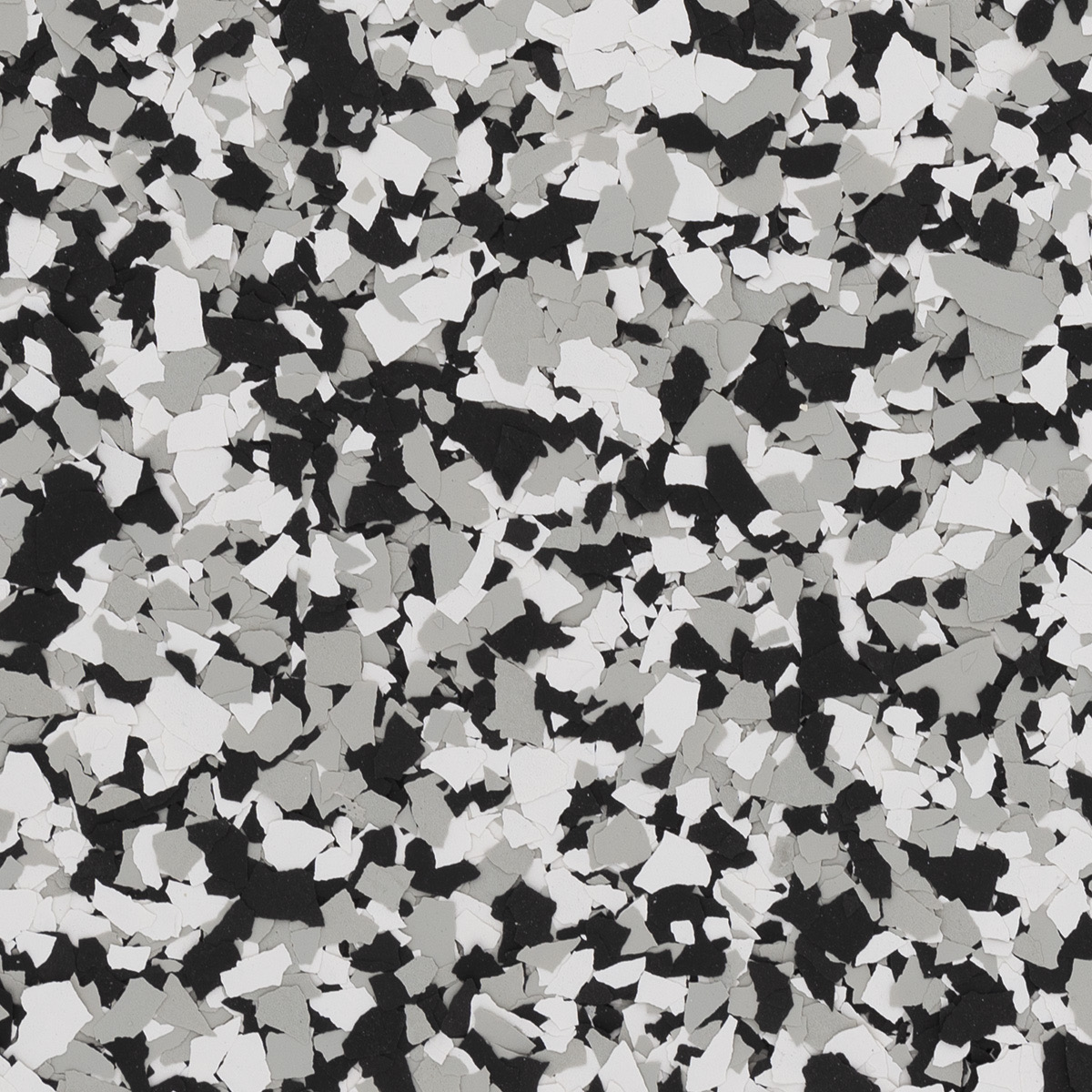
Bold black, gray & white contrast. The highest-contrast blend we install. Best at hiding marks, road salt and grinding dust. Holds up visually in a hallway or entry that takes constant traffic.
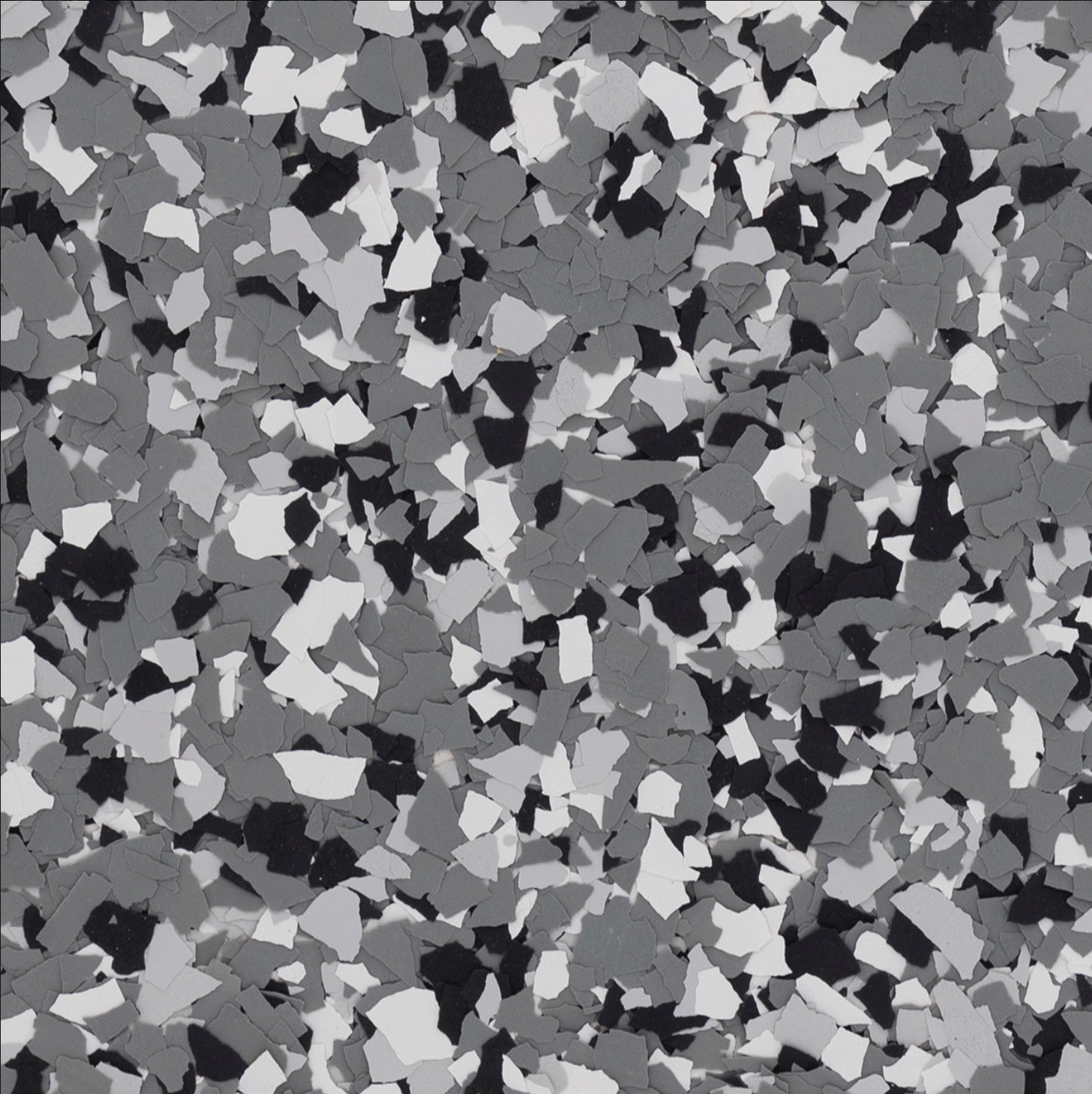
Medium grays, black & white blend. The safest all-round choice for a working garage. Popular because the blend reads clean but dust and dry footprints disappear into the mid-gray base.
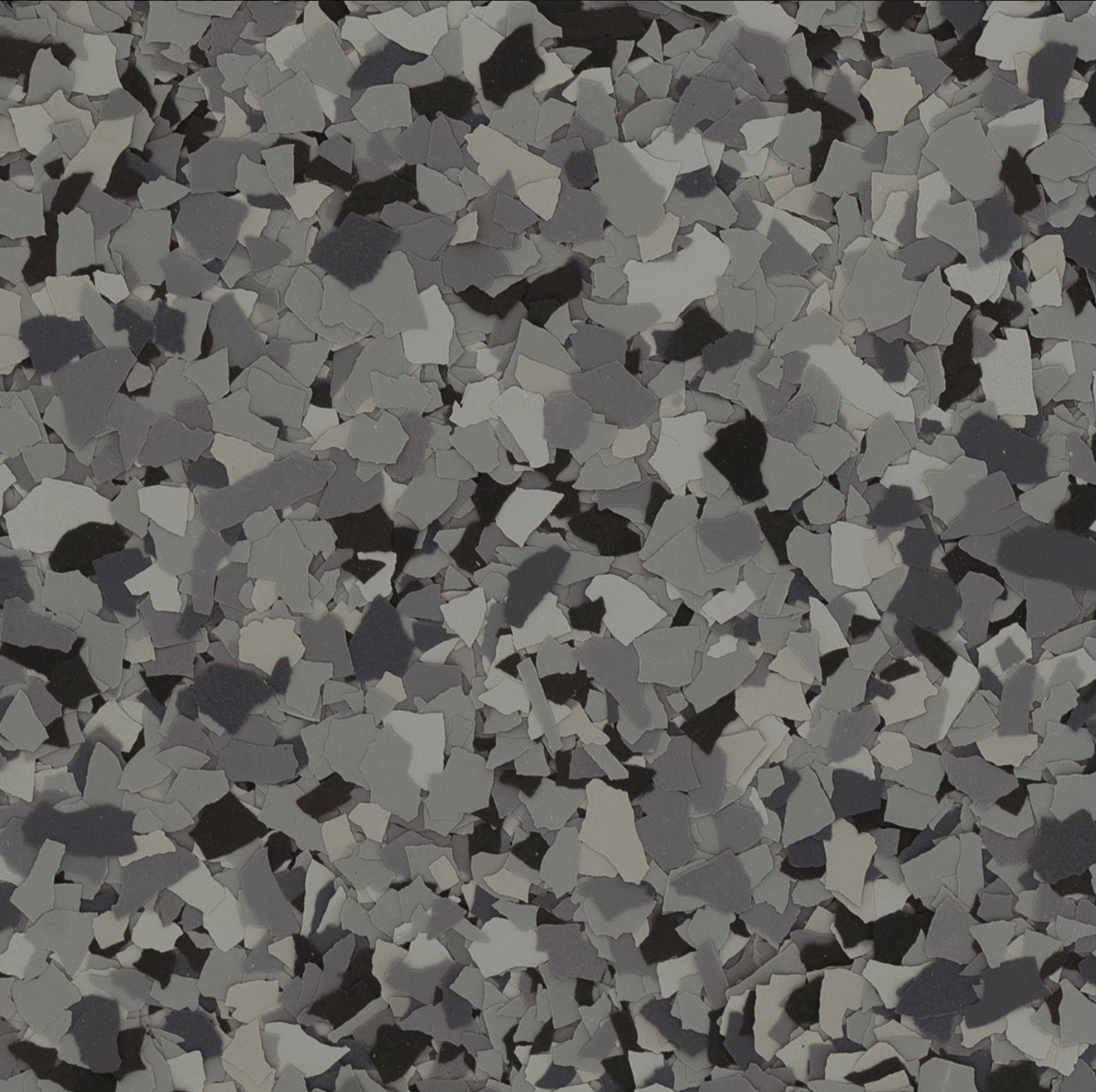
Deep charcoal, slate & white. Reads modern and makes white walls and cabinets pop, with just enough white flake to keep from looking flat. Looks excellent in a finished garage or man cave.
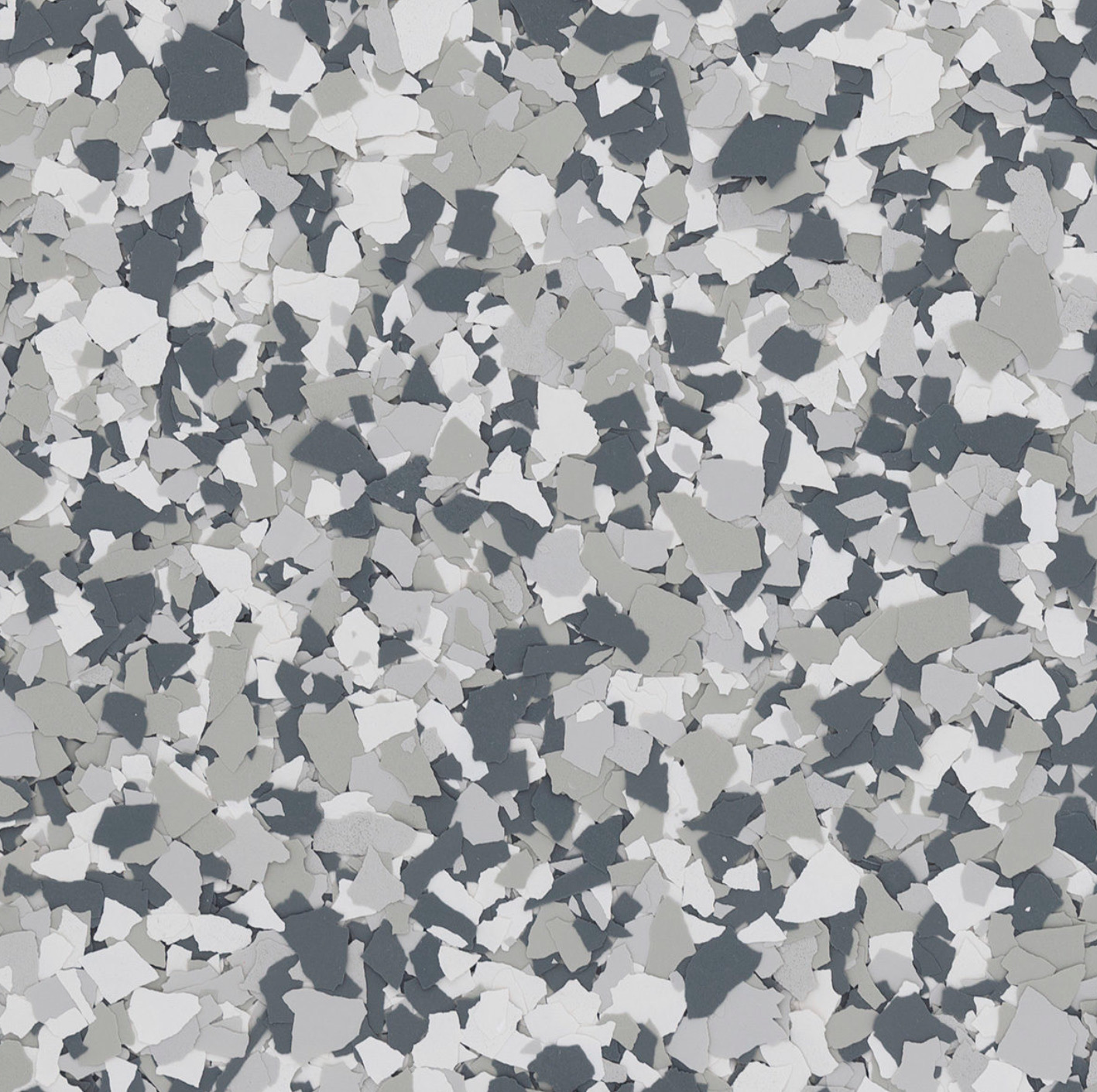
Slate, steel gray & crisp white. The light base bounces light around and makes a dark or north-facing basement feel bigger under the same fixtures, while the slate flake keeps it from looking washed out.
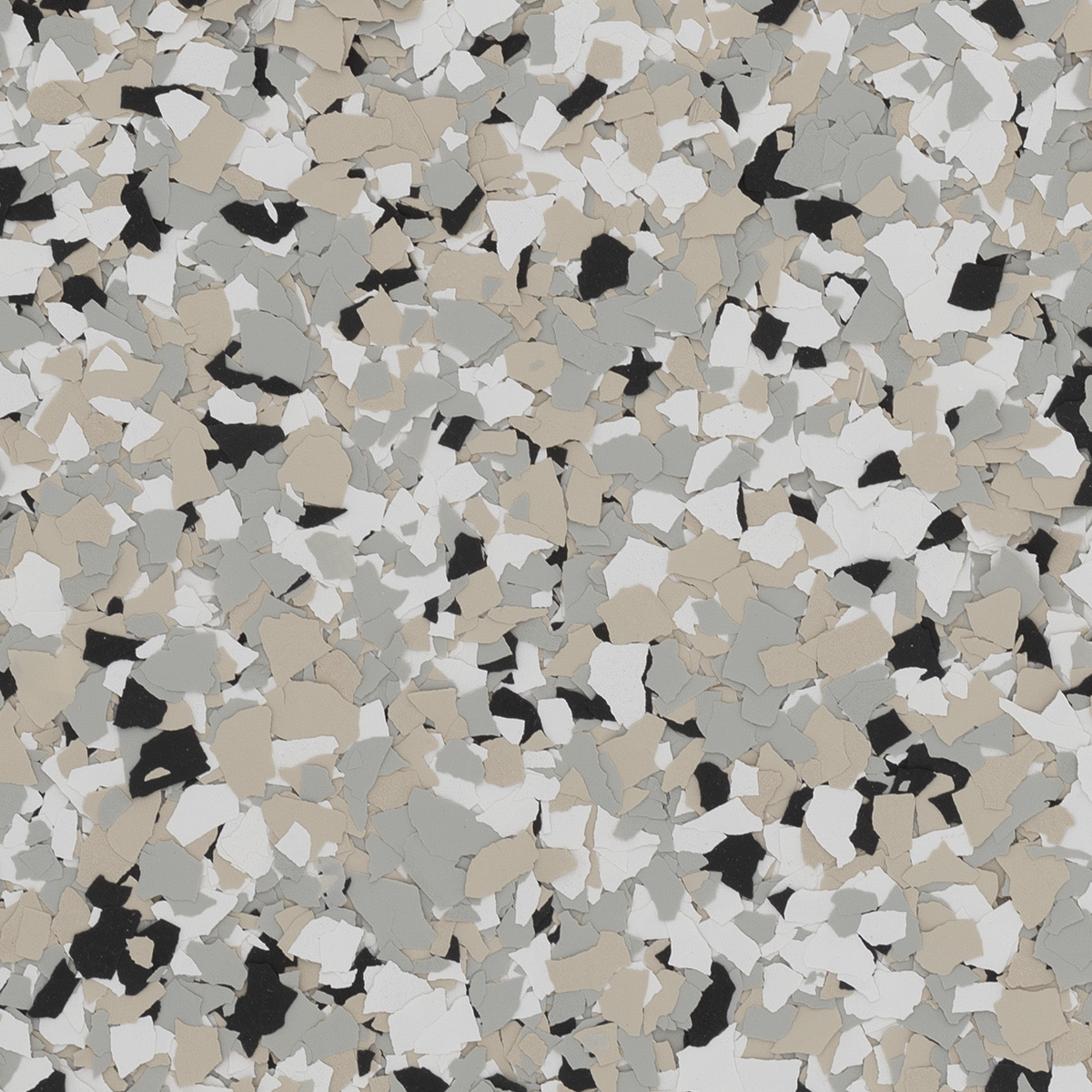
Cool grays, taupe, black & white. The taupe warms a gray floor just enough to sit comfortably next to both cool gray walls and warm wood. An easy pick for a garage that doubles as a workshop or home gym.
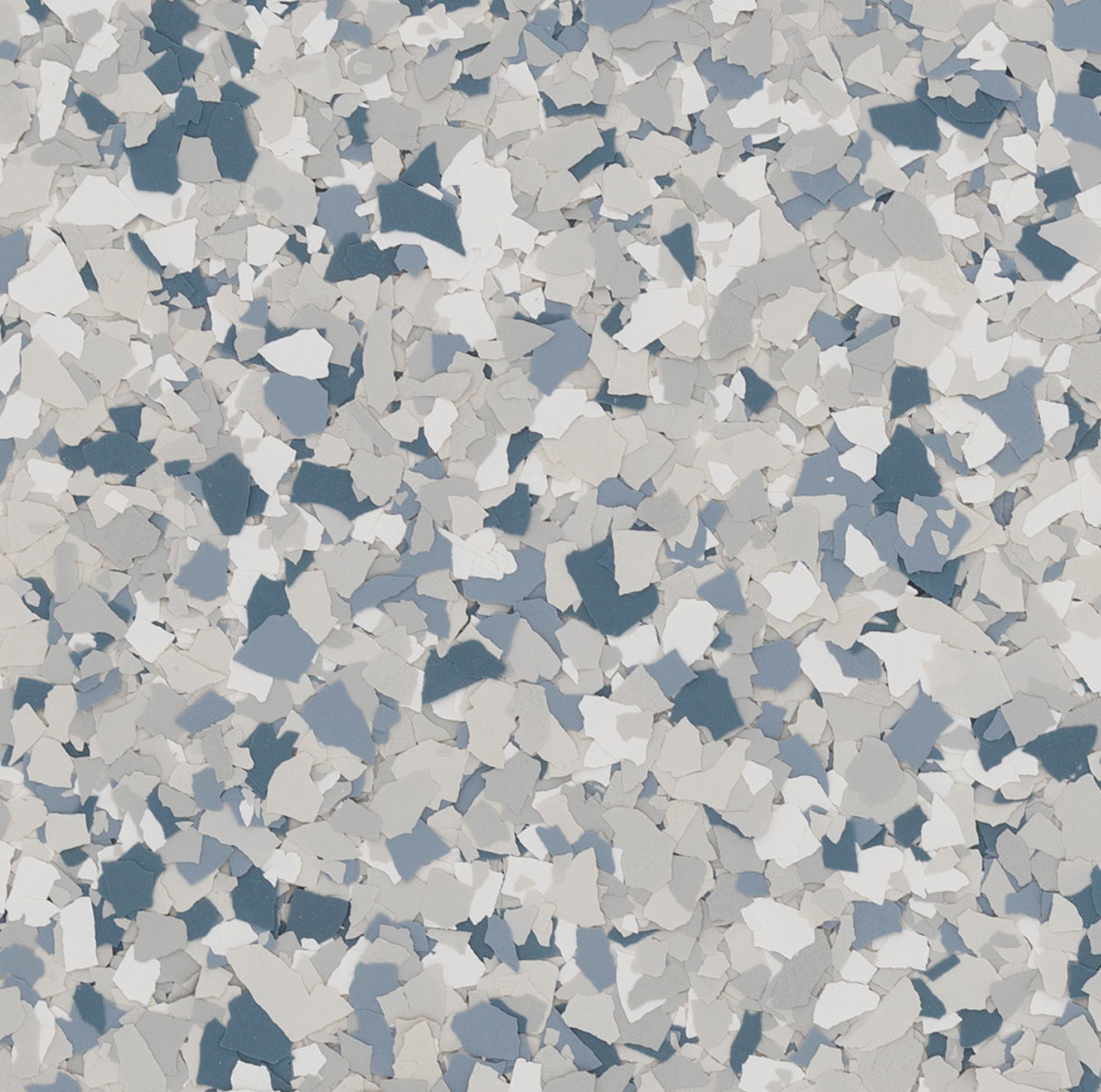
Slate blue, cool gray & white. The lightest floor blend we install. A blue-gray flake keeps a pool deck visually cool, and the light base reflects heat rather than soaking it up.
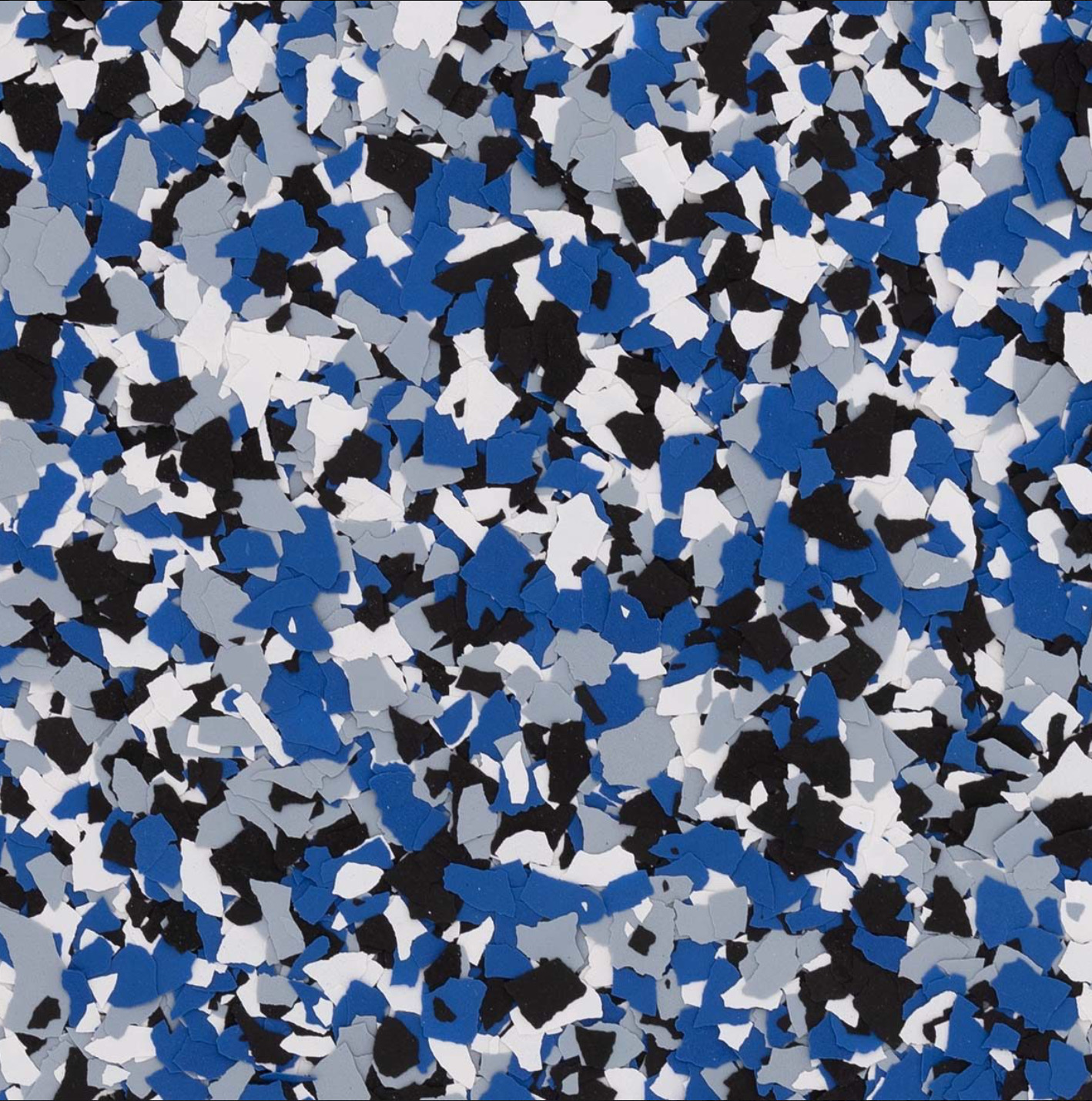
Cobalt blue, black, gray & white. The boldest blend in the collection, made for a floor that’s meant to be noticed. Looks great for a garage, game room, or a space done in team or brand colors.
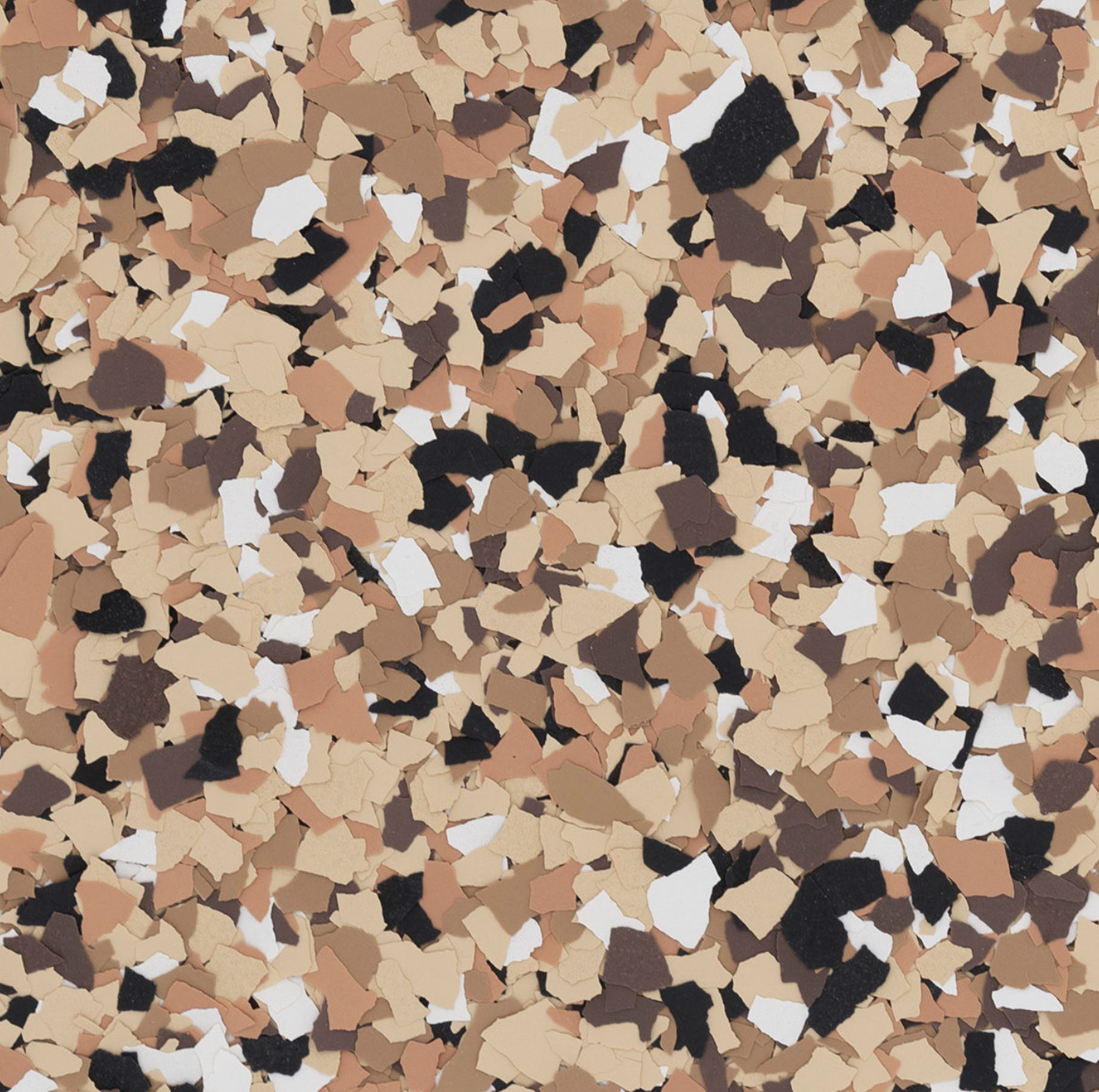
Warm tans, browns, black & white. The mix settles into a soft mid-tone that carries from a patio into an interior living space without a jarring change at the door. The warm base hides sand and dry soil well.
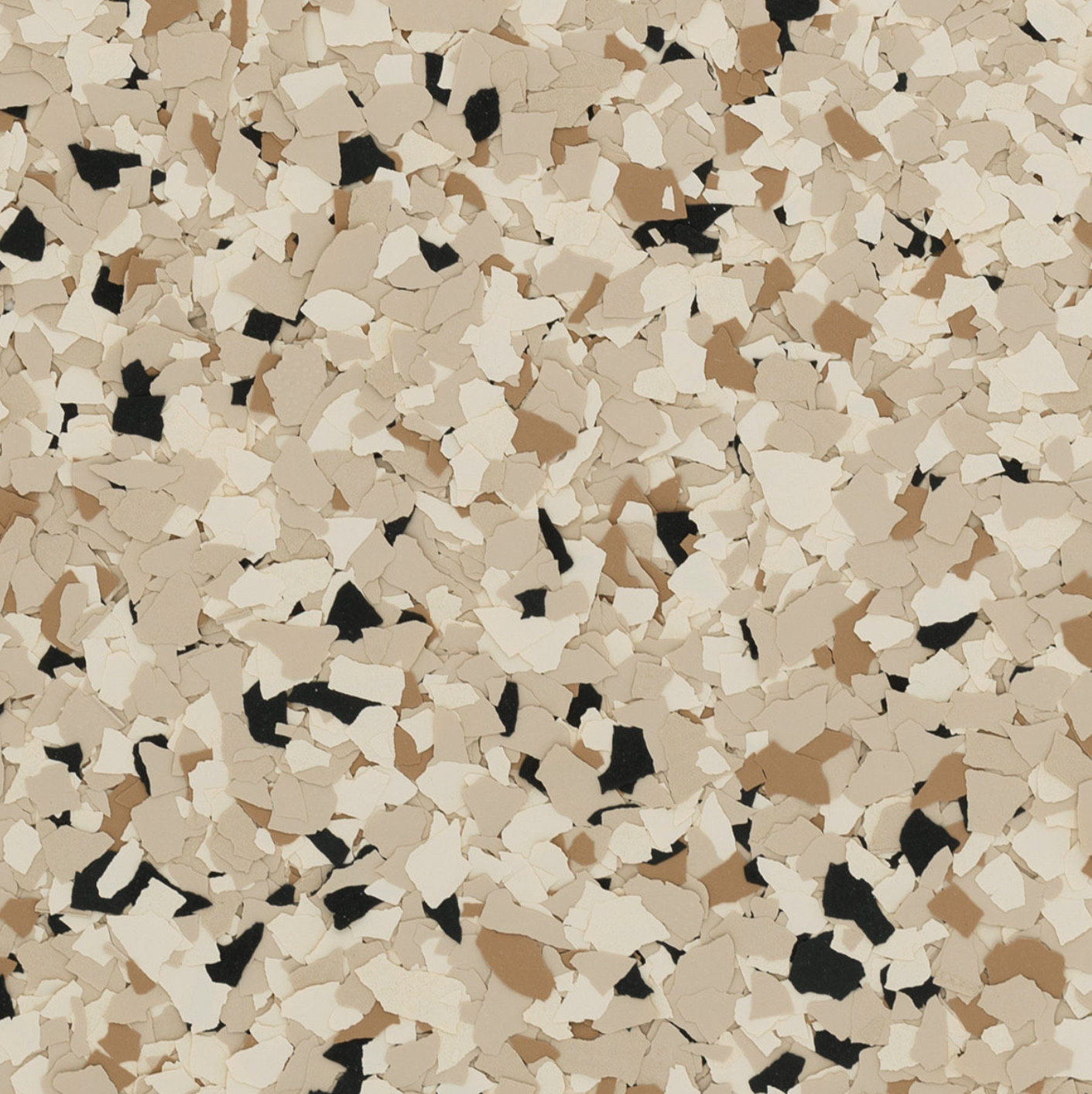
Warm cream, tan, black & white. The low glare means overhead lights don’t throw a hot spot across the floor, in photos or in person. Sits well next to wood or cream cabinetry, and its warmth hides dry dust.
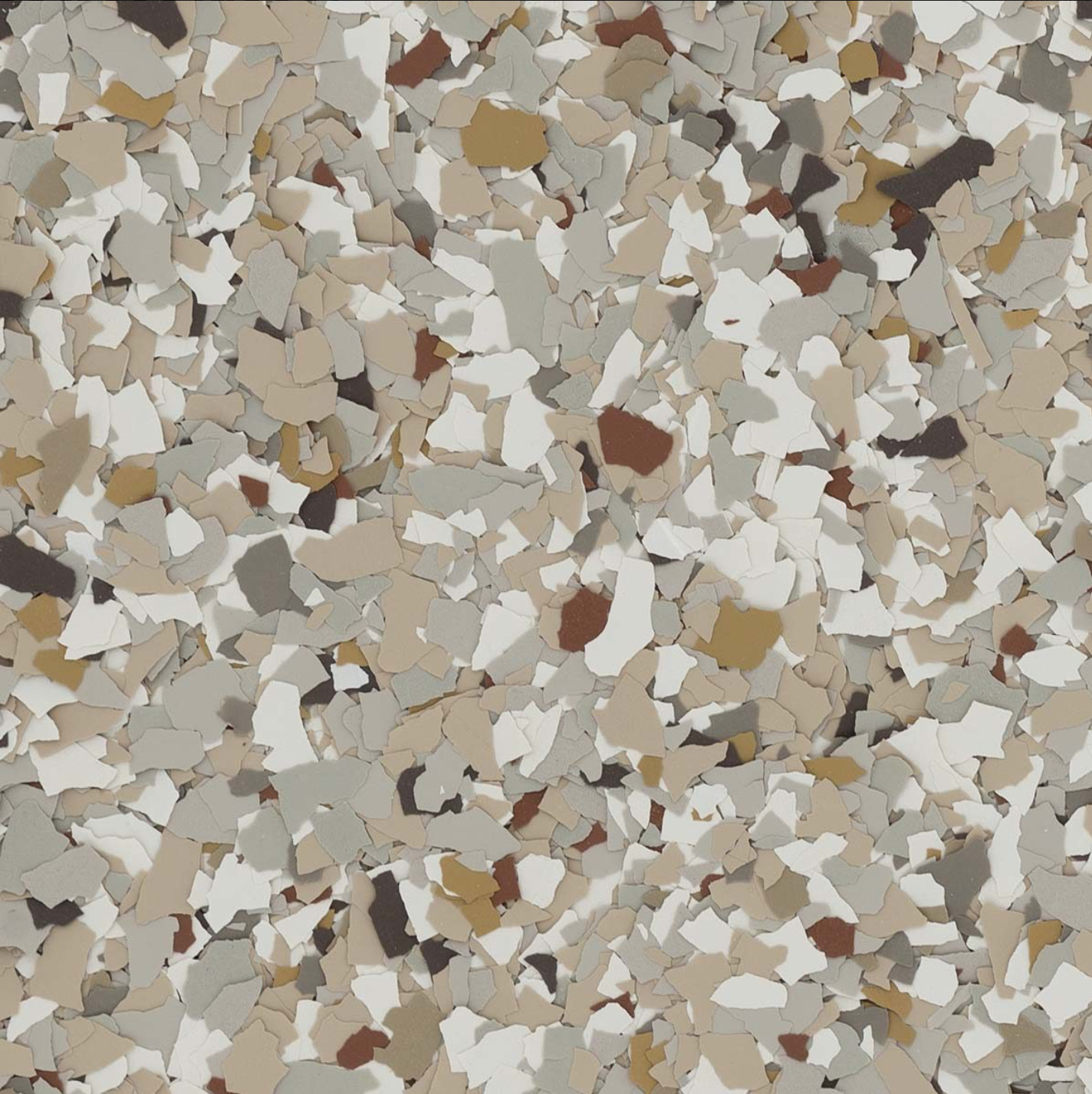
Earthy tones, sage, rust & white. Tan and gray together, so it stays neutral without going cold. Useful middle ground when the walls are warm but the cabinets are not. Stone-like mix is forgiving for outdoors.
The names above are descriptive — they are our shorthand for the tone each blend reads as, not catalog product names. Flake blends get discontinued and reformulated, so the only reliable way to pick is with the real thing in your hand. We bring physical samples to the estimate.
Most people start from what they like on a screen and end up somewhere else once they think about the room. These are the rules that actually decide it.
Gloss is set by the clear topcoats, not by the flake, so it is a separate decision from color. Each level trades something away.
Reflects the most light and makes the flake look deepest, almost like it is under water. The trade-off is that it also shows scuffs, dust and dry footprints most clearly. Best in a finished, well-lit space you keep clean.
A softer sheen that still lifts the color without the mirror effect. It is the middle option and the one most people land on, because it hides day-to-day marks while still looking finished.
Hides marks, dust and scuffs better than anything else. The trade-off is that the flake reads flatter and the color loses some depth — a matte floor looks more like stone and less like a coating.
Aggregate mixed into the final clear coat, which adds grip and knocks the sheen down slightly. We specify it anywhere the floor gets wet: pool decks, patios, basement entries and garage bays where snow comes in on the car.
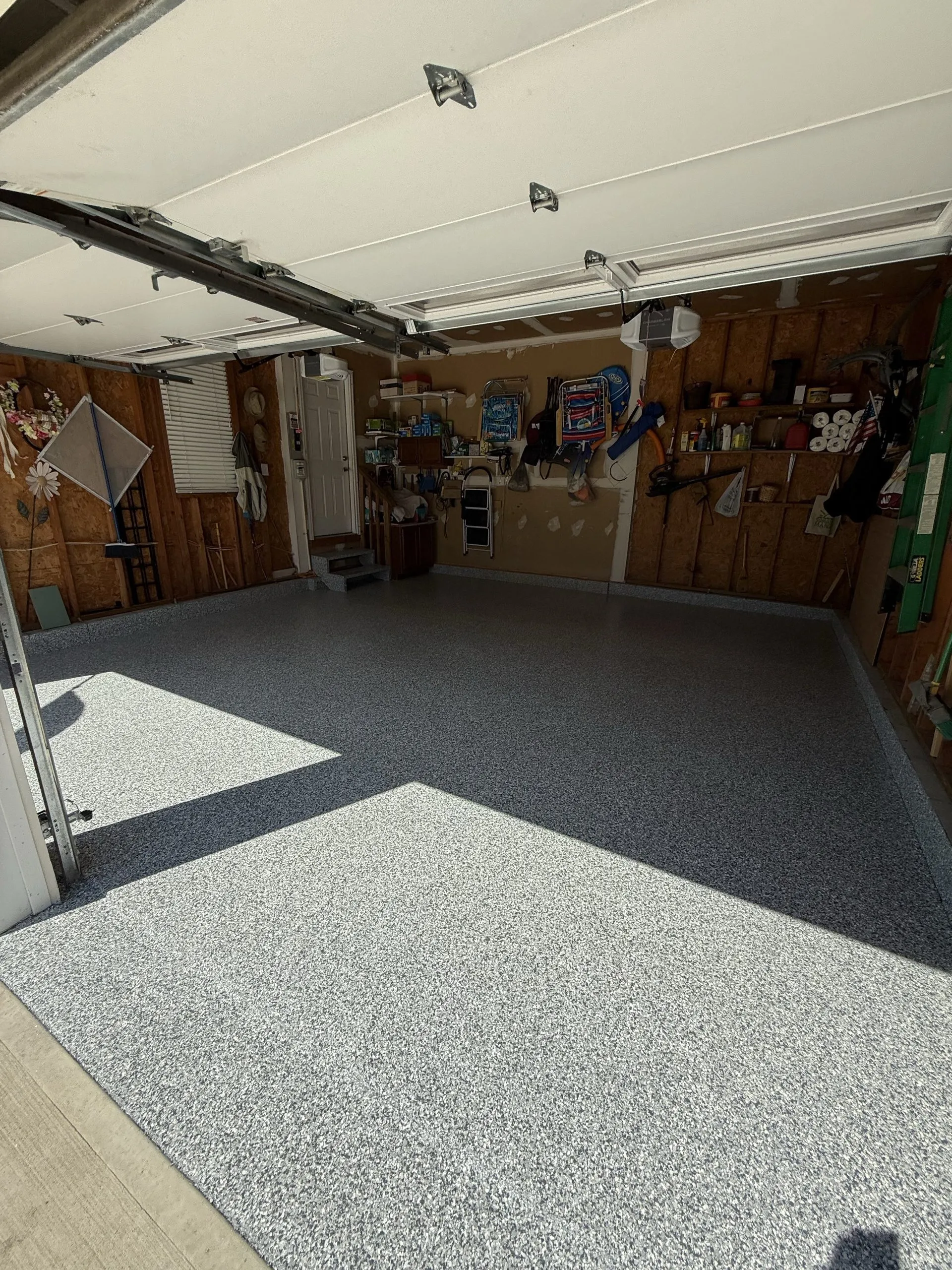
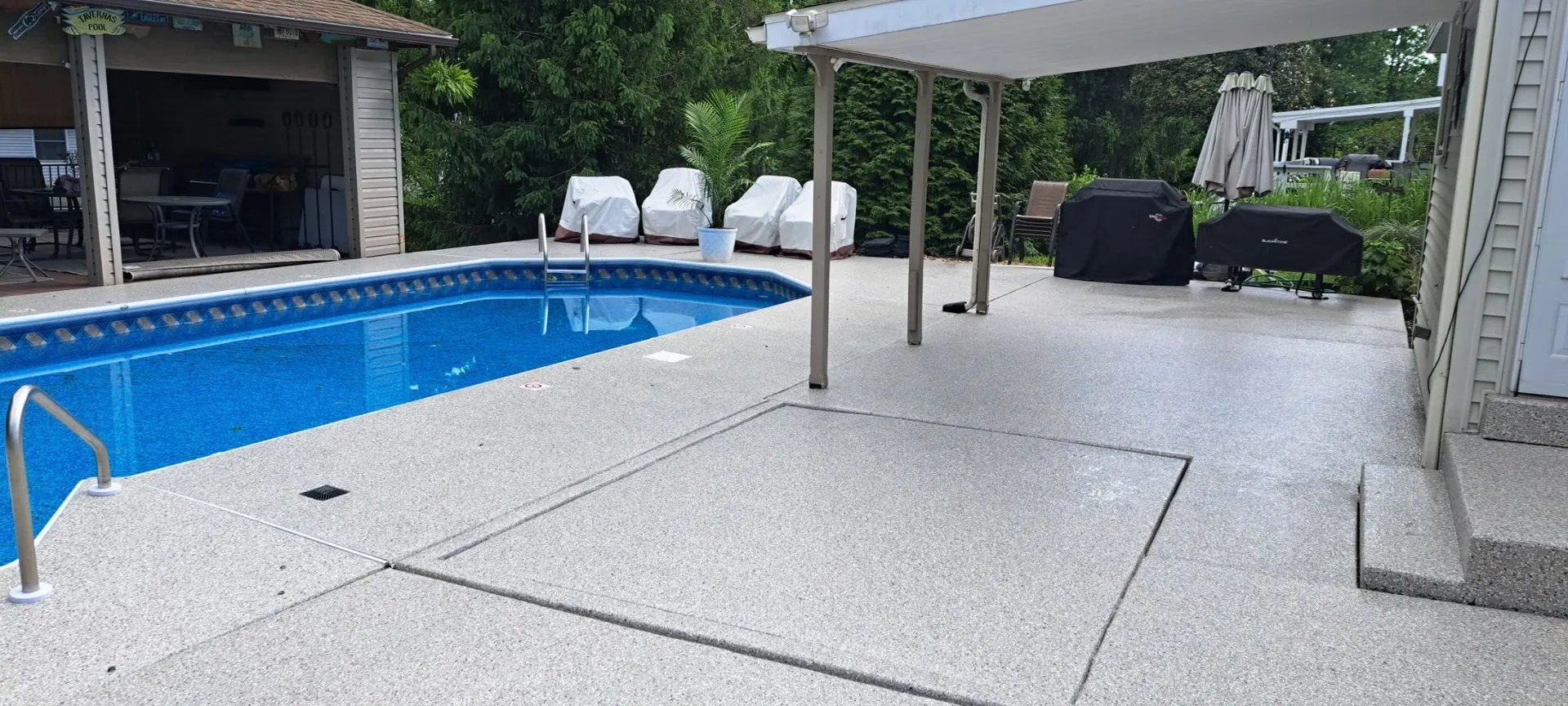
Flake colors can look different on a full floor than they do on a small sample. Use these installs to see how each blend looks in garages, basements, pool decks, kitchens, and bathrooms.
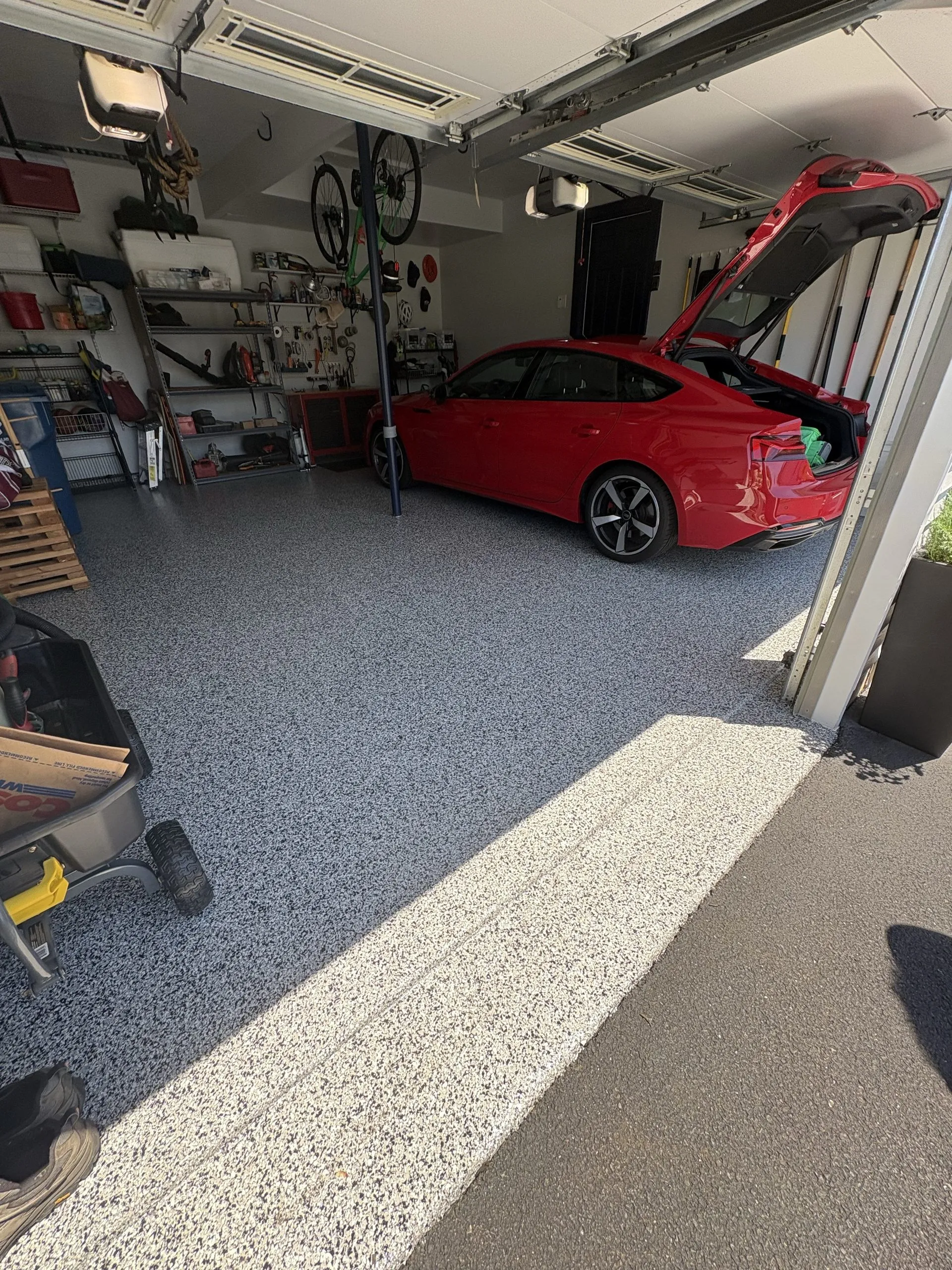
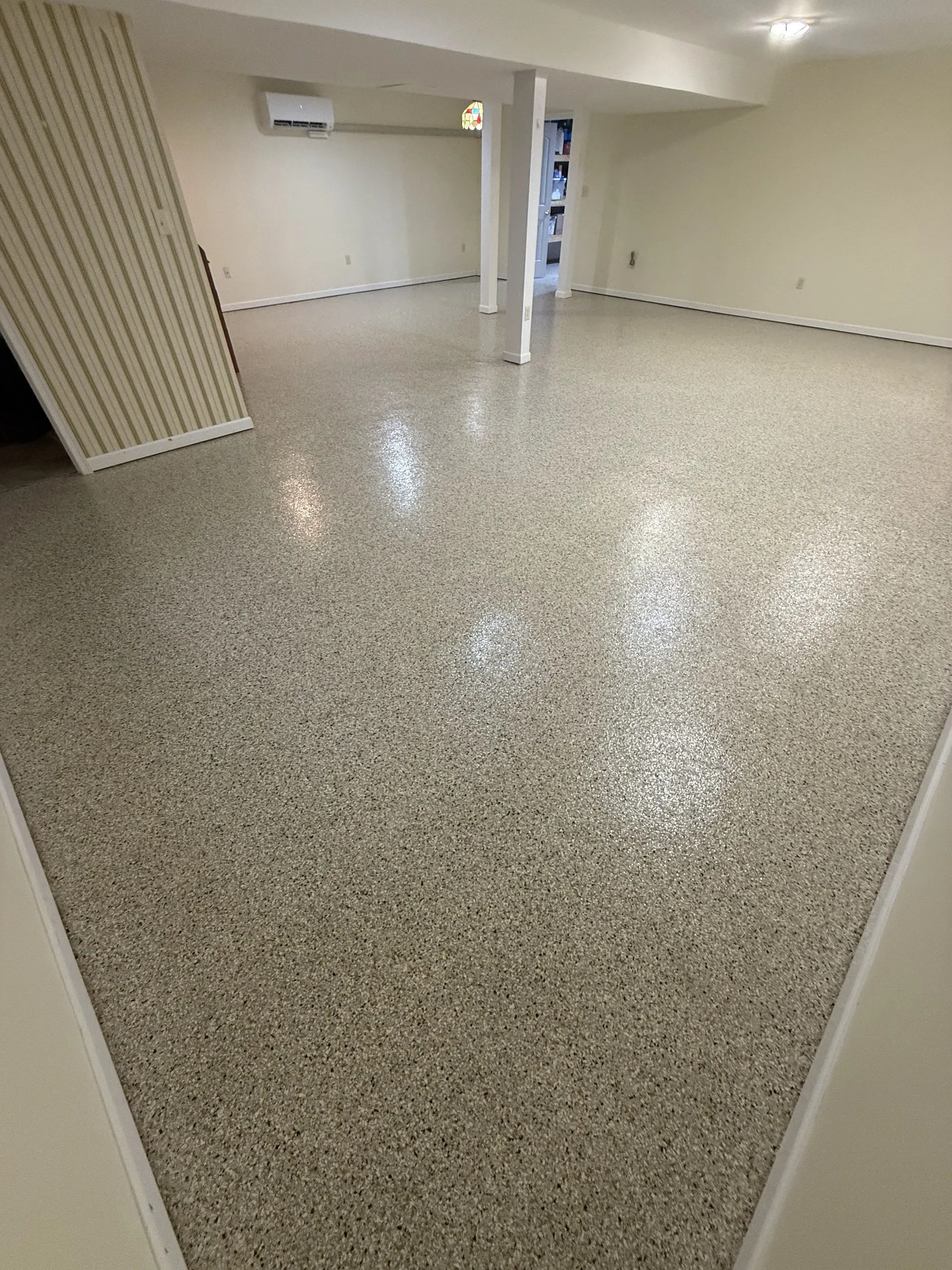
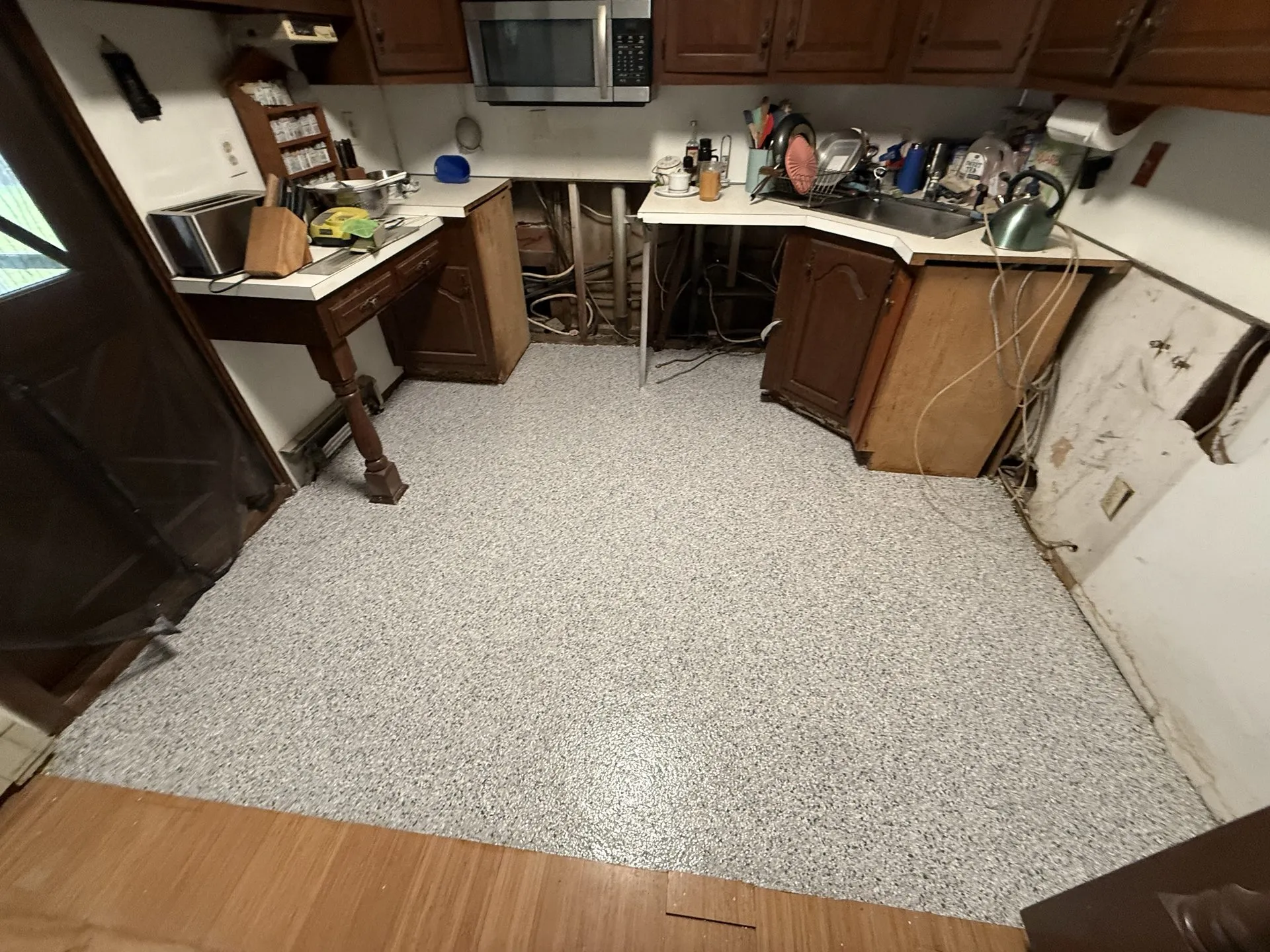
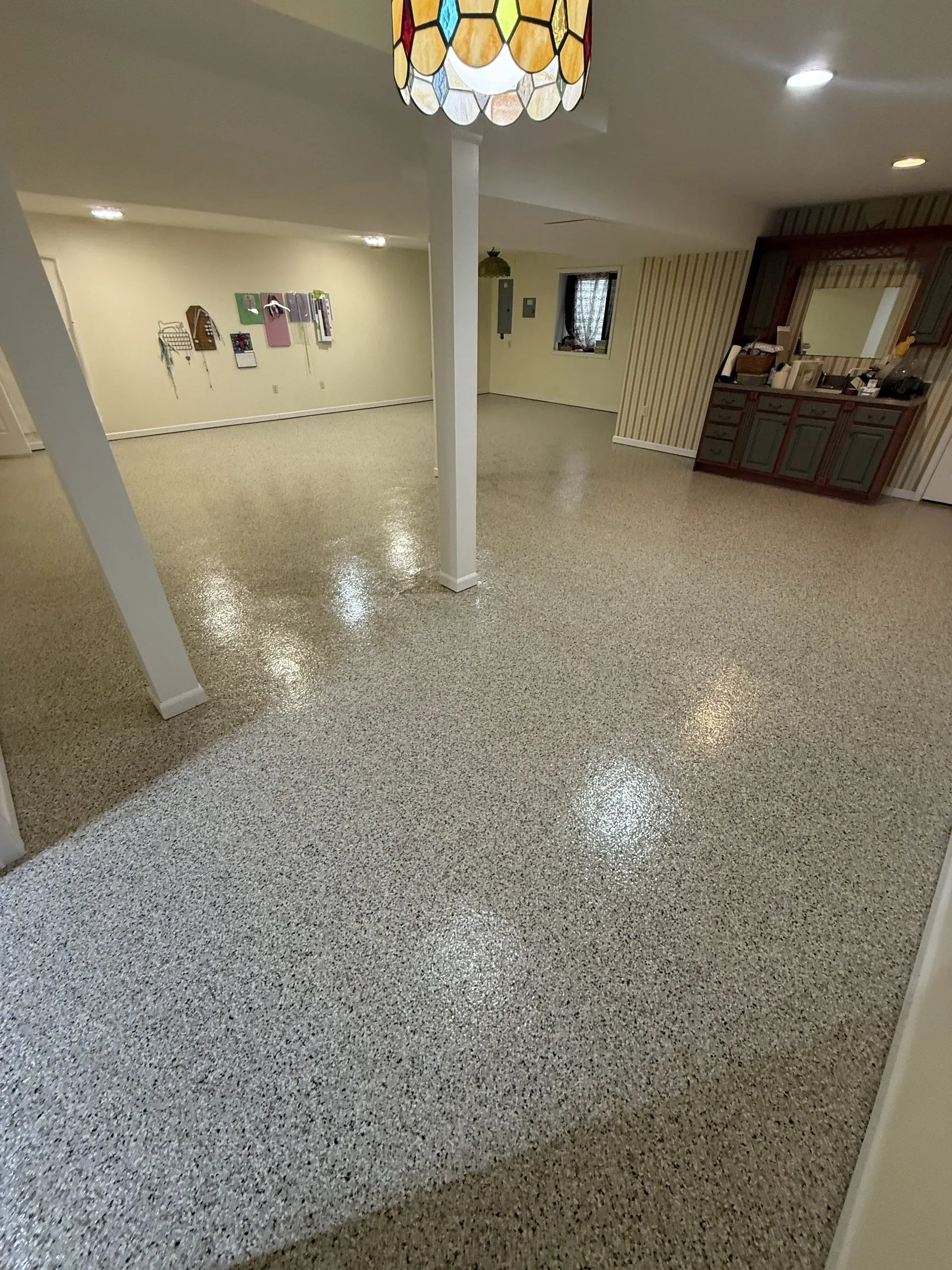
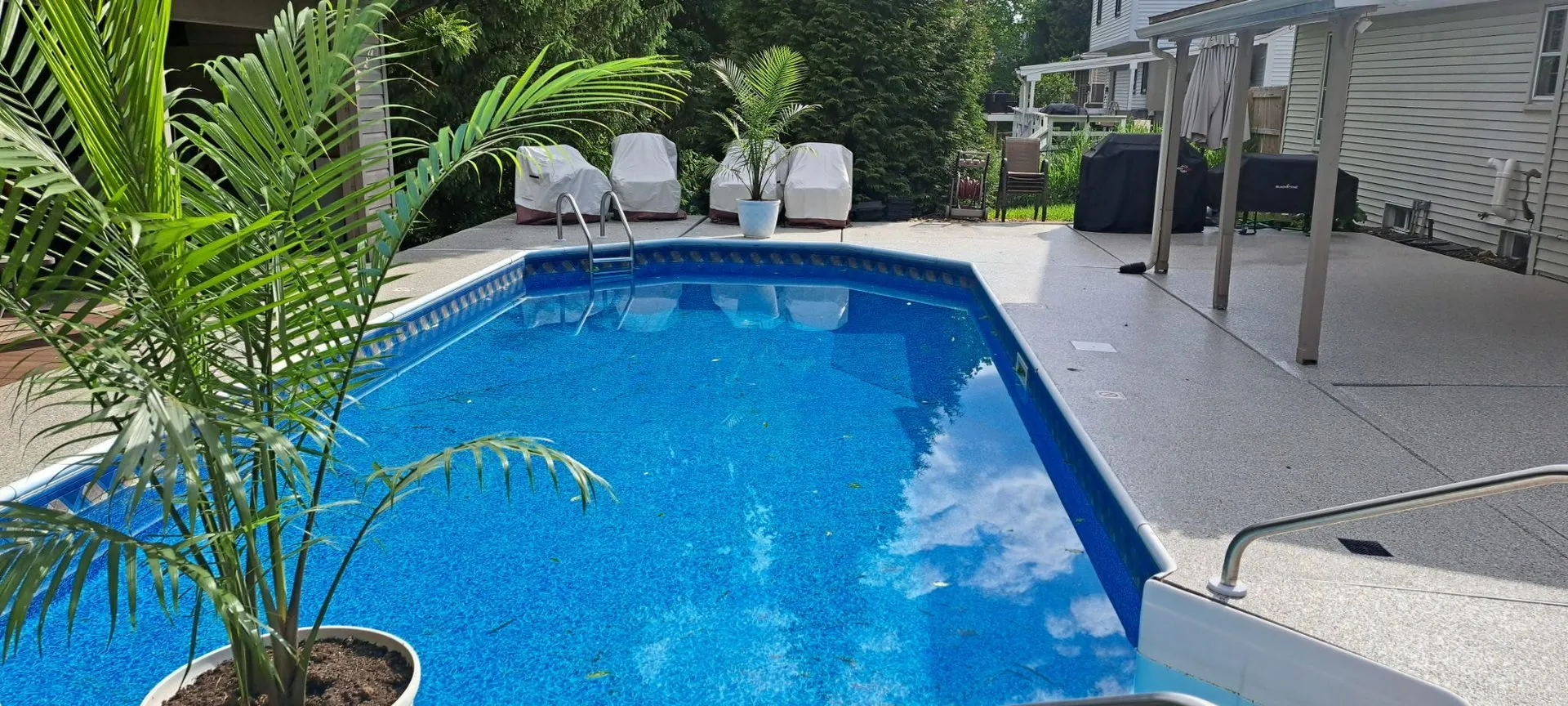
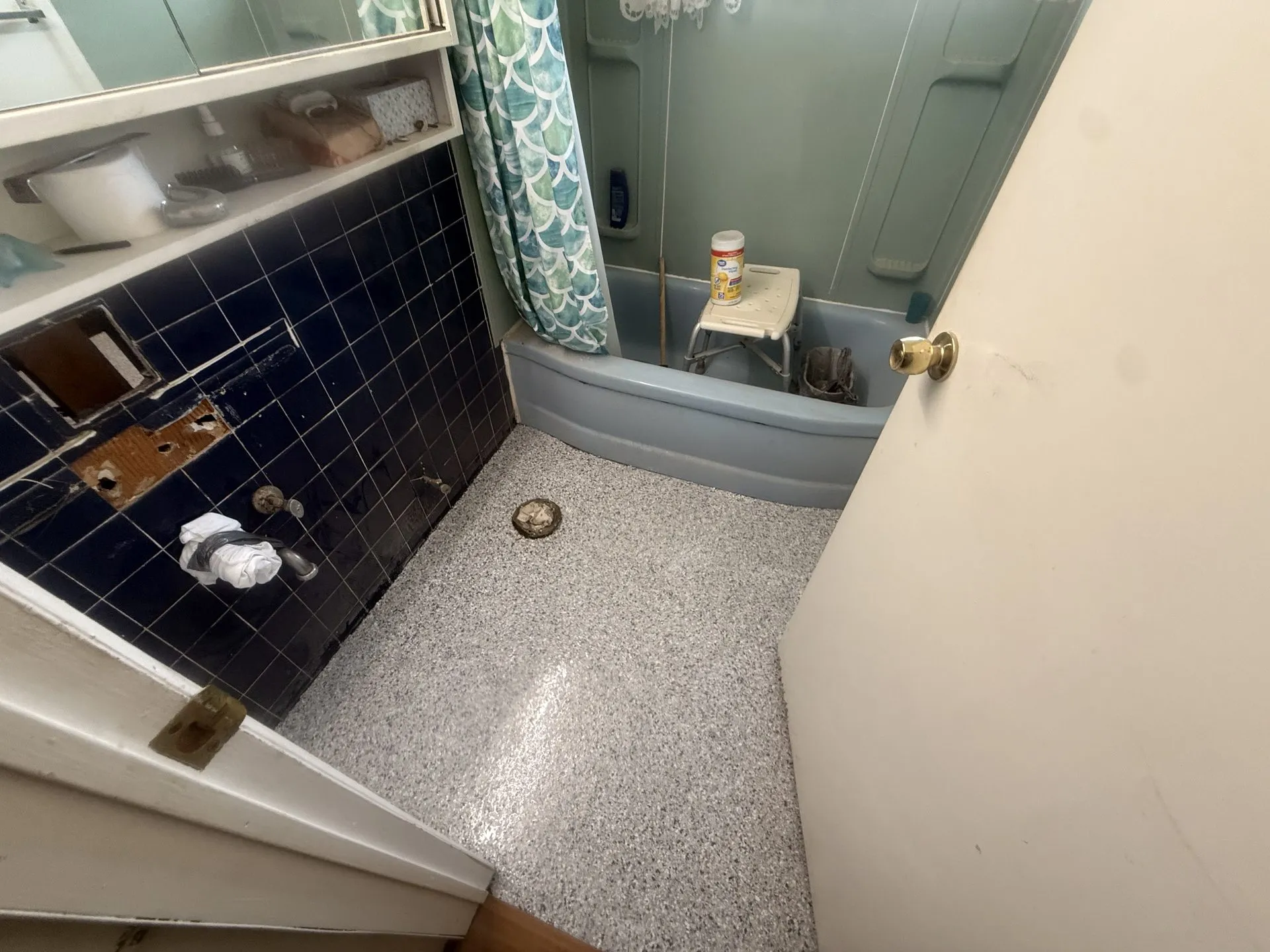
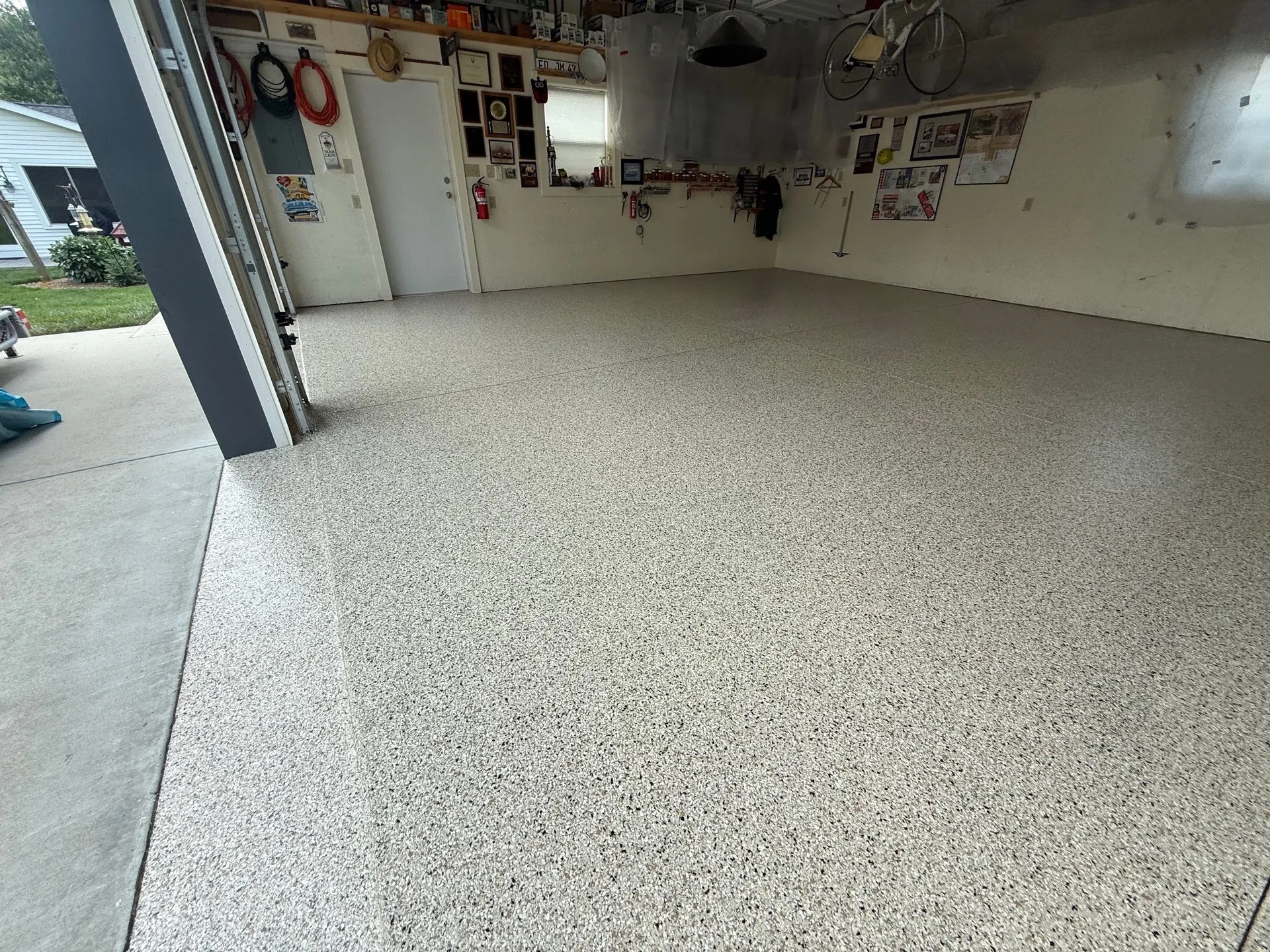
A blend on a screen is a guess. A blend on your own slab, in your own light, is a decision.
We bring physical samples to the estimate and put them down on the floor they are going to cover. Then we look at them in the actual light of the room — with the door open and with it shut, with the overhead light on and off. That sounds fussy until you have seen it: flake reads differently under a single garage bulb than it does under daylight coming in the open door, and a blend that looked cool gray on a laptop can come back faintly blue or faintly brown depending on which bulbs are in the ceiling.
The other thing samples settle is scale. Flake size and density change how busy a floor looks, and a blend that reads calm on a small chip can read noisy across a whole two-car bay. Standing over a sample on your own slab, at the distance you will actually see it from, sorts that out in about a minute.
We will also tell you what your slab can take. Some floors need patching, and a patched area sits differently under a light low-contrast blend than under a busy one — so sometimes the honest recommendation is the blend that hides your particular slab, not the one in the photo you liked. The prep side of that is written out on how it works, and if you are still weighing the coating itself, see polyaspartic vs epoxy.
Every blend on this page can go anywhere we coat. Only the anti-slip specification changes.
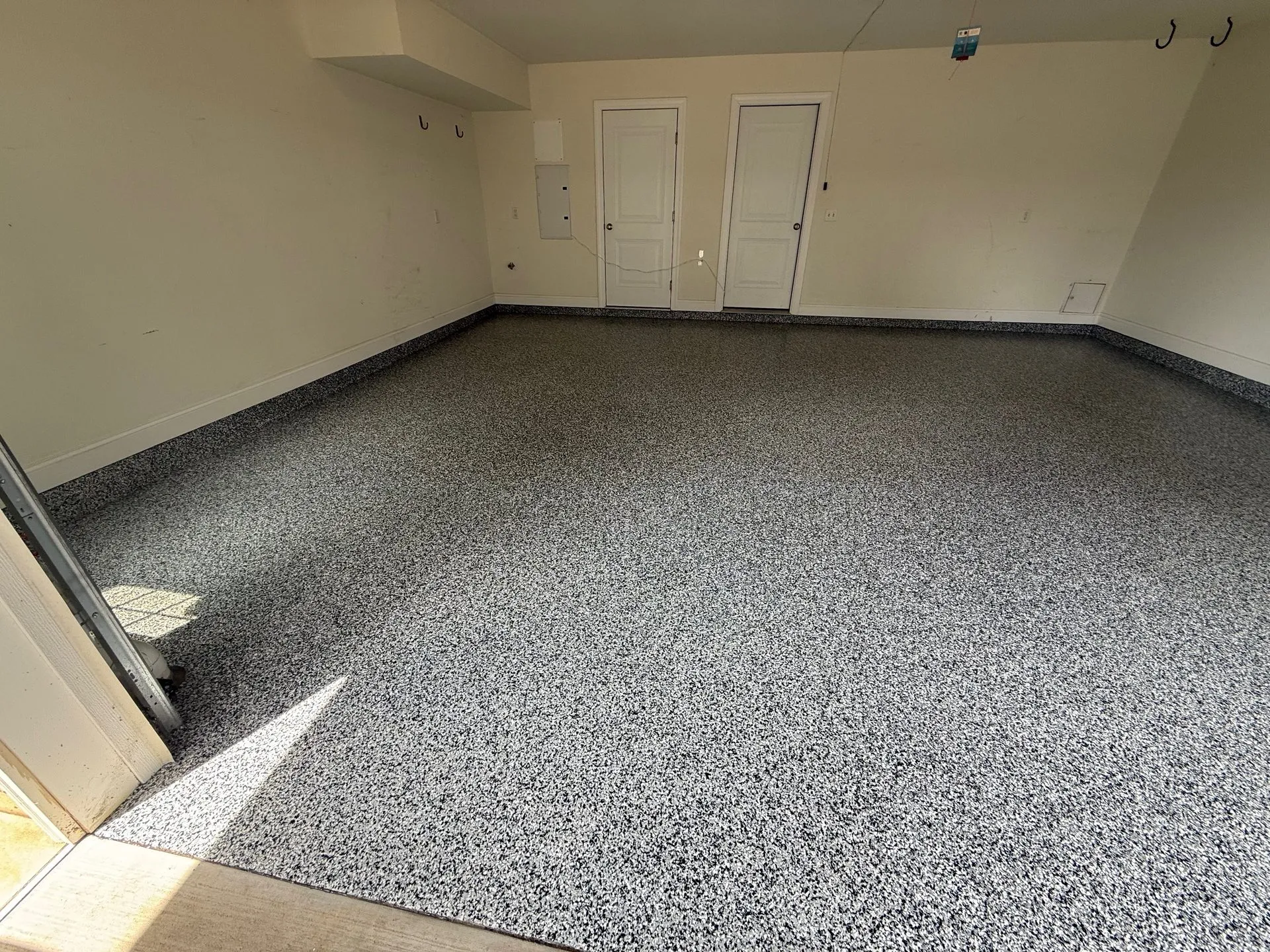
High-contrast blends earn their keep here, and the apron takes direct sun all summer.
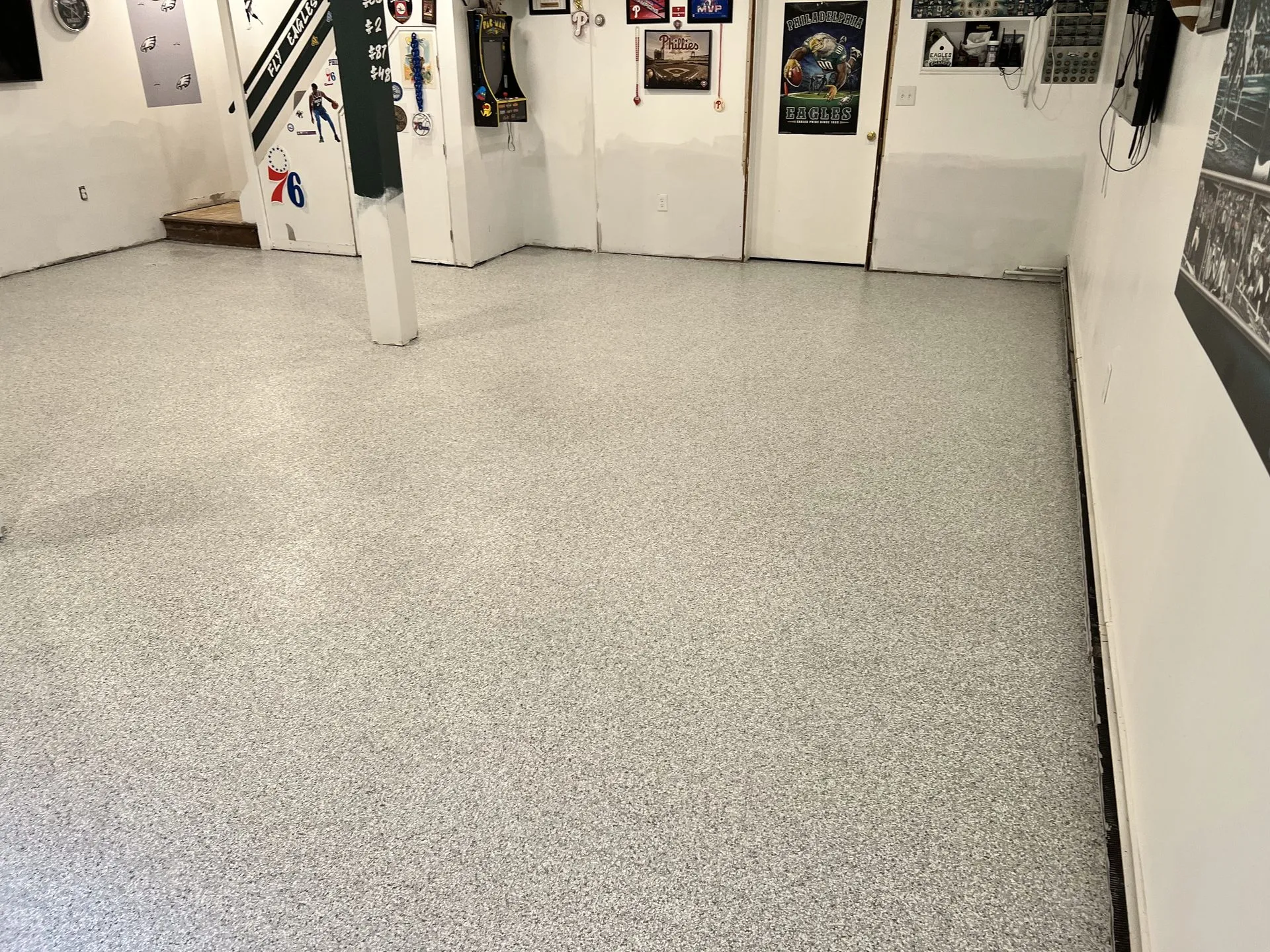
Light blends do the most work below grade, where there is no window to help you.
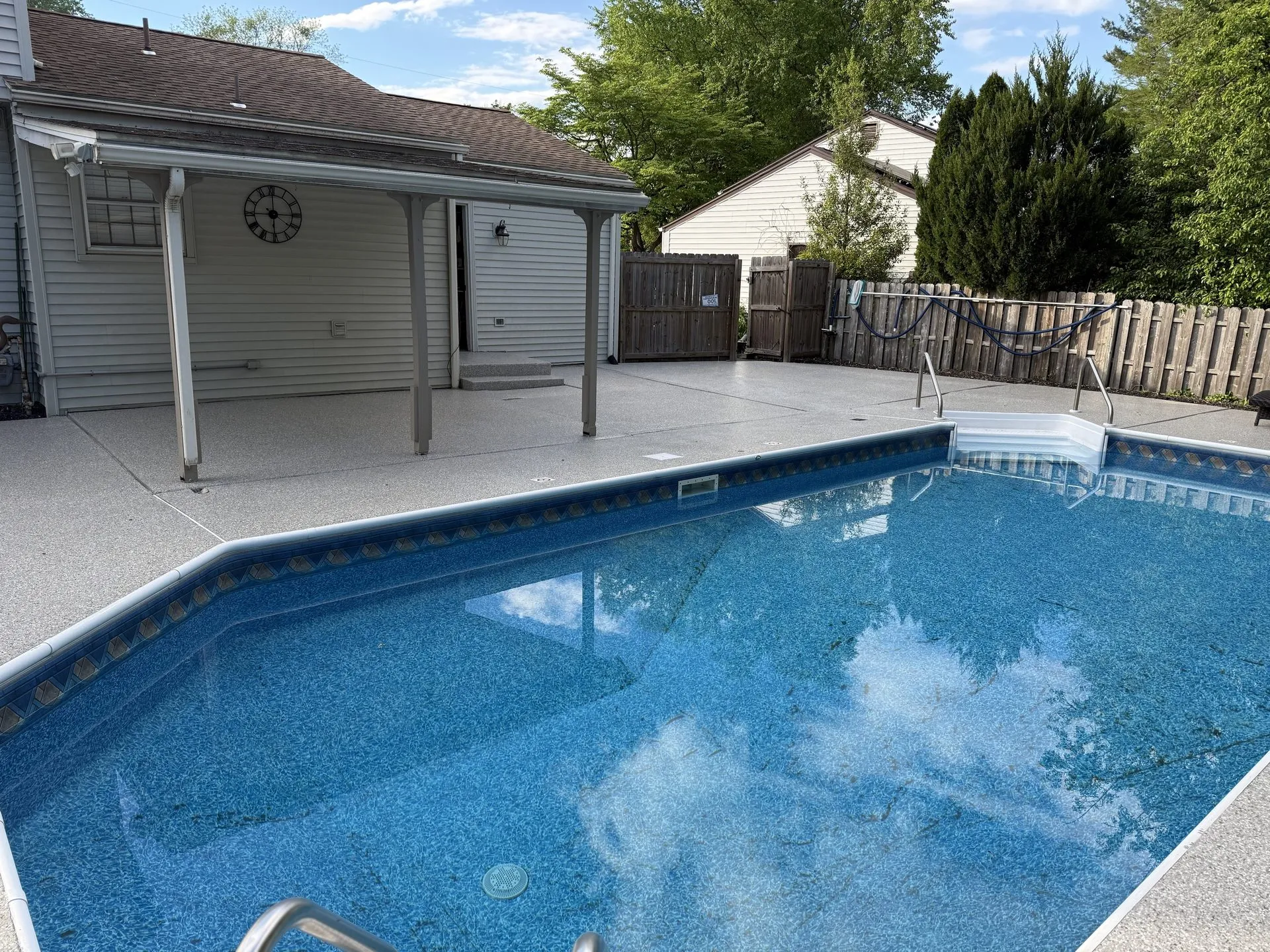
Anti-slip aggregate is standard, and UV stability is why the color still matches in year five.
We can get close, and we are honest about what close means. Flake is a blend of discrete colored chips, not a mixed paint, so it cannot be color-matched to a code the way a wall can. What we do instead is bring samples, hold them against the cabinet door or the adjoining floor, and pick the blend whose overall tone sits with it. In practice that gets you a floor that clearly belongs in the room, which is what people actually want — an exact match would look odd anyway.
Yes. A border is a different blend run around the perimeter or along the apron, masked off before the flake is broadcast. Two-tone works the same way — commonly a darker band framing a lighter field, or a separate color on a step or landing. It adds masking time to the install, so mention it at the estimate rather than on the day, and we will show you where the line should fall.
No. Polyaspartic is UV stable and does not amber, so the clear topcoats stay clear instead of yellowing over the flake underneath. That matters most on the garage apron and on a pool deck, where part of the floor gets direct sun and the rest does not — with a coating that ambers, you end up with a visible line between the sunlit strip and the shade. This is the single biggest visual difference between the two chemistries, and it is covered on polyaspartic vs epoxy.
More than the ten shown here, but not unlimited. Flake comes in standard blends from the manufacturers we buy from, and those blends change as products are discontinued and reformulated. The ten in our Decorative Flake Collection are the colorways we install most and the range most people choose within. If you want something outside them, ask — we will tell you at the estimate whether it is available in a blend we can stand behind.
Yes, and you should. We bring physical samples to every estimate and lay them on the slab they are going to cover so you can see them in the room's own light. Nothing gets ordered until you have done that. If you want to see finished floors first, there are more on projects.
There is a slight texture, not roughness. Flake is broadcast by hand to rejection, so the surface has a fine grain to it, and the two clear topcoats fill between the chips and smooth the profile considerably. Most people describe a finished floor as barely textured — comfortable in bare feet on a basement floor or a pool deck. Where we add anti-slip aggregate the texture is deliberately more noticeable, because that is the point of it.
Tell us the room, roughly how big it is and when you want it done. We will measure, look at the slab and give you a price that does not move.

Polyaspartic concrete floor coatings installed in a single day across central Pennsylvania. Every slab diamond ground, never acid etched.
© 2026 Spartic Coatings. All rights reserved.
Serving Lancaster, Chester, Berks, Dauphin, York and Lebanon counties, Pennsylvania.