A polyaspartic coating is built for outdoor concrete: it is UV-stable so it does not amber in sunlight, it stays flexible through a Pennsylvania freeze-thaw winter, and we texture the final topcoat so the surface grips when it is wet. Installed from our base in Ephrata across Lancaster, Chester, Berks, Dauphin, York and Lebanon counties.
The same diamond ground, hand-broadcast flake system we use indoors, finished with a textured topcoat for outdoor use.
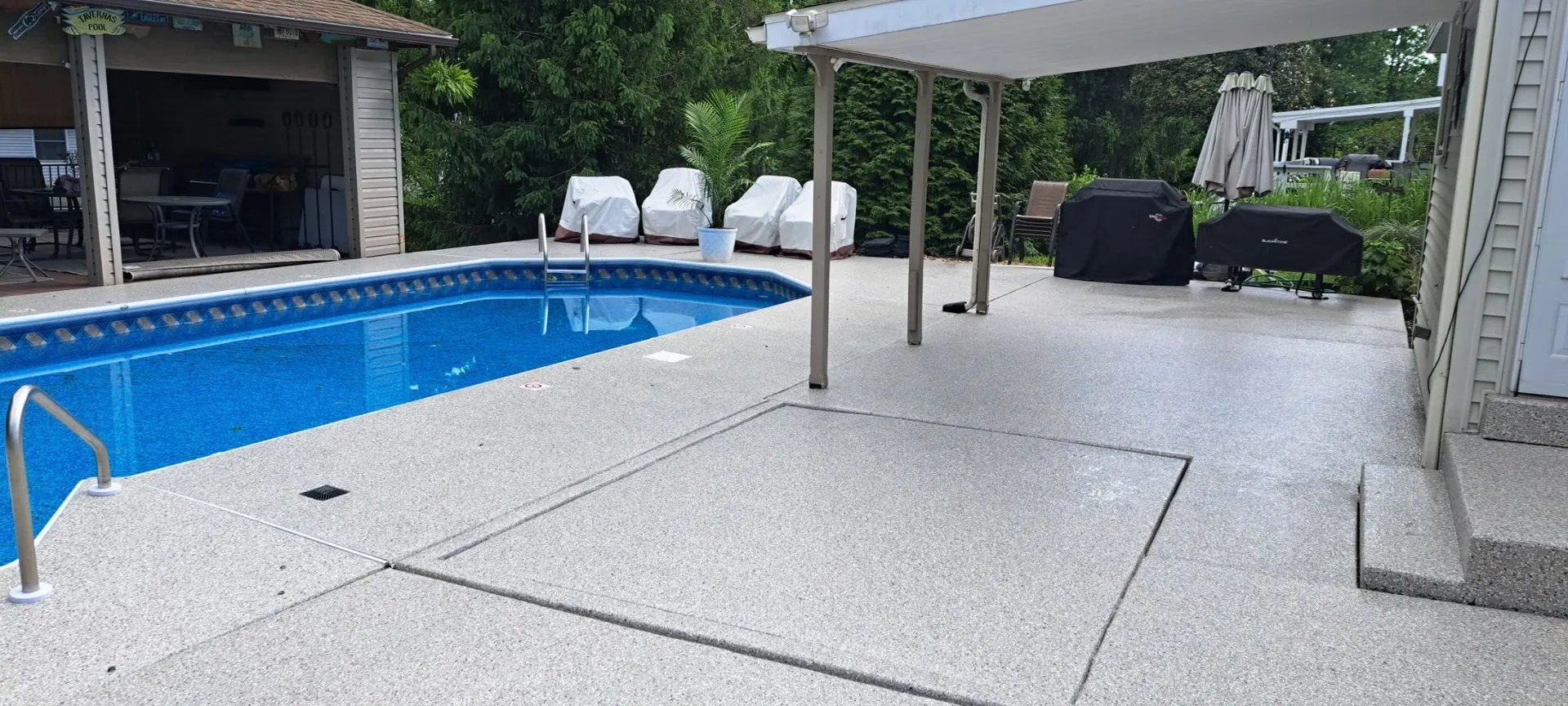
A coated deck carried around the whole pool perimeter, with no seams or joints between sections.
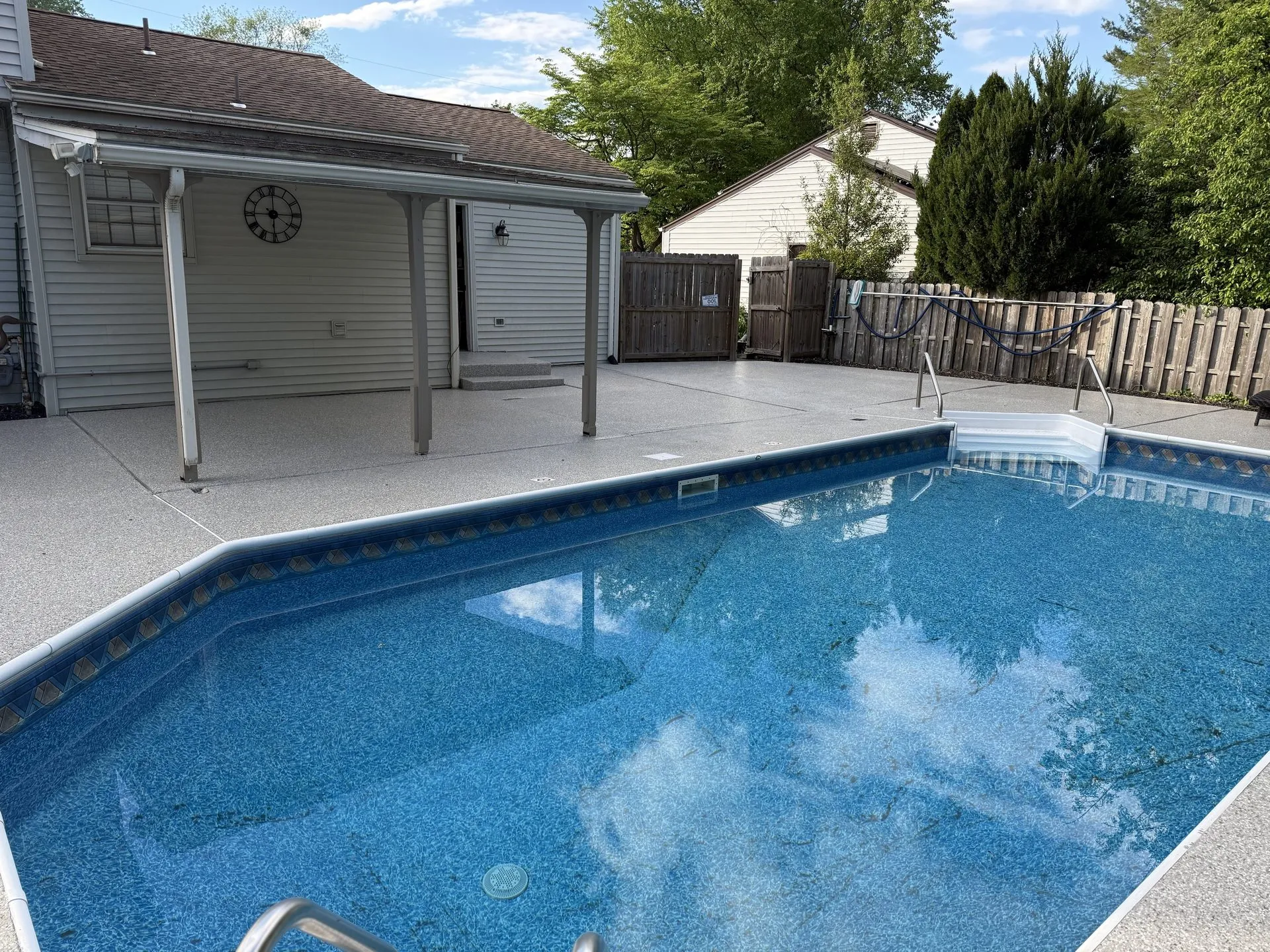
Open, unshaded concrete. This is exactly the exposure where an epoxy topcoat would amber and chalk.
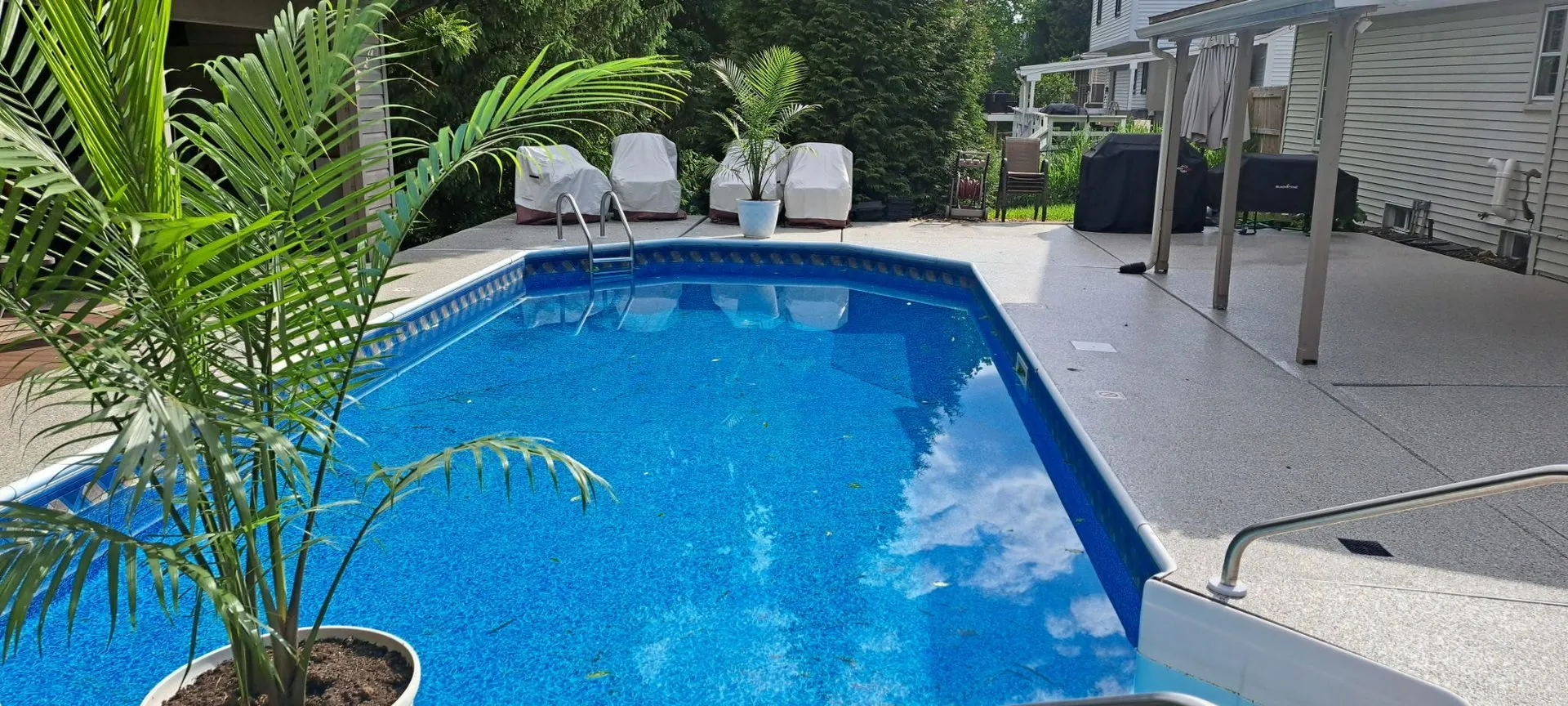
The wet zone at the coping. This gets the most aggressive anti-slip texture on the job.
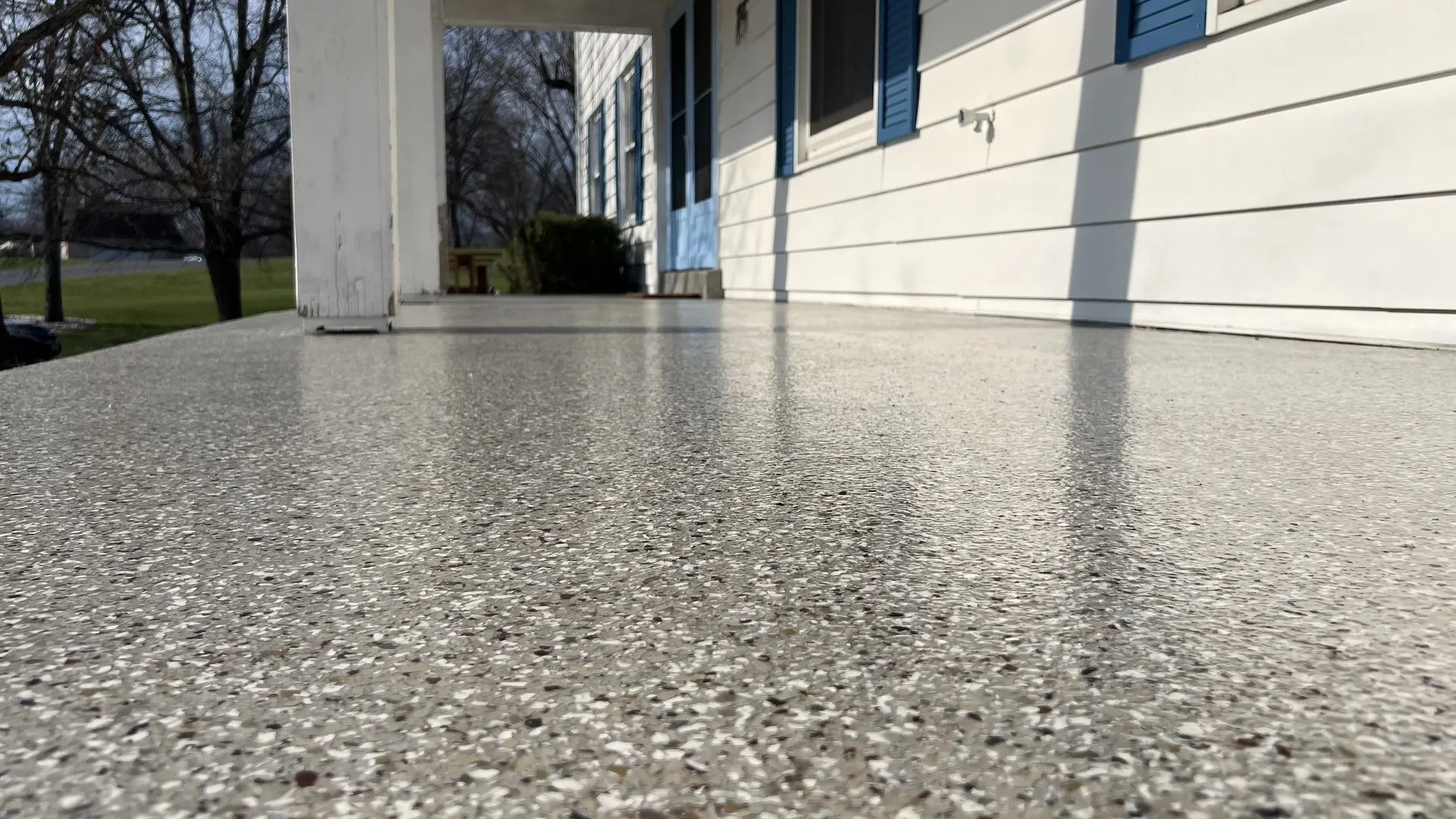
Pool surround and the adjoining patio coated in one pass, so the color reads as a single surface.
More outdoor project photography is being added this season. In the meantime, the indoor galleries on the garage and basement pages show the same flake blends and the same preparation close up.
Three things decide whether an exterior floor still looks right in five years. None of them is the color.
Not if it is finished for the job it has to do. This is the detail worth asking every contractor about, because it is decided in the last coat and cannot be added later without recoating.
Anti-slip texture is a finishing choice made at the estimate, and it is written into the scope so there is no confusion on install day.
The preparation is the same discipline we use indoors. The difference outdoors is that the weather has a say in when we start.
We check the concrete for cracks, heaving, spalling and drainage, and we check the forecast. Outdoor work is weather-dependent: we will not coat if rain is coming in before the topcoat is set, or if the overnight temperature is going to drop too low. If the window is wrong we move the date rather than gamble with your deck.
The deck is diamond ground, never acid etched. Grinding takes off weathered surface, old sealer and pool chemical residue and opens the concrete so the coating keys into it. Cracks and joints are filled, and the whole surface is vacuumed clean before anything goes down.
The pigmented base coat is applied and vinyl flake is broadcast by hand to rejection while it is still wet, so the color is even across the whole deck. Once it sets, the loose flake is scraped back and vacuumed to give a consistent profile.
Two clear polyaspartic topcoats seal the flake, with the anti-slip aggregate carried in the final coat. Foot traffic is usually fine about four to six hours after that last coat. We will tell you when the deck can get wet again and when furniture can go back on it.
A light flake blend reflects more sun than bare grey concrete, and the texture breaks up direct contact, so the deck is more comfortable barefoot in midsummer.
An aggregate carried in the final topcoat gives the surface texture where it matters, with a more aggressive finish at the poolside than on a covered patio.
Splash-out from a chlorine or salt water pool sits on a sealed film instead of soaking into open concrete, and winter de-icing salt has nothing to attack.
Staining, patch marks and discoloration disappear under an even flake finish, so a sound but ugly deck does not need tearing out and repouring.
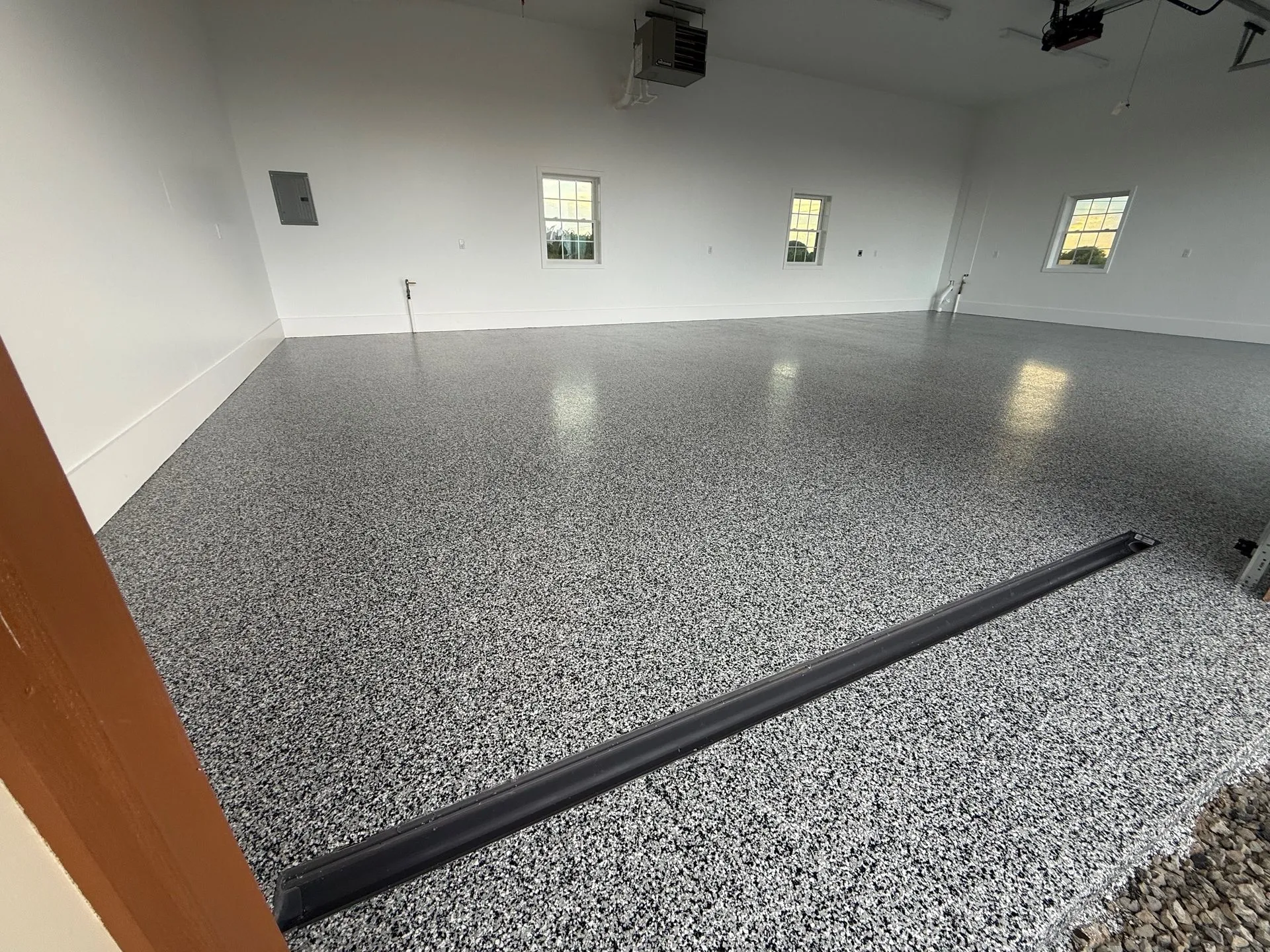
The same system on a garage slab, including the apron where the door meets the driveway. No hot-tire pickup, back to parking in about 24 hours.
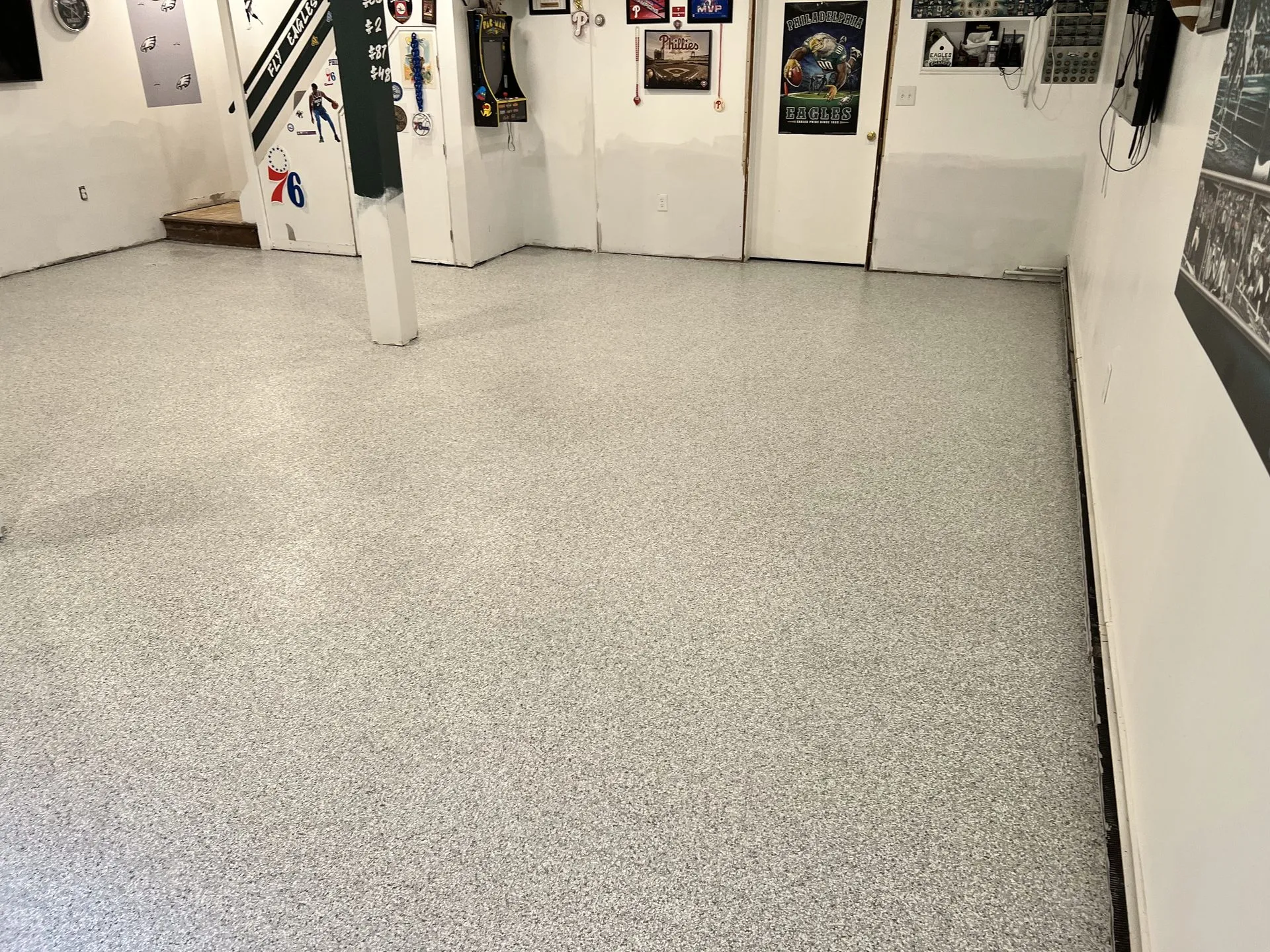
Stops the dust a bare slab sheds and makes the room usable as living space. Includes how we test a slab for moisture first.
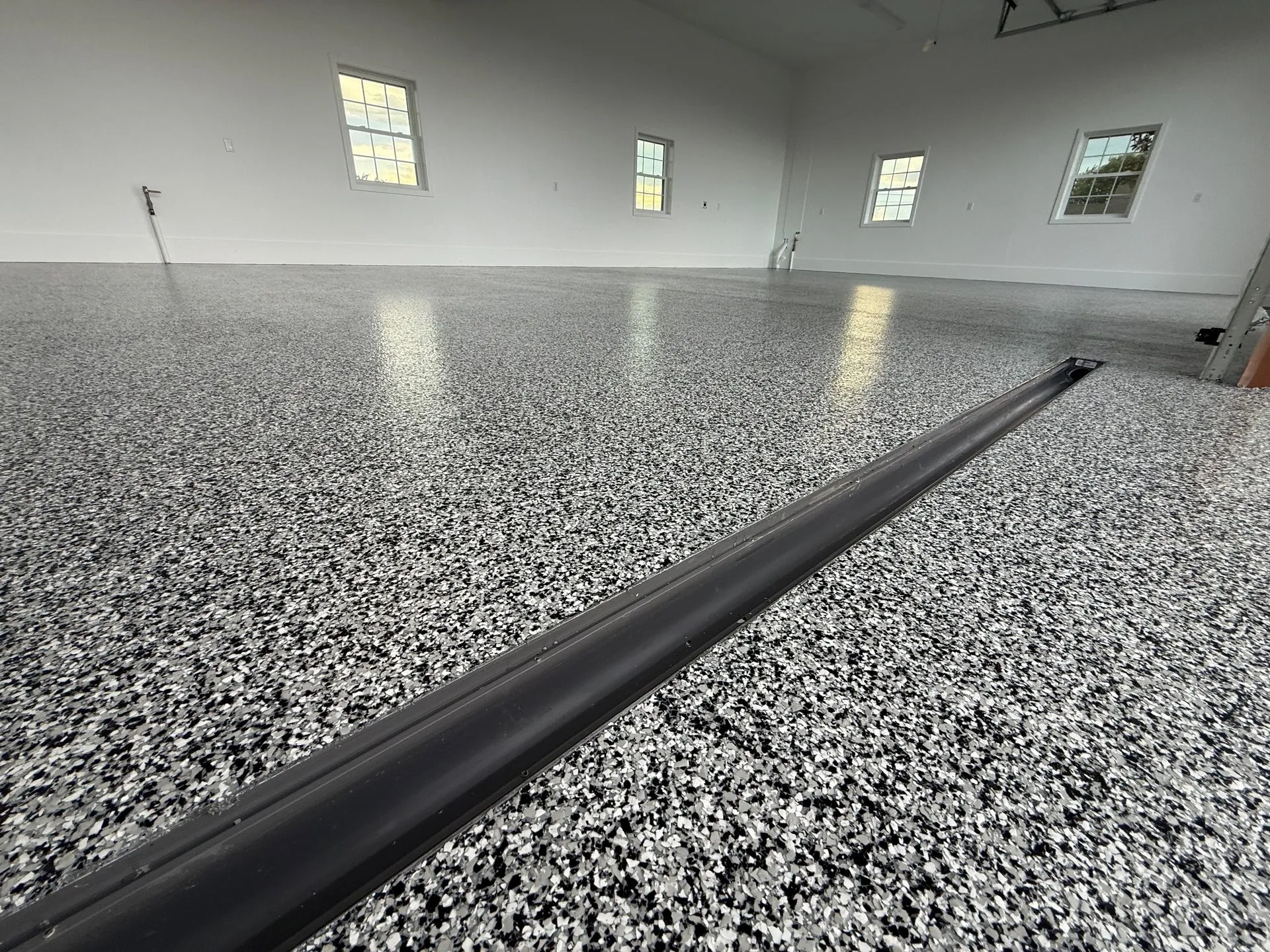
See the flake blends side by side. Outdoors the lighter blends run cooler underfoot, so color is worth deciding deliberately.
If yours is not here, call (814) 424-4535 or read the full FAQ.
No. A cured polyaspartic topcoat is chemically resistant, and splash-out from either a chlorine pool or a salt water pool sits on the surface rather than soaking in. Salt water is actually harder on bare concrete and on metal fixings than it is on the coating, because open concrete wicks the water in and the salt then works on it from inside. Rinse the deck down at the end of the season and hose off any heavy splash areas as you would normally.
It gets warm, like any surface in direct sun, but a coated deck in a light flake blend runs cooler than the bare grey slab it replaced. Light blends reflect more heat than dark ones, and the anti-slip texture means less of your foot is in flat contact with the surface. If barefoot comfort in July is your priority, say so at the estimate and we will steer you toward a lighter blend. No coating makes an unshaded deck cool in the middle of the afternoon.
This system is for poured concrete. Pavers, flagstone and brick are individual units with sand or mortar joints that move independently, so a continuous coating film has nothing solid to span and it will crack along every joint. The same applies to a deck surfaced in loose stone or tile. If you have pavers and want a seamless coated surface, that is a question of pouring a slab first — come and ask us and we will give you a straight answer about whether it is worth it.
Normal cracks and control joints are filled as part of preparation and disappear under the finish. Heaving is different. If a section of slab has lifted, dropped or is moving at a crack, the concrete has an underlying problem — a base that has washed out, tree roots, frost — and a coating will simply crack again in the same place. We will look at it and tell you honestly whether it needs a mudjack, a section replaced, or whether it is stable enough to coat as it stands. We would rather turn a deck down than coat a slab that is going to move.
Spring through fall is the main window, and polyaspartic stretches it at both ends because it cures over a wider temperature range than epoxy. The limits are rain and cold nights, not the calendar: we need a dry window long enough for the topcoat to set and an overnight temperature that stays high enough for a proper cure. That means we watch the forecast and will move a date rather than rush a deck in before a storm. Booking ahead of the season gets you the better slots.
An outdoor slab works harder than an indoor one — UV, rain, freeze-thaw and pool chemicals all act on it, and that is why the material choice matters so much outside. A UV-stable polyaspartic system will not amber or chalk the way an epoxy topcoat does in sun, and our work carries a lifetime warranty. The honest difference is cosmetic upkeep: an exterior deck sees more dirt and more weather, so it wants rinsing more often than a garage floor does. Read how it works for the full sequence.
Tell us the room, roughly how big it is and when you want it done. We will measure, look at the slab and give you a price that does not move.
Polyaspartic concrete floor coatings installed in a single day across central Pennsylvania. Every slab diamond ground, never acid etched.
© 2026 Spartic Coatings. All rights reserved.
Serving Lancaster, Chester, Berks, Dauphin, York and Lebanon counties, Pennsylvania.