Both are resin floor coatings. They cure by different chemistry, and that one difference drives everything else — how fast you get the garage back, how the floor handles sunlight and hot tires, and what month of the year it can be installed in Pennsylvania.
Epoxy builds a thick, hard film in few coats and is a sound choice for an unheated interior slab that never sees sunlight. Polyaspartic cures much faster, stays UV stable instead of ambering, resists hot-tire pickup, and will cure in cold months when epoxy stalls. The honest trade-off is film build per coat and material cost on one side against speed, UV stability and cold-weather installation on the other — not one product being better at everything. Spartic Coatings installs polyaspartic because Pennsylvania garages get sunlight through the open door, hot tires in summer, and freeze-thaw slab movement all winter.
Read the film build row and the coats row carefully. Those are the two places epoxy genuinely wins, and they matter on some floors.
Figures above are for professionally installed systems on a diamond-ground slab. Consumer kits of either chemistry behave differently and generally worse.
Epoxy is not a bad coating. It is an older, well understood one, and there are floors where it is the sensible answer.
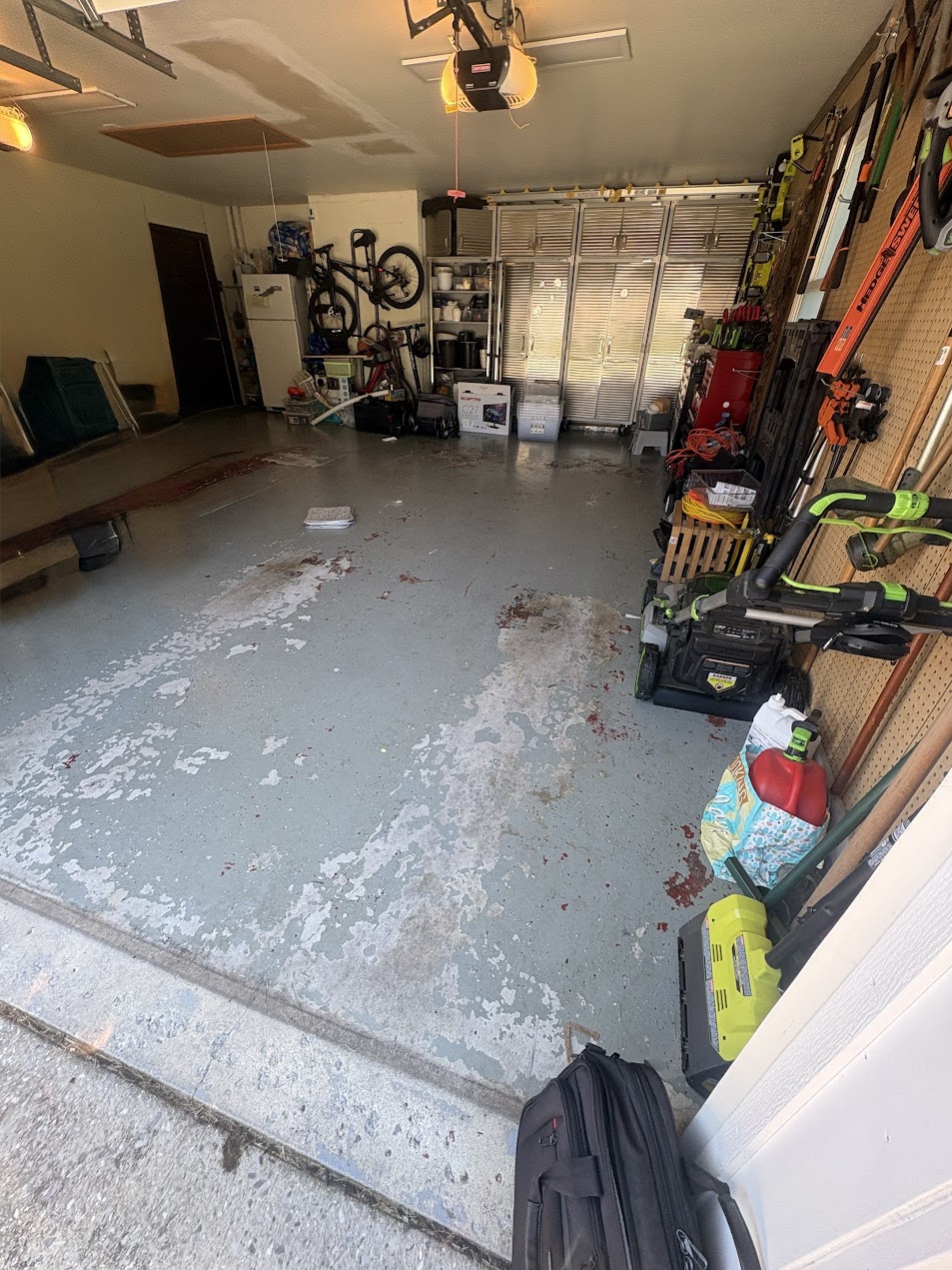
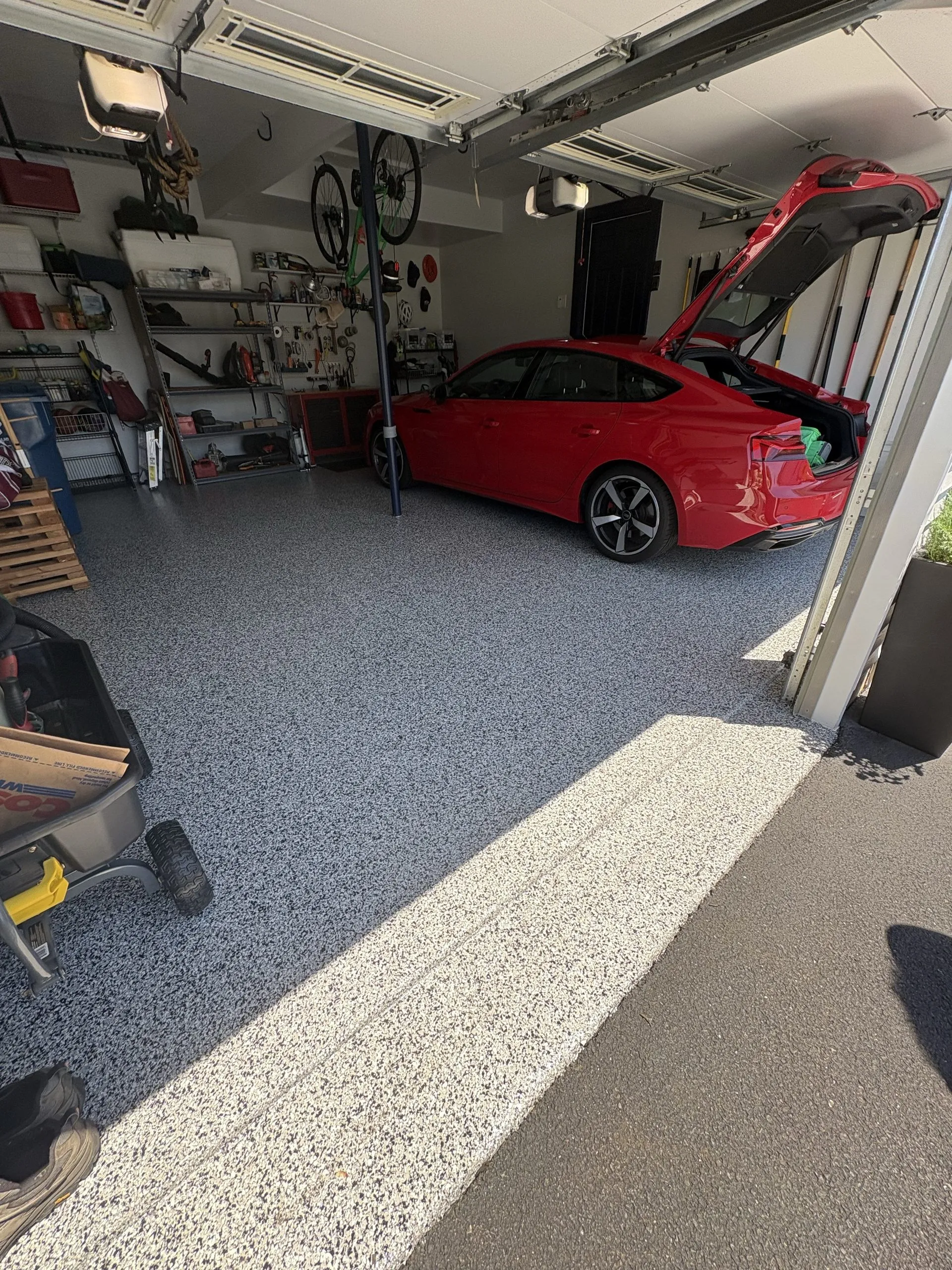
The case for polyaspartic here is not that it beats epoxy on paper everywhere. It is that the five things it does better are exactly the five things a Pennsylvania garage does to a floor.
Here is the part most comparison pages leave out. Polyaspartic and epoxy fail the same way and for the same reason: the coating lets go of the slab. That is a bond problem, and bond is decided before any resin is mixed. A well-prepped epoxy floor outlasts a badly-prepped polyaspartic floor every single time. Chemistry is the smaller half of the decision.
We diamond grind every slab to open the concrete profile. Acid etching leaves residue and a shallow profile, and residue is what coatings release from.
Spalls, pits and control joints get cut and filled. Coating over a void just moves the failure a few months into the future.
Moisture pushing up through a slab will lift either chemistry off the concrete. It gets identified and addressed before the base coat goes down, not after.
The base coat goes into open, dust-free concrete so it keys into the slab rather than sitting on top of residue. That is the whole game.
Plenty of installers run an epoxy base coat with a polyaspartic clear topcoat. It is a real approach, not a compromise, and it is worth understanding before you compare quotes.
The logic is straightforward. The epoxy base does the cheap, thick film build over the slab and holds the flake. The polyaspartic topcoat sits on top and supplies the UV stability and hot-tire resistance, so the ambering problem is covered by the layer that actually sees the sunlight. You get the film build of one chemistry and the surface performance of the other.
The cost is time. An epoxy base still has to cure before the topcoat can go on, so a hybrid floor is not a one-day install, and in cold months the epoxy base still has to warm up before it will cure at all. It also adds a layer boundary, and every extra boundary is one more place a floor can separate if a coat goes down before the one underneath is ready.
Spartic Coatings runs a full polyaspartic system: a pigmented polyaspartic base coat, flake broadcast by hand to rejection, then two clear polyaspartic topcoats, installed in one day on a typical residential garage or basement. We chose that over a hybrid because the one-day return to service and the cold-month install window are what our customers in Lancaster, Chester, Berks, Dauphin, York and Lebanon counties actually ask for. If a hybrid quote is in front of you, ask the installer how the slab is prepped — that answer tells you more than the resin does. Our own process is written out on how it works, and the finish options are on colors and finishes.
The process, the floors we do most, and a way to get a firm number.
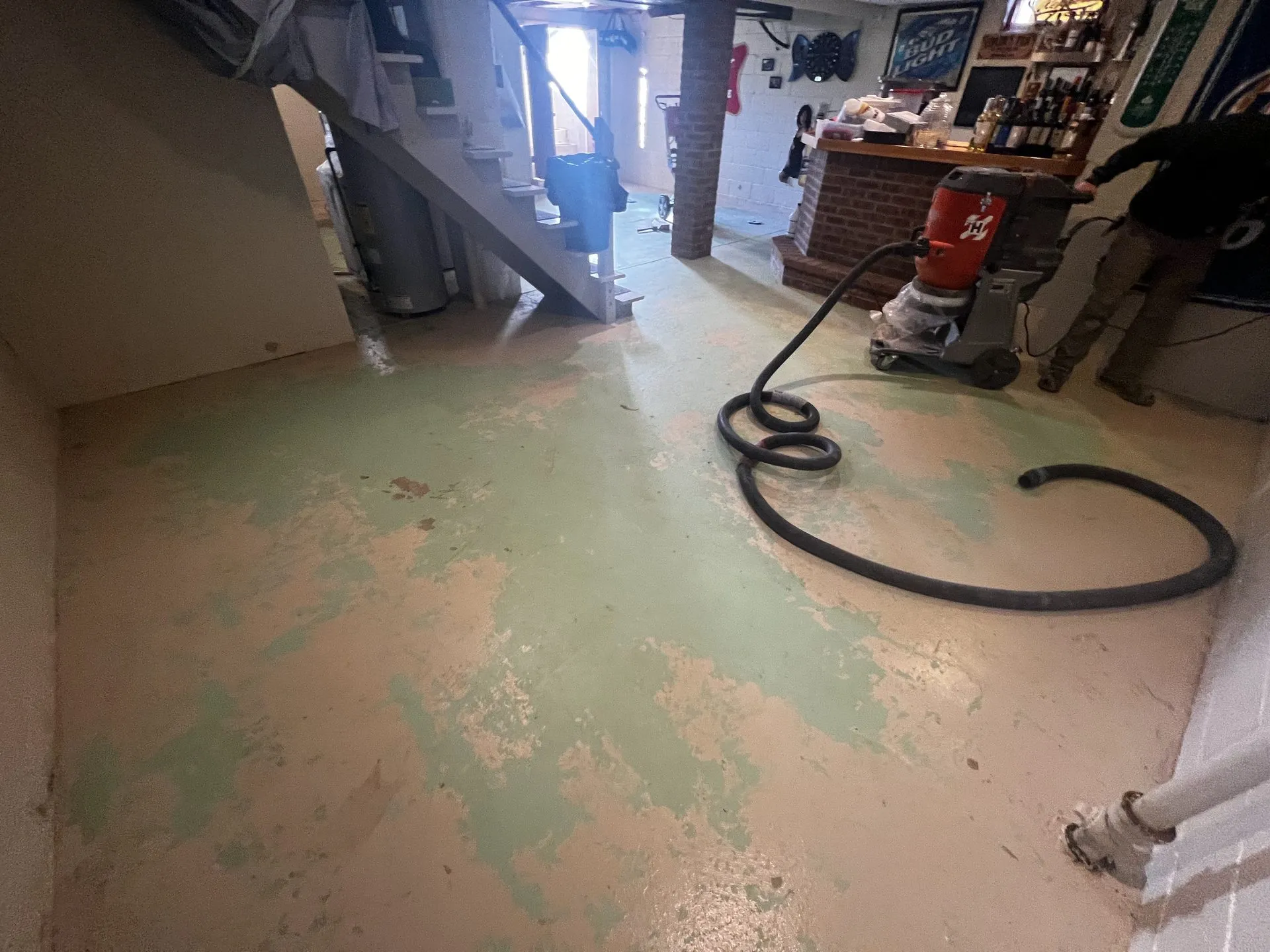
Grind, repair, base coat, flake, two clear topcoats. The whole day, step by step.
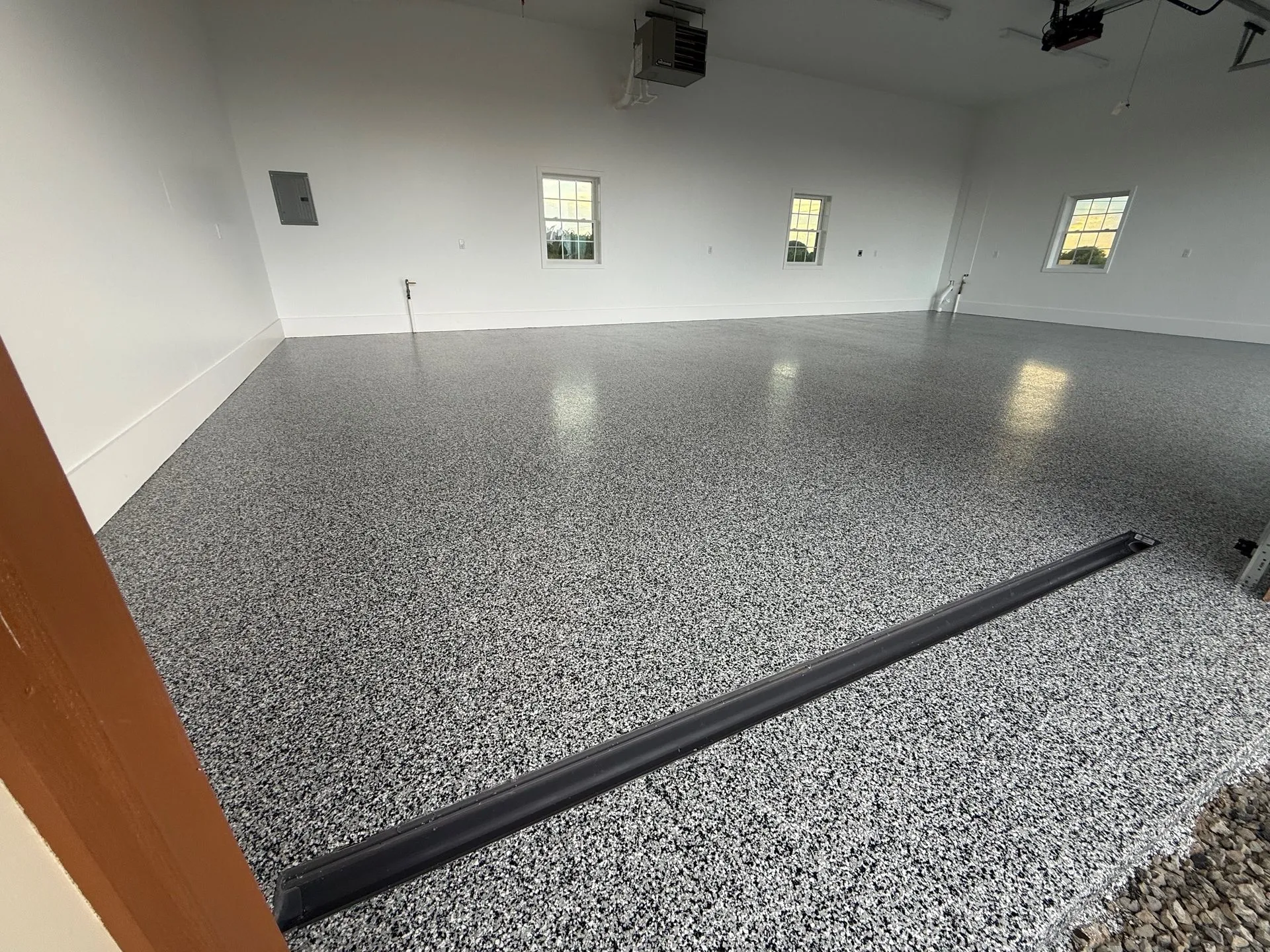
The floor this comparison is usually about, including the apron where the door meets the driveway.
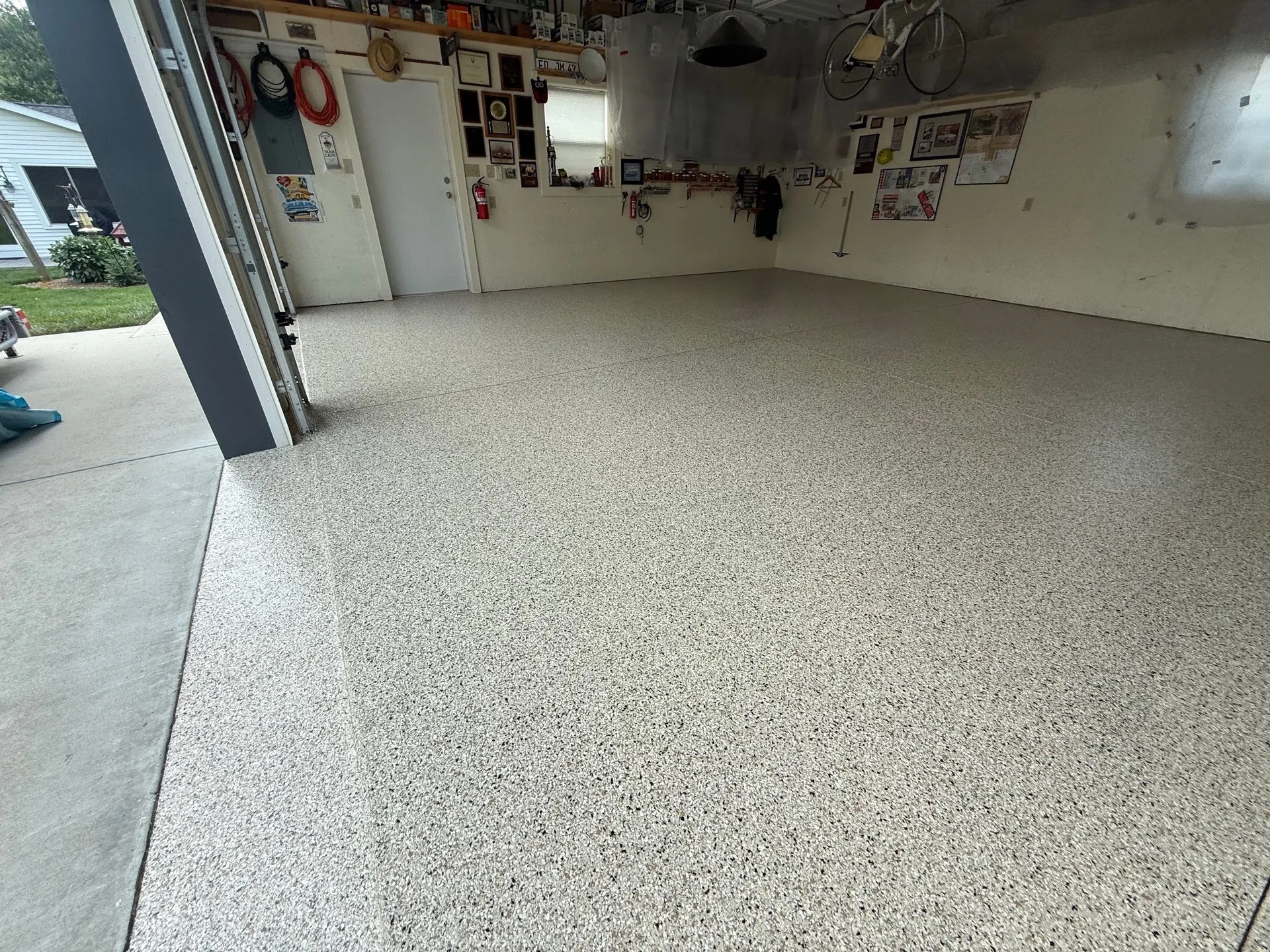
We look at your slab, talk through the finish, and give you a firm number at the estimate.
No — it is a different resin chemistry, not a premium grade of the same thing. Polyaspartic is an aliphatic polyurea. That chemistry is what makes it cure in hours instead of days, hold its color under sunlight, and cure in a wider temperature range. Epoxy has its own real advantage: it lays down a much thicker film per coat, which is why it is cheaper to build thickness with.
Sometimes, and only after we test the existing floor. The question is never whether the two chemistries get along — it is whether the old epoxy is still bonded to the slab. If it lifts, chips or sounds hollow, it comes off, because a new topcoat is only as sound as the layer under it. If the old floor is genuinely well bonded, it can be ground to a profile and coated over. We make that call on site, not over the phone.
Only where sunlight reaches it. An epoxy floor in a windowless basement can stay true to color for years. Put the same epoxy in a garage where the door opens every day and the apron strip will amber while the back of the garage stays put — and that uneven shift is what people actually notice. Polyaspartic is UV stable and does not amber, which is why we use it on aprons, patios and pool decks.
Whichever one was prepped properly. That is not a dodge — the dominant failure mode for both systems is the coating releasing from the concrete, and that is decided by surface prep, not resin. On a diamond-ground slab, polyaspartic holds up better to the specific things that shorten a floor's life outdoors and in a garage: UV, hot tires and slab movement. On a badly prepped slab, both fail, and they fail the same way.
Usually, from a few clues. A thick, glassy floor that has yellowed near the garage door and shows patchy lift where the tires sit is almost certainly epoxy, often a consumer kit. A floor still holding its color in the sunlit strip with no tire marks is more likely polyaspartic. Age helps too: if it went down before flake systems became common locally, epoxy is the safe bet. We identify it at the estimate and tell you whether it can be coated over or has to come off.
A smooth, high-gloss floor of either chemistry is slick when wet — the resin is not what makes the difference. Traction comes from the flake profile and from anti-slip aggregate added to the final clear coat. We specify aggregate anywhere the floor gets wet: pool decks, patios, basement entries and garage bays where snow comes in on the car. You can see the finish and gloss options on colors and finishes.
Tell us the room, roughly how big it is and when you want it done. We will measure, look at the slab and give you a price that does not move.
Polyaspartic concrete floor coatings installed in a single day across central Pennsylvania. Every slab diamond ground, never acid etched.
© 2026 Spartic Coatings. All rights reserved.
Serving Lancaster, Chester, Berks, Dauphin, York and Lebanon counties, Pennsylvania.