A lifetime warranty on a floor coating covers the coating's adhesion to the concrete — bond failure, delamination and peeling that happens because the system did not stay stuck to the slab. It does not cover damage you cause: impact chips from dropped tools, gouges from dragged equipment, chemical abuse, or cracking that follows movement in the concrete slab underneath. Coverage and exclusions vary by installer, so always read the actual written warranty document, which comes with your quote.
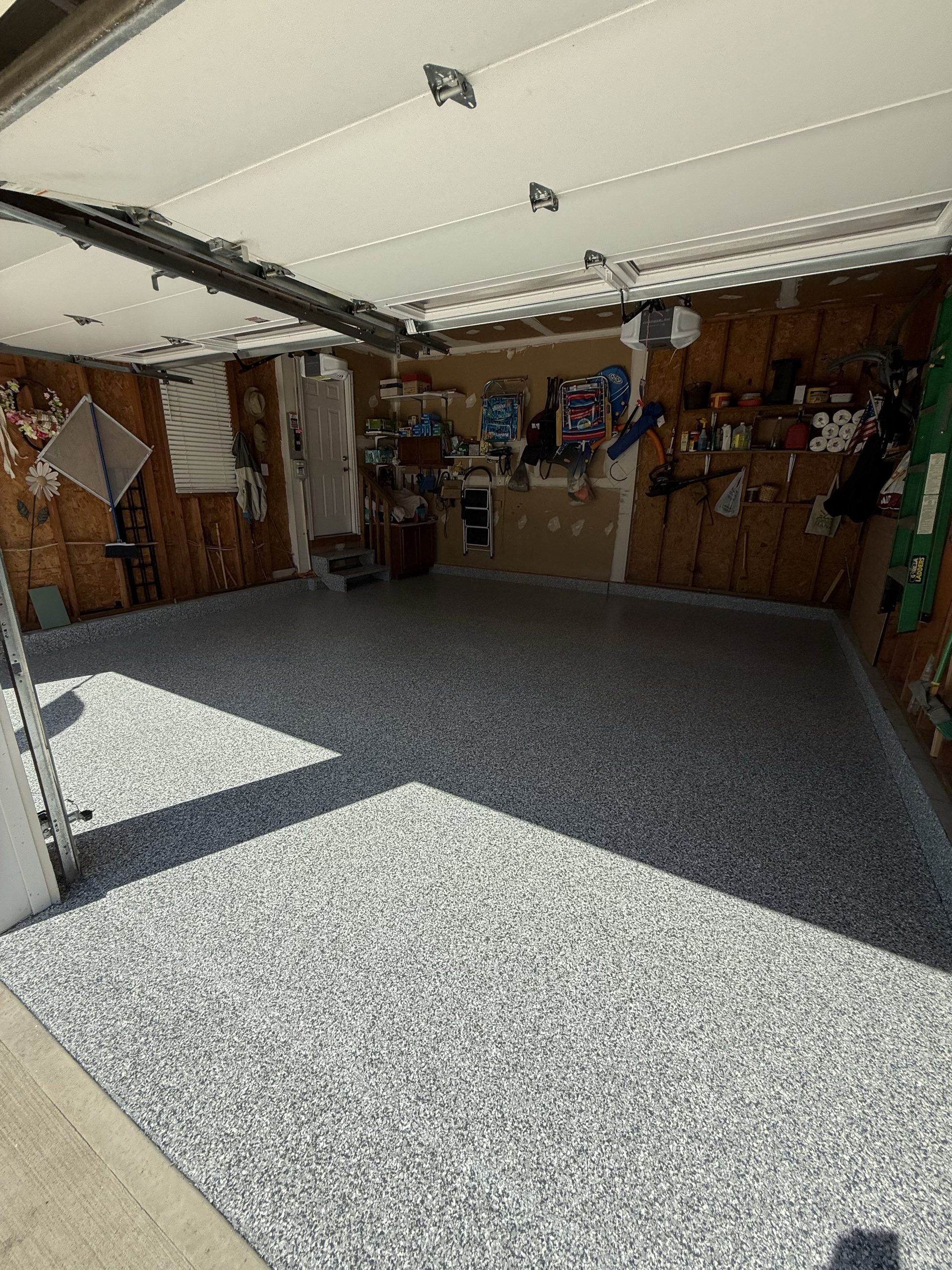
Everyone in this industry advertises a lifetime warranty, and almost nobody explains what it covers. So here is the plain version: a coating warranty is a warranty on adhesion. It promises the coating will stay bonded to your concrete. It is not an insurance policy on the floor, and it does not make the floor indestructible. Understanding that distinction is what lets you compare two quotes honestly.
Bond failure is the coating letting go of the slab. It is the thing a coating warranty exists to cover, because it is the only failure mode that is genuinely the installer's fault rather than the world's.
It shows up in three named ways, and they mean slightly different things:
The mechanisms behind all three are covered in detail in why do garage floor coatings peel. They come down to preparation and moisture, both of which are decisions made by the installer on the day. That is the logic of the warranty: we control the prep, so we carry the risk on the prep.
Across the industry, these exclusions are close to universal. They are not unique to any one company, and a warranty without them would not be a real document.
Drop an engine block, a floor jack, a cast iron pan or a loaded tool chest hard enough and you will chip the coating. That is not a bond failure, it is a collision. Same with dragging a heavy metal shelf across the floor and gouging it, or running a machine with steel wheels over it.
Brake fluid, paint stripper, battery acid, aggressive solvents and driveway degreasers left to sit can etch or soften a coating. A splash wiped up is nothing. A puddle left for a week is chemical attack. Warranties normally exclude it, and it is easily avoided.
This is the big one and it is worth understanding. A coating is a few thousandths of an inch of resin bonded to a slab of concrete. If the slab settles, heaves in a freeze-thaw cycle, or develops a new structural crack, the coating over it will crack too. The coating cannot hold a moving slab together and no coating on the market claims to. Control joints are a related case: joints exist so the slab can move, and movement at a joint can telegraph through the finish. Ask how a contractor treats joints before work starts.
Rubber mats, cheap tires, and anything containing certain plasticizers can leave a stain or a shadow on a coated floor over time. Leaving cardboard or a wet mat in one spot for months can also mark it. This is a care issue, covered in how to clean and maintain a coated concrete floor.
Coating over another installer's floor, or someone else recoating or repairing ours, generally ends coverage on the affected area. Reasonably so — nobody can warrant a bond they did not create.
Ask for the document, not the adjective. Then read it for these specifics:
We carry a lifetime warranty on our floors, and its terms are set out in the written document that comes with your quote. We are not going to paraphrase its exclusions on a blog post, because the document is the document and you should be reading that rather than a summary. What we will tell you is that you should have it in writing before you sign anything, from us or from anyone. If a contractor will not put a warranty in writing, the warranty does not exist.
Because an installer can only responsibly warrant what they control. We control how the slab is prepared, and we diamond grind every floor to an open concrete profile rather than acid etching, which is the difference between a coating that is mechanically keyed into the slab and one that is sitting on residue. We control whether the slab is tested for moisture before anything goes down. We control whether flake is broadcast to rejection and whether two clear topcoats go on. Those are the variables that produce bond failure, and they are the variables the warranty is about.
The full sequence is on our how it works page, and the questions worth asking any contractor are in nine questions to ask before hiring a floor coating contractor. If you want the warranty document to read before you decide anything, ask us for it.
Three pages that answer the questions this article usually raises.
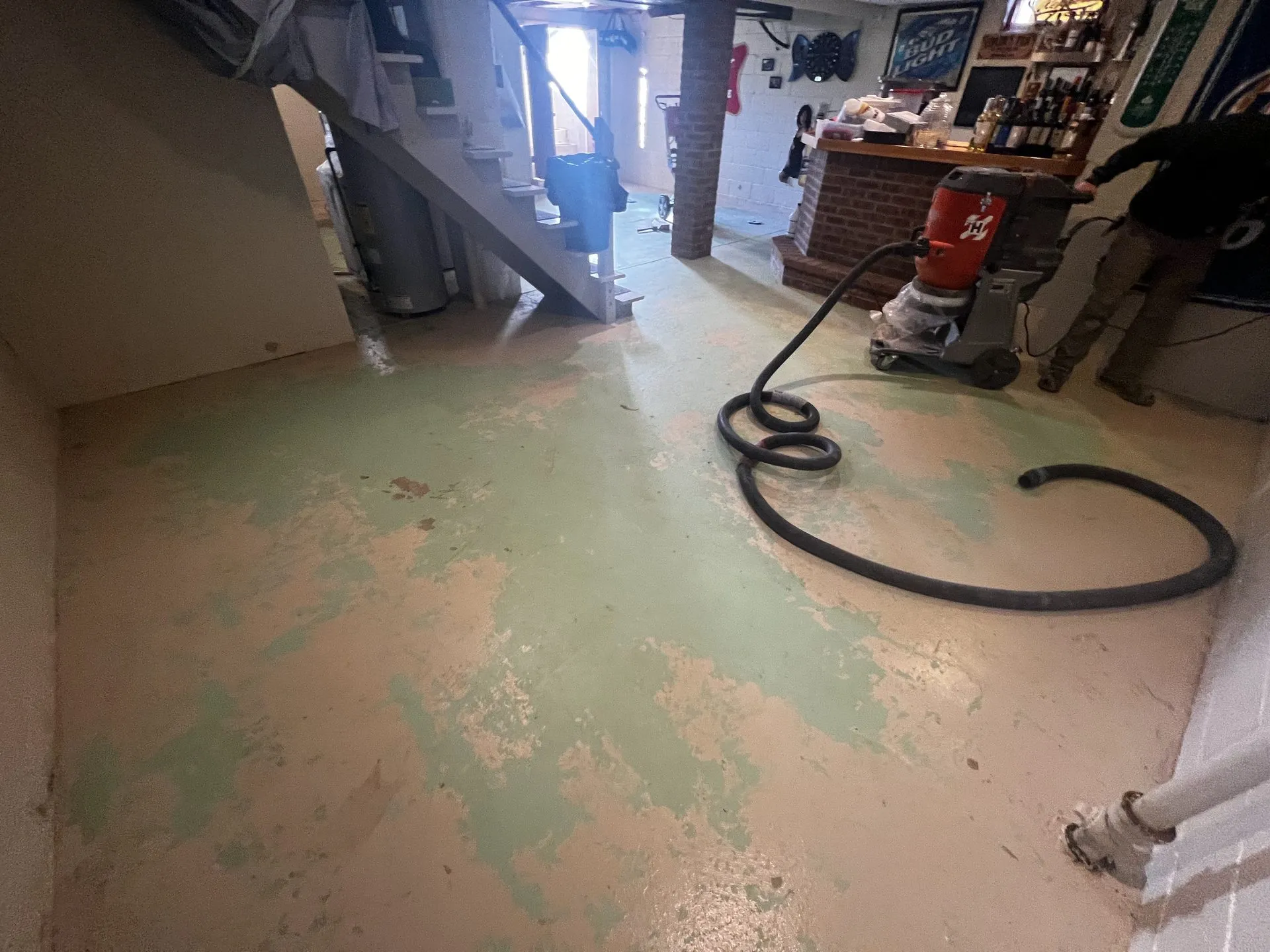
Diamond grinding, crack and joint repair, base coat, flake broadcast to rejection, two clear polyaspartic topcoats — in one day.
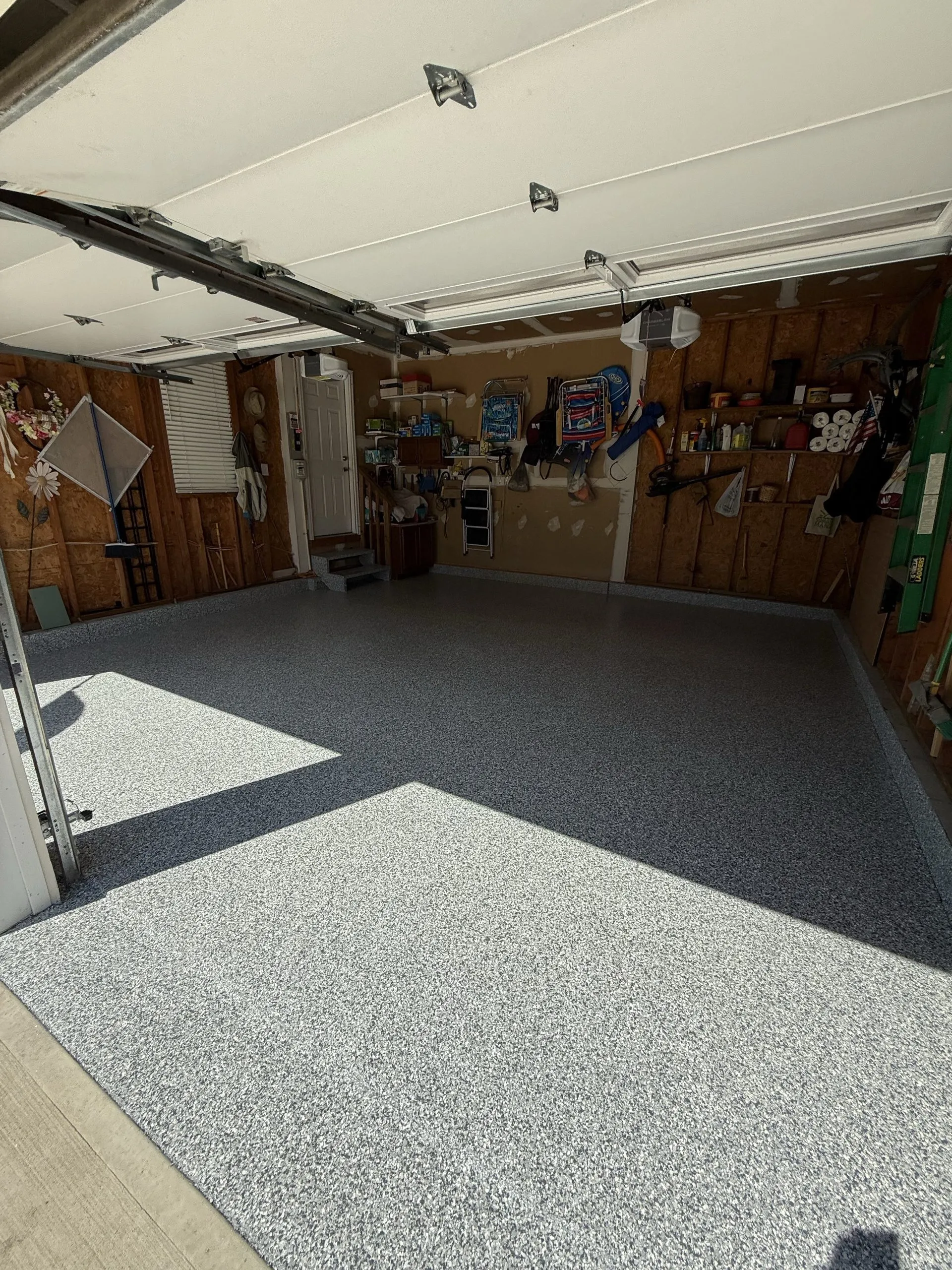
See the blends side by side and how each one hides dust, tire marks and the odd dropped wrench.
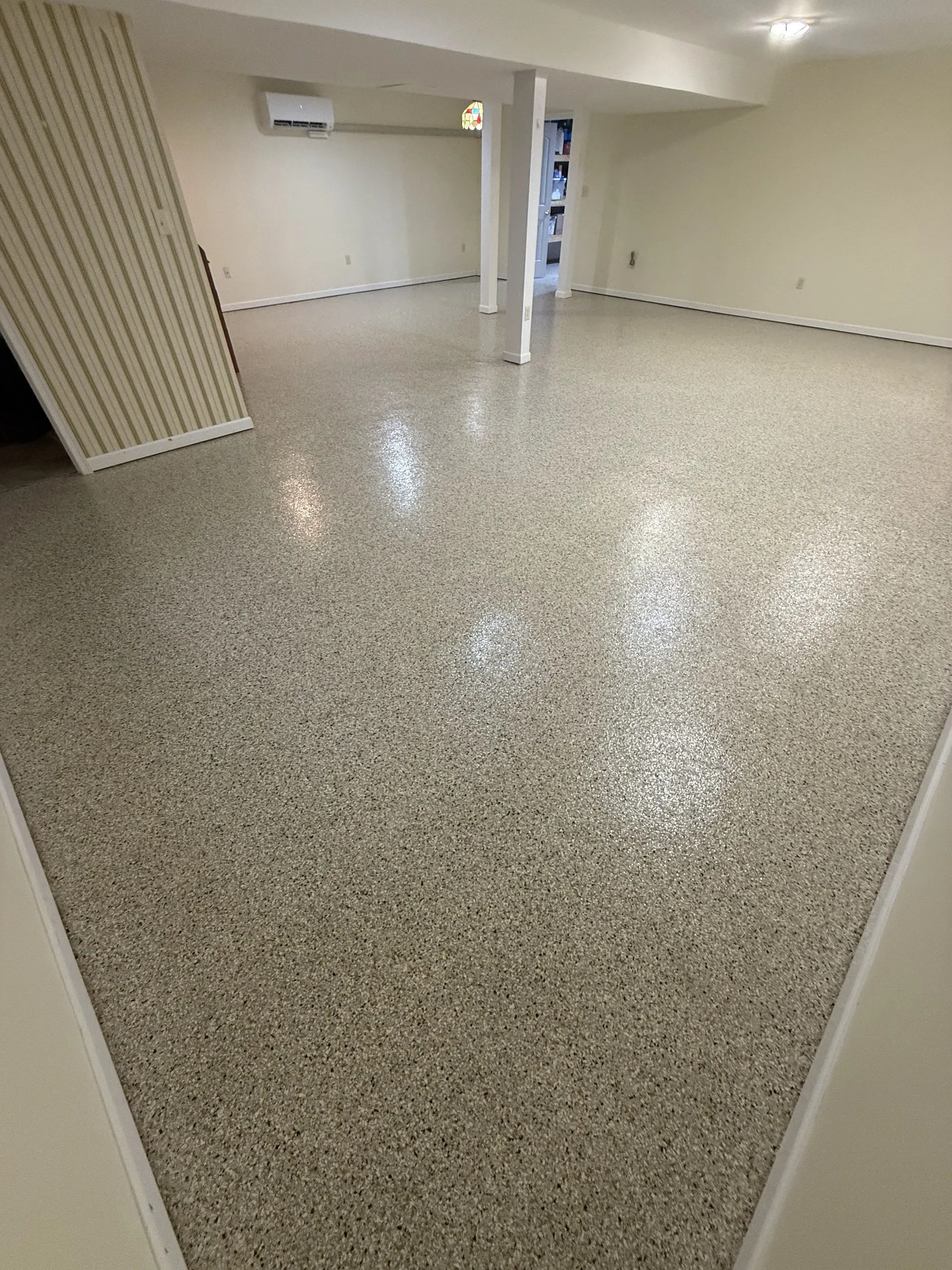
We measure the slab, check moisture and control joints, and give you a firm number at the estimate.
Tell us the room, roughly how big it is and when you want it done. We will measure, look at the slab and give you a price that does not move.

Polyaspartic concrete floor coatings installed in a single day across central Pennsylvania. Every slab diamond ground, never acid etched.
© 2026 Spartic Coatings. All rights reserved.
Serving Lancaster, Chester, Berks, Dauphin, York and Lebanon counties, Pennsylvania.