One crew, one day. We grind the slab back to clean concrete, repair what is hiding under the old coating, broadcast the flake and lay two polyaspartic topcoats. You walk on it that evening and park on it the next morning.
Every floor on this page was ground, patched and coated by our own crew. No stock photography.
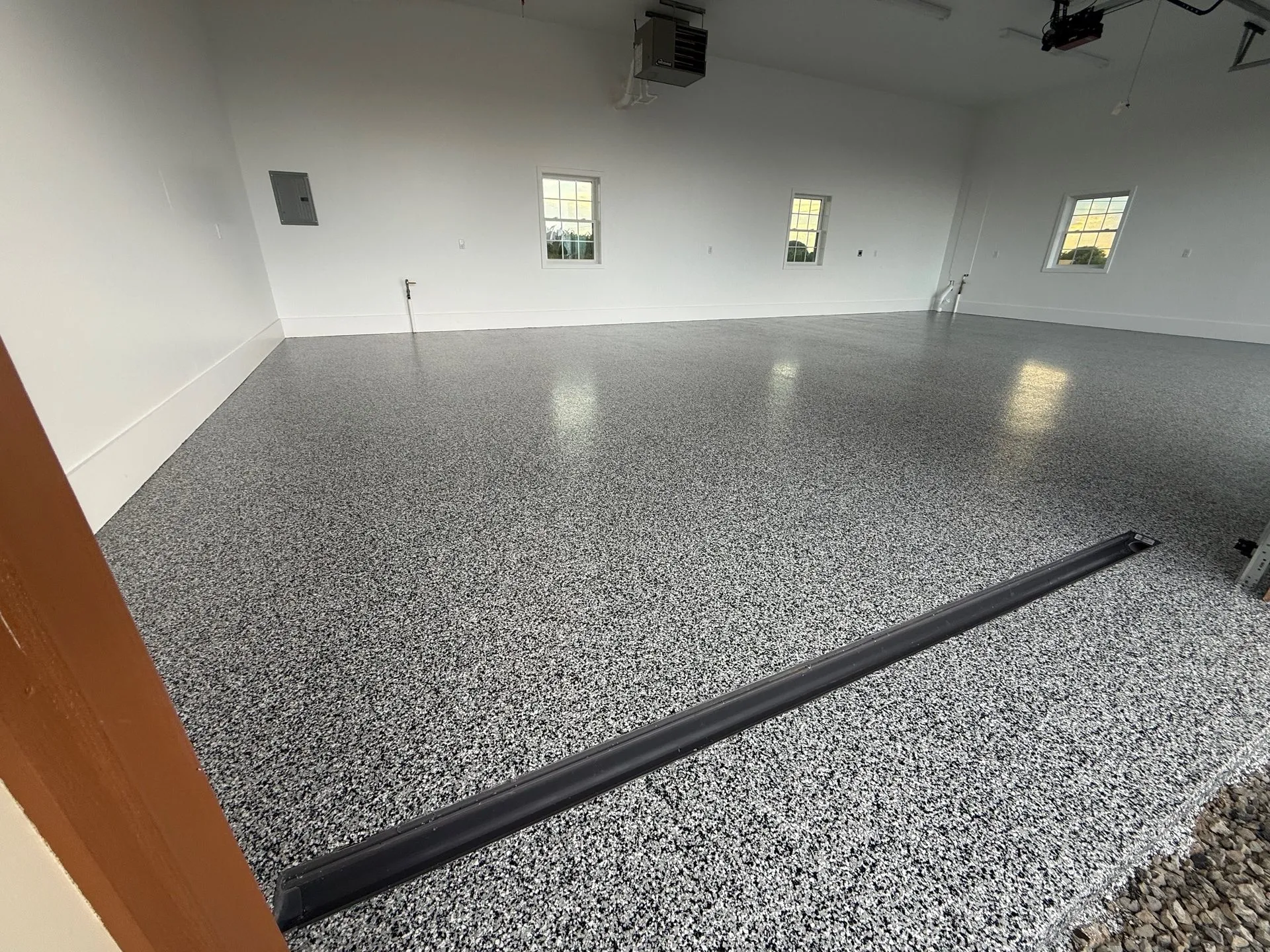
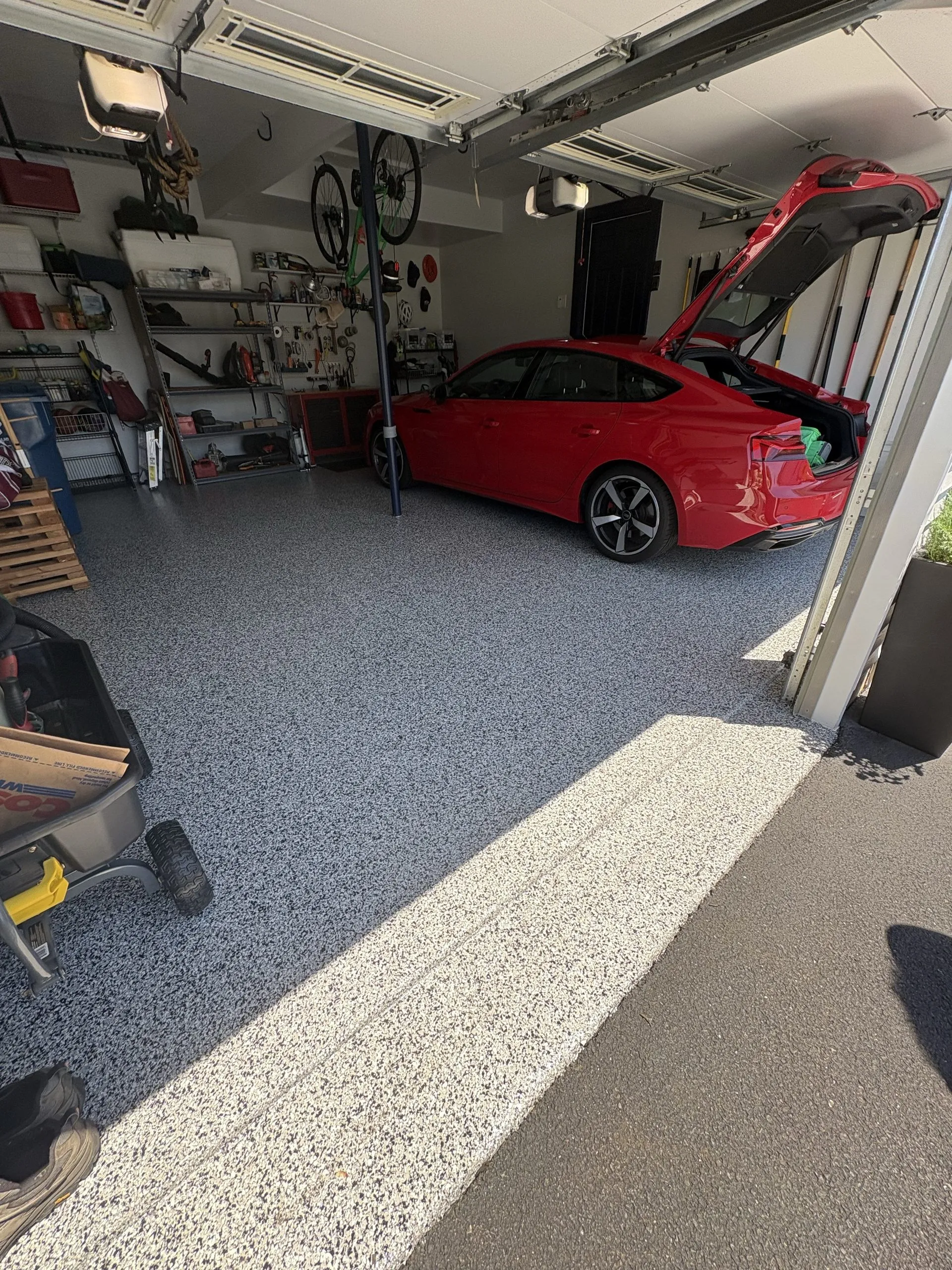
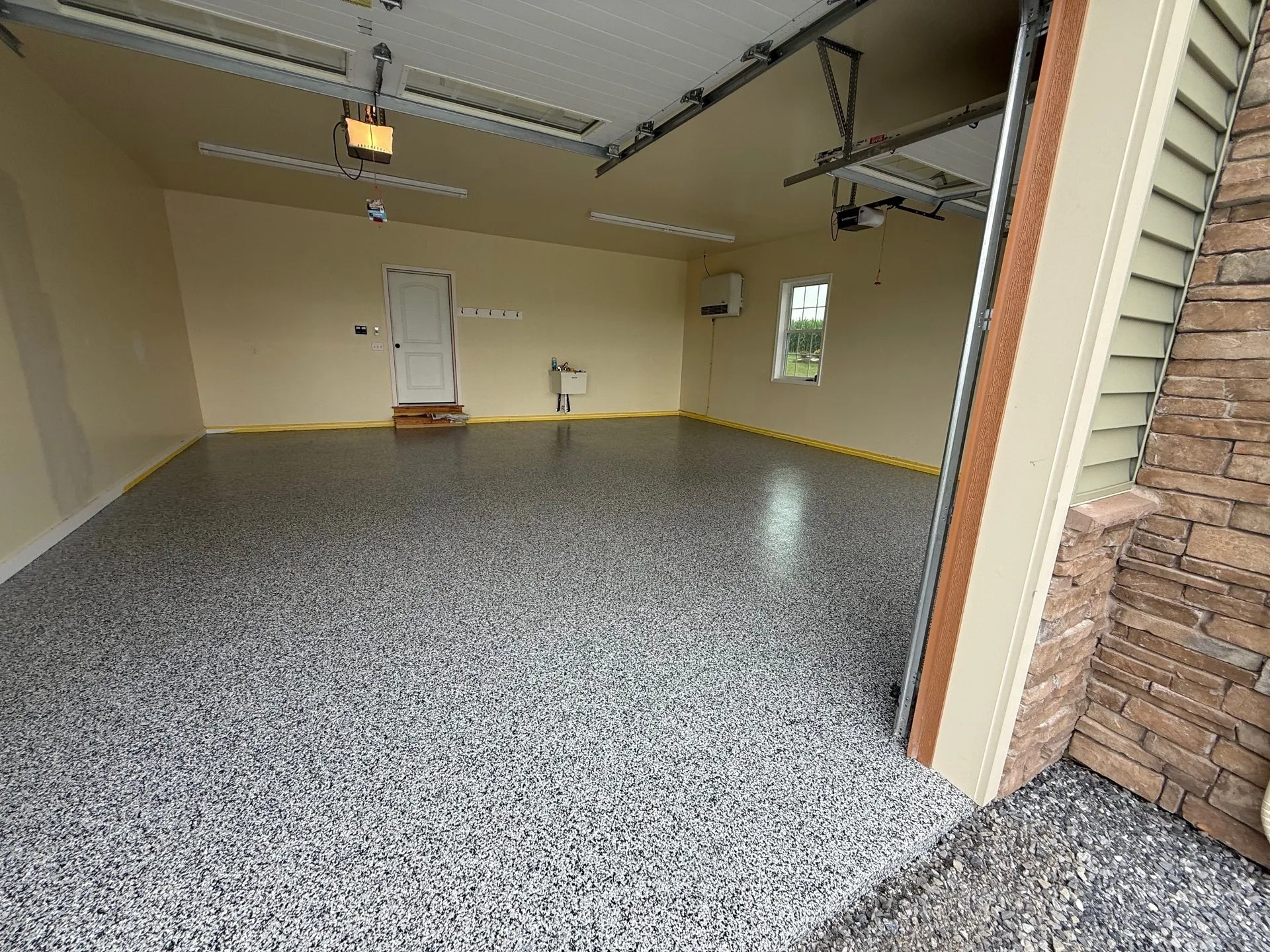
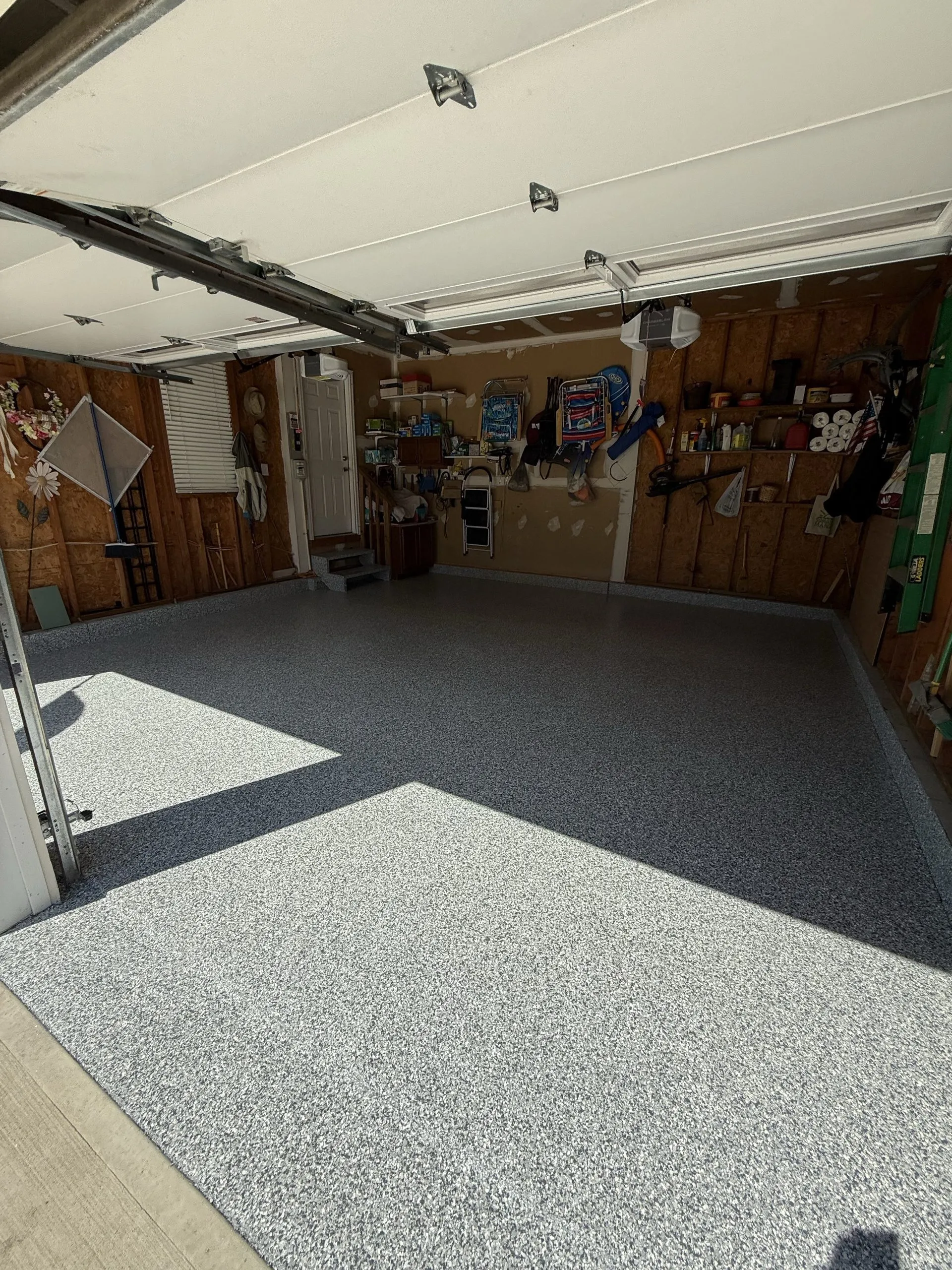
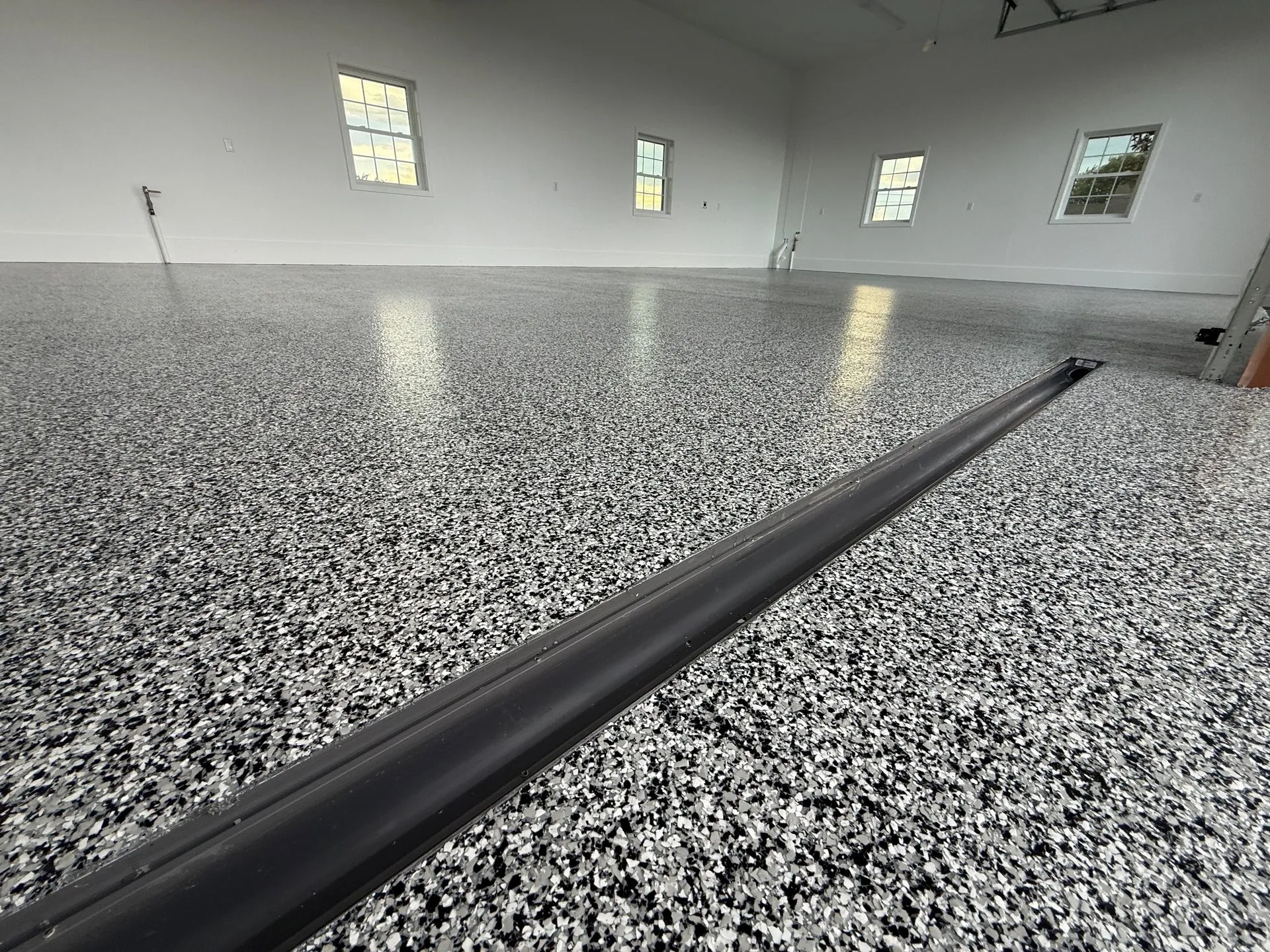
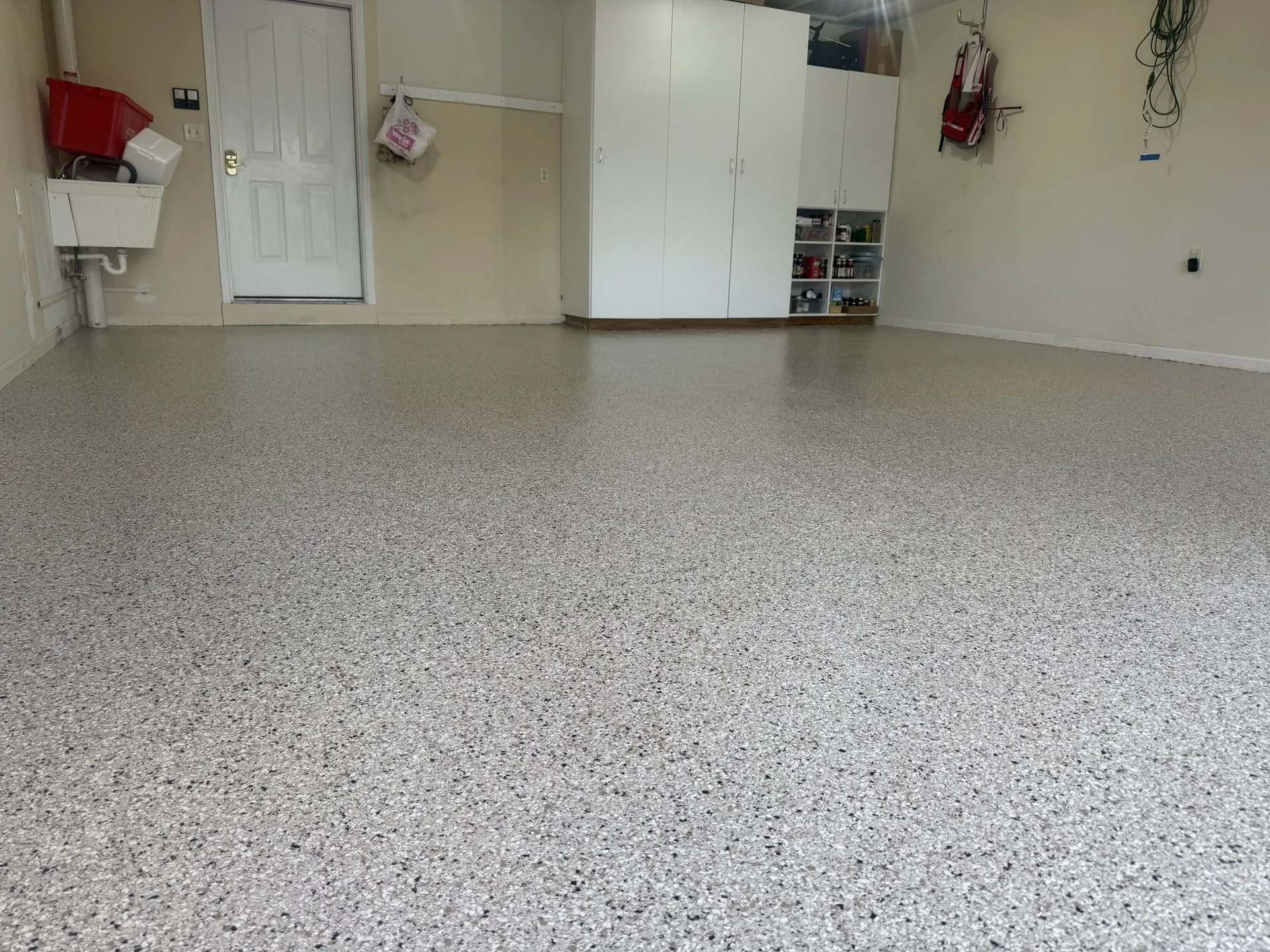
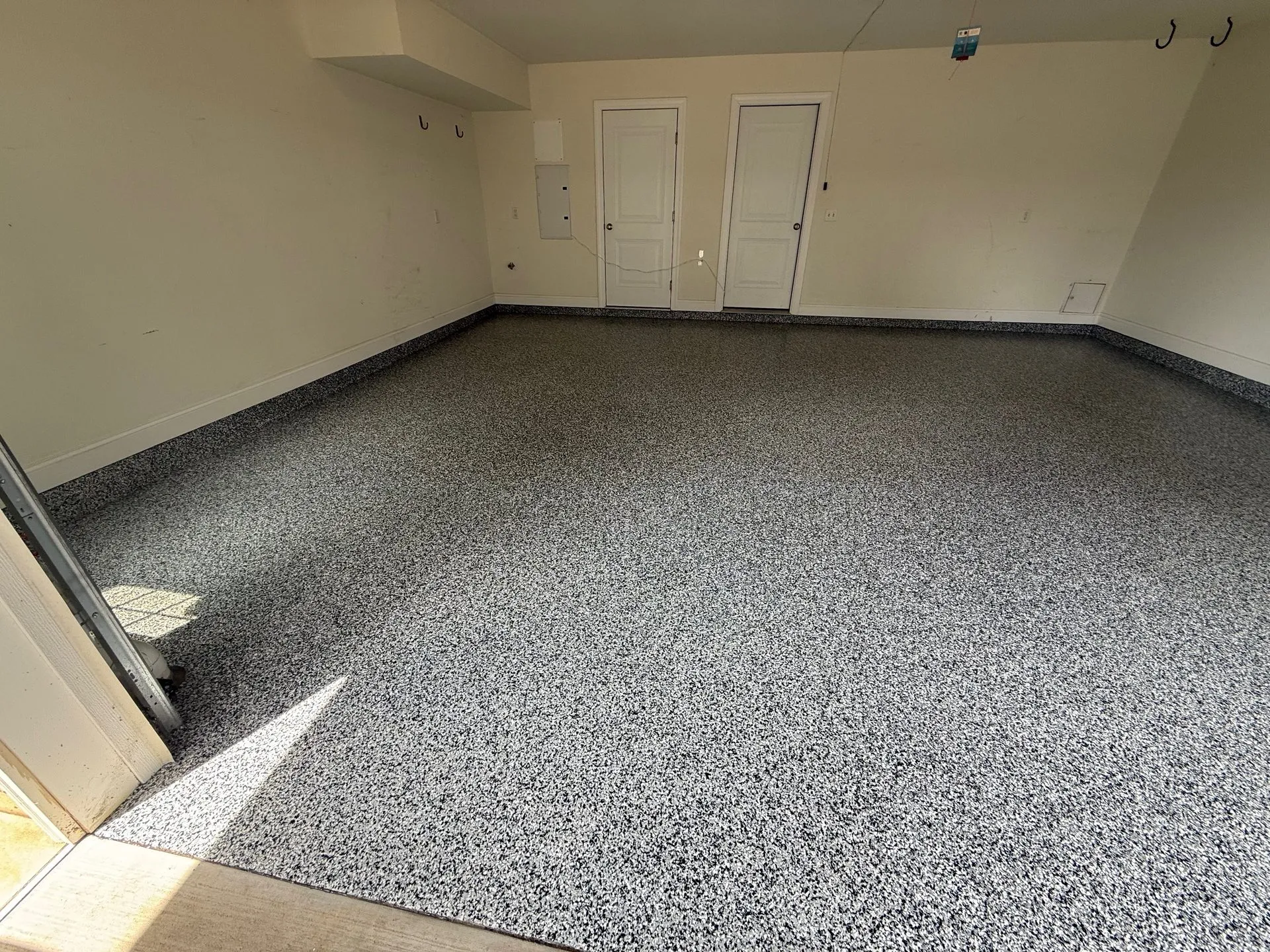
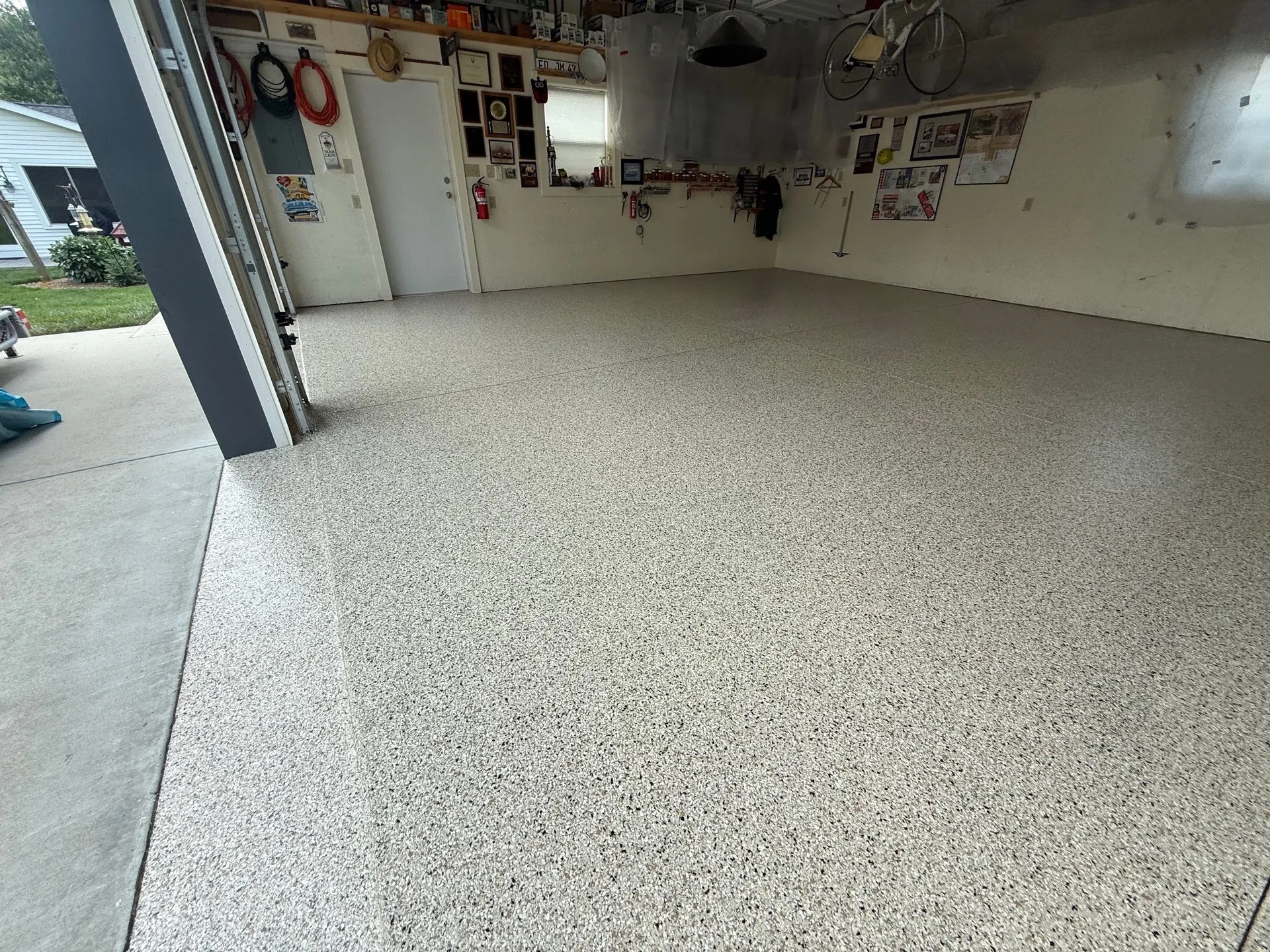
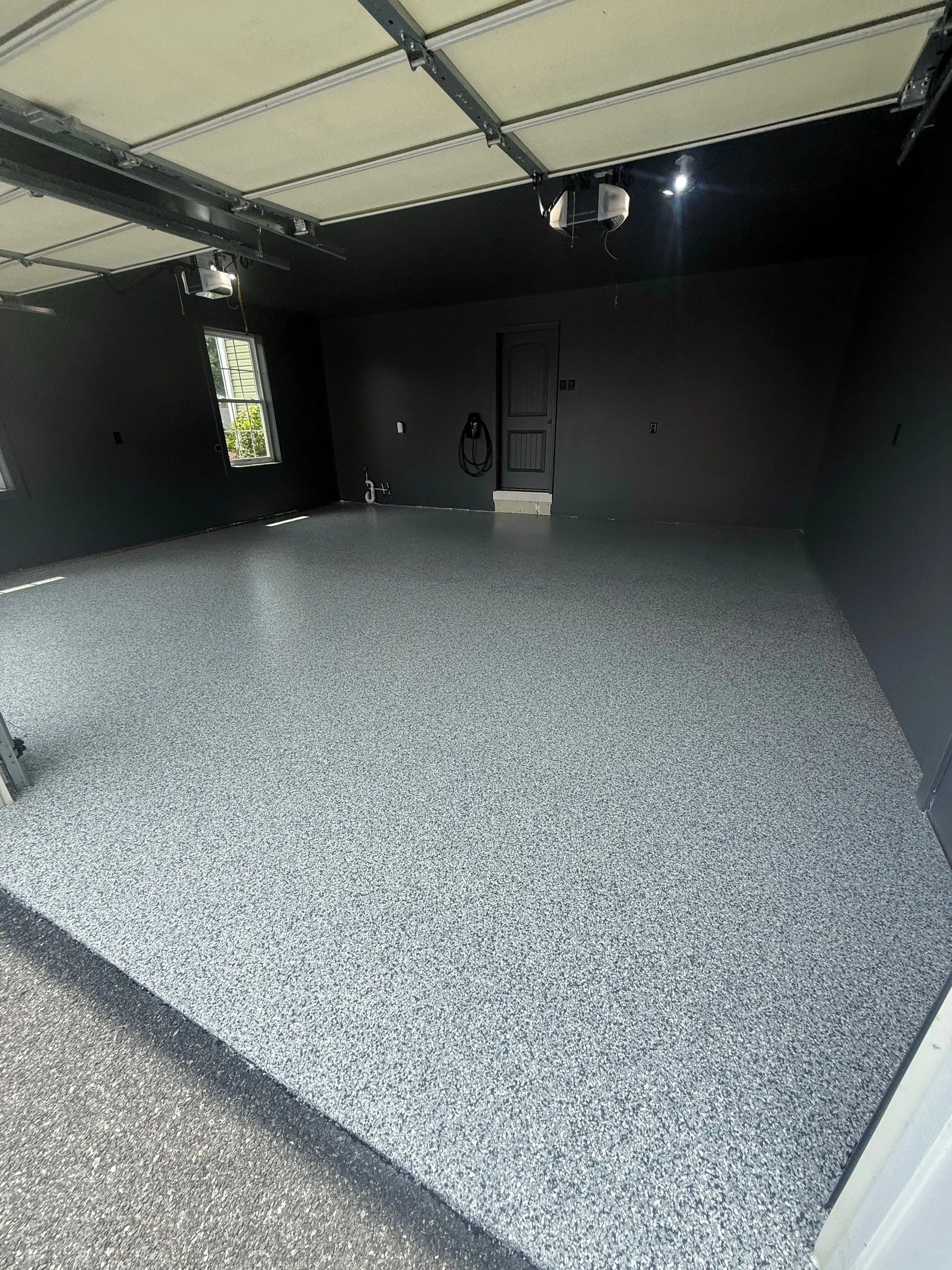
Four layers, and the first one is the reason the other three last.
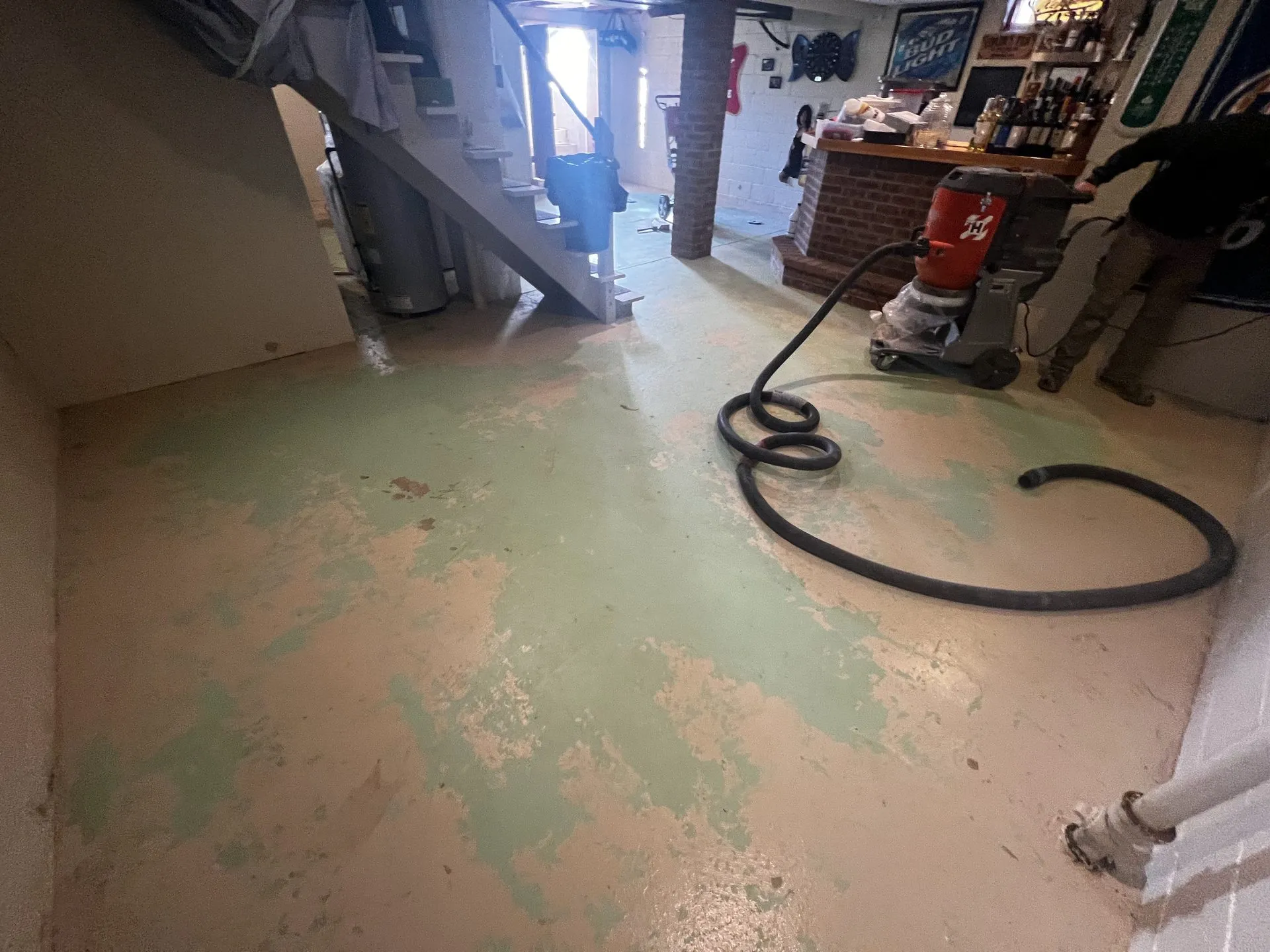
A standard two or three car garage is a single-day job. We arrive early, and the floor is coated before we leave.
Everything comes off the floor. We diamond grind the full slab including the edges, then vacuum the dust as we go rather than after.
Cracks, pits, spalled edges and the apron where the door meets the driveway all get filled and re-ground flat.
Pigmented base goes down and flake is broadcast into it by hand. Excess is scraped and vacuumed once it has set.
Two clear polyaspartic coats seal it. Walk on it that evening, park on it the next morning.
Polyaspartic does not soften and release when a warm tire sits on it, which is the single most common way an epoxy garage floor fails.
It stays flexible enough to move with a slab that swings from humid August to a February cold snap, and it cures in temperatures epoxy will not.
Road salt, brake fluid, oil and antifreeze wipe off instead of staining or etching the surface.
A light flake blend bounces the light from one bulb around the whole bay, and the floor sweeps and mops instead of shedding dust.
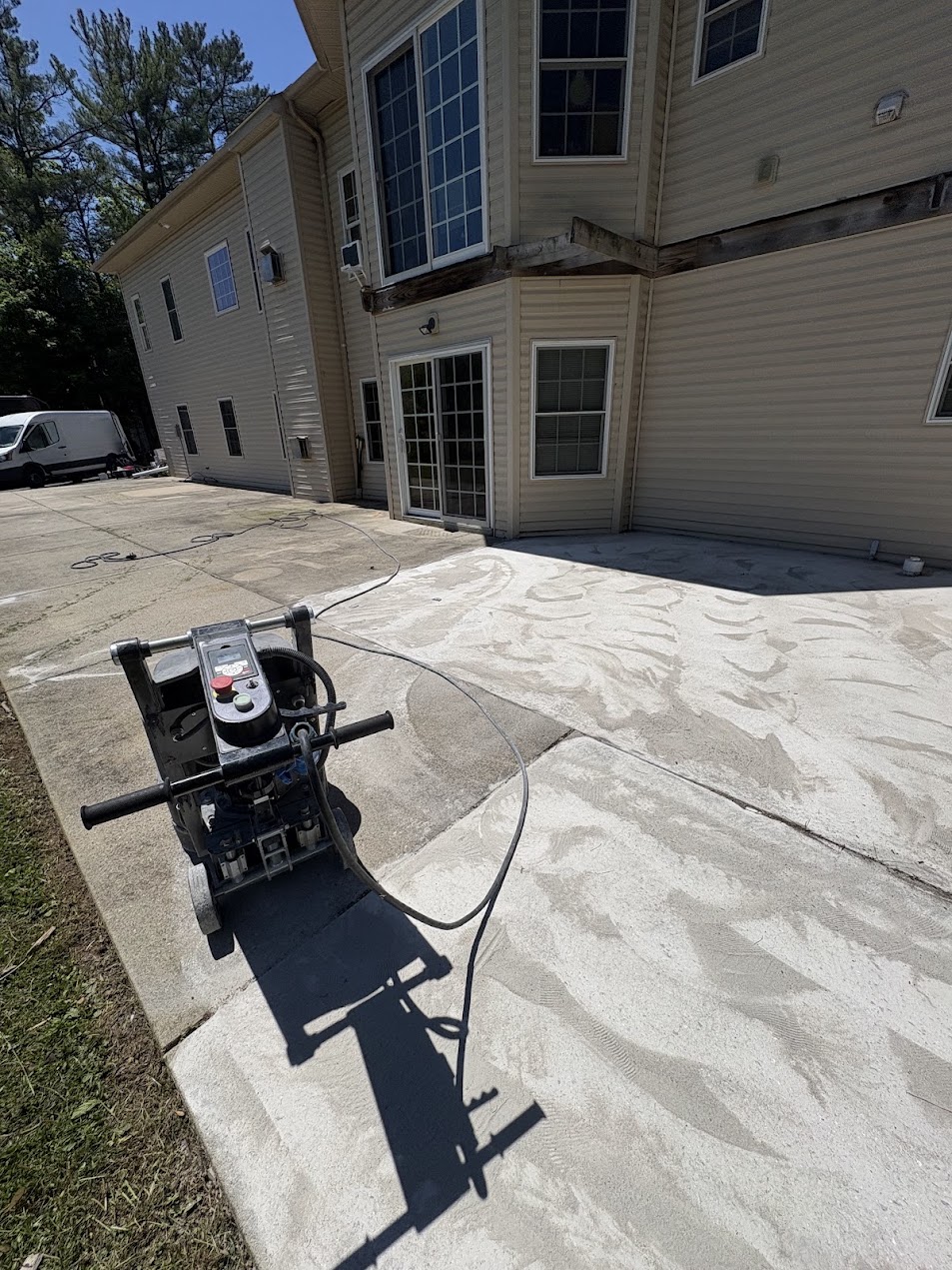
If a quote sounds unusually cheap, this is almost always the step that was removed.
Acid etching is a wash. It roughens the very top of the slab and leaves behind whatever was sealing it, so the coating bonds to residue rather than to concrete. It is quick, it needs no equipment, and it is why so many garage floors peel in sheets a year or two later.
Diamond grinding mechanically removes the sealed surface and cuts a profile into the concrete underneath. It is slower, dustier and needs real machines, but the coating then keys into the slab itself. We grind every floor we coat, including new construction, and we would rather lose a job than skip it.
Polyaspartic vs epoxy, comparedDarker, higher-contrast blends hide tire marks and dust best. Lighter blends make a small or north-facing garage feel twice as open.
Our most requested garage blend. Hides everything.
Highest contrast. Best at hiding tire marks and dust.
Brightens a dark bay or a basement-level garage.
Warm and low-glare. Good with wood or cream cabinets.
Blend names shown here are descriptive. We will bring physical samples to your estimate so you are choosing from the real thing.
See all colors and finishesFoot traffic the same evening, usually about four to six hours after the final topcoat. Vehicles the next morning, so roughly 24 hours. That fast return is the main practical difference between polyaspartic and epoxy, which typically wants three to five days before you drive on it.
Peeling is a bond failure, not a product failure. It happens when a coating is applied over a sealed, etched or painted slab. Because we diamond grind down to open concrete on every job, the coating keys into the slab rather than sitting on top of whatever was there before.
Static cracks are chased out, filled and ground flush before any coating goes down, and they disappear under the flake. A crack that is actively moving, or a slab that has heaved, is a structural issue. We will tell you that at the estimate rather than coating over it and letting it reappear.
The flake itself creates a texture, and we can add an anti-slip additive to the final topcoat if the garage takes snow and salt off vehicles all winter. Tell us at the estimate and we will spec it in.
Yes, and we recommend it. The apron takes the worst of the salt and freeze-thaw. It is exposed to UV, so we use a UV-stable topcoat there. Epoxy would amber in that position within a season.
Sweep or blow it out, then mop with warm water and a neutral cleaner. No wax, no sealing, no re-coating on a schedule. Avoid dragging steel shelving across it and put a mat under a welder or a bench grinder.
We work out of Ephrata and cover Lancaster, Chester, Berks, Dauphin, York and Lebanon counties. If you are on the edge of that, call us anyway and we will tell you straight whether it is worth the drive.
Tell us the room, roughly how big it is and when you want it done. We will measure, look at the slab and give you a price that does not move.
Polyaspartic concrete floor coatings installed in a single day across central Pennsylvania. Every slab diamond ground, never acid etched.
© 2026 Spartic Coatings. All rights reserved.
Serving Lancaster, Chester, Berks, Dauphin, York and Lebanon counties, Pennsylvania.