Ask how the slab will be prepared, and expect to hear diamond grinding rather than acid etching or a chemical wash. Ask whether the slab is tested for moisture first, exactly what product goes down and how many coats, how cracks and control joints are handled, whether the apron is included, and what the written warranty excludes. Each of those questions has an answer that is hard to fake, which is why nine of them in one conversation will tell you more than three quotes side by side.

Floor coating quotes are hard to compare because the expensive part of the job is invisible once it is finished. Two floors can look identical on day one and be completely different products underneath. The difference shows up in year three. These nine questions are the fastest way to find out which one you are buying, and they work on any contractor, us included.
This is the question. If you only ask one, ask this one.
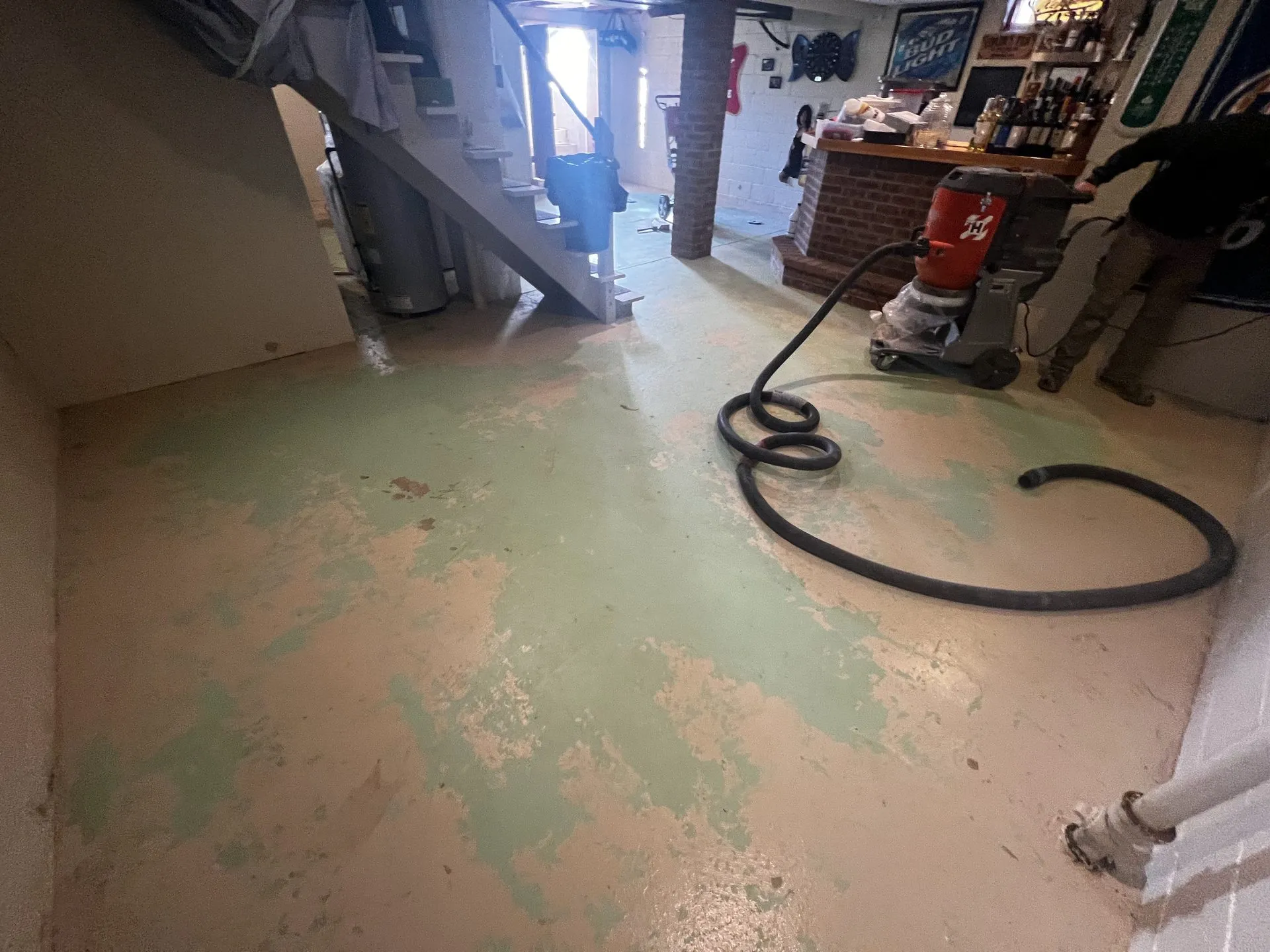
The answer you want is diamond grinding, sometimes with shot blasting on a large or heavily contaminated floor. Grinding mechanically removes laitance — the weak layer of fine cement paste left by troweling — along with old sealer, old coating and contamination, and it opens a concrete profile with real tooth for the coating to key into.
The answers that should end the conversation are “we acid etch it,” “we give it a chemical wash,” “we pressure wash and scuff it,” or “our primer doesn't need it.” Acid etching is a chemical rinse. It leaves salt residue, it does not reliably remove laitance, and it produces a profile that is inconsistent across a floor. It is the single most common reason coatings fail, and the mechanism is laid out in why do garage floor coatings peel.
A coating is a vapor-resistant film. If the slab is passing moisture upward, that vapor collects at the bond line and eventually blisters and delaminates the floor. The test is cheap. Redoing the floor is not.
Ask what test they use — a calcium chloride test or an in-slab relative humidity probe are the two standard answers — and ask whether the reading gets recorded. A recorded reading protects both sides if there is an argument later. This matters most below grade and on new concrete, and it is covered in can you coat a basement floor that gets damp.
“Epoxy” is not a specification, it is a category. You want the actual build, layer by layer: what primer if any, what the pigmented base coat is, what the topcoats are, and how many. Our standard residential build is a pigmented base, flake broadcast into it, and two clear polyaspartic topcoats.
Two clear coats matter because the clear is the wear layer. One thin clear coat over flake wears through at the door line and in the tire paths first, and once it is through there is no repairing it invisibly. The differences between the chemistries are on polyaspartic vs epoxy.
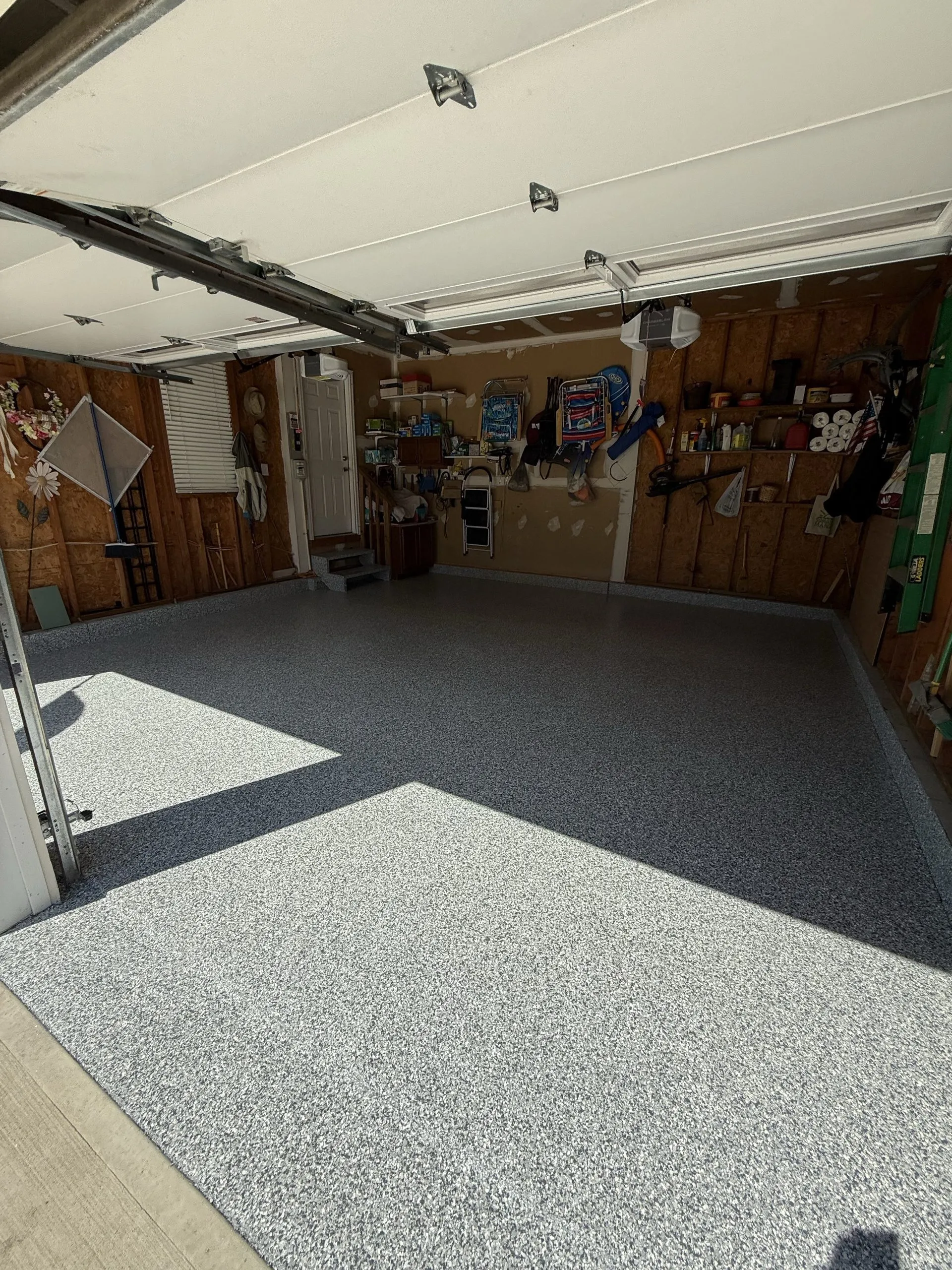
Broadcast to rejection means flake is thrown into the wet base by hand until the surface physically will not take any more, then the loose excess is scraped and vacuumed off. That gives you full, even coverage with no base color showing through.
A partial broadcast — sometimes sold as a “light” or “accent” flake — uses much less material and leaves visible base color between the chips. It is a legitimate look if that is what you chose. It is not what most people picture, and it should not be what you get by default because it was cheaper to quote.
These are two different things and a good contractor will distinguish them without prompting.
Cracks get chased out to a V, cleaned, and filled with a structural repair material before coating. Filling a crack flush without opening it first is cosmetic and it will reappear.
Control joints are deliberate. They exist so the slab has a planned place to crack as it moves. Bridging one rigidly with coating and hoping for the best means the joint moves anyway and telegraphs a line through the finish. Ask whether they fill joints, honor them, or fill them with a flexible material, and ask what happens if a joint moves later.
The apron is the strip where the garage floor meets the driveway, usually just outside the door line. It takes the worst of the weather and the road salt, and it is the first part of the floor anyone sees from outside.
It is also where quotes quietly differ. Some include it, some do not, and some exclude it without saying so. Get it stated either way in writing. If it is excluded, you will have a crisp line between finished floor and weathered concrete at the exact spot you look at every day.
A straight answer here tells you what system they are using. A polyaspartic build is typically installed in one day, with foot traffic around 4 to 6 hours after the final topcoat and vehicle traffic around 24 hours. A traditional epoxy build with an overnight window between coats is a multi-day project.
Also ask what would turn a one-day job into two — removing a failed existing coating, significant slab repair, or a high moisture reading are the usual causes. The full timeline is on how long does a garage floor coating take to install.
Ask for the exclusions, not the headline. Everyone advertises a lifetime warranty; the document is what varies. Find out whether it covers labor or material only, whether it transfers if you sell the house, whether it is prorated, and who honors it — the installer or a manufacturer you would have to chase.
A warranty with no exclusions listed is not a stronger warranty, it is a less serious document. What these things genuinely cover and do not is set out in what does a lifetime warranty on a floor coating actually cover.
Ask for proof of liability insurance and workers' compensation, and ask whether the crew doing your floor is employed by the company or subcontracted. Subcontracting is not automatically a problem, but it changes who is accountable when something needs fixing in two years, and you should know the answer before rather than after.
A few patterns come up often enough to name:
Because preparation is the part you cannot inspect after the fact and the part that decides whether the floor is still there in ten years. Every coating on the market fails the same way: it lets go of the concrete. It lets go because it was never mechanically keyed in, or because water was coming up underneath it. Both of those are decisions made on the morning of the install, before any color goes down.
That is why four of these nine questions are about what happens before the first coat. Our own sequence is set out step by step on how it works. Ask us all nine — we would rather answer them than have you find the answers later. Get in touch and bring the list.
Three pages that answer the questions this article usually raises.
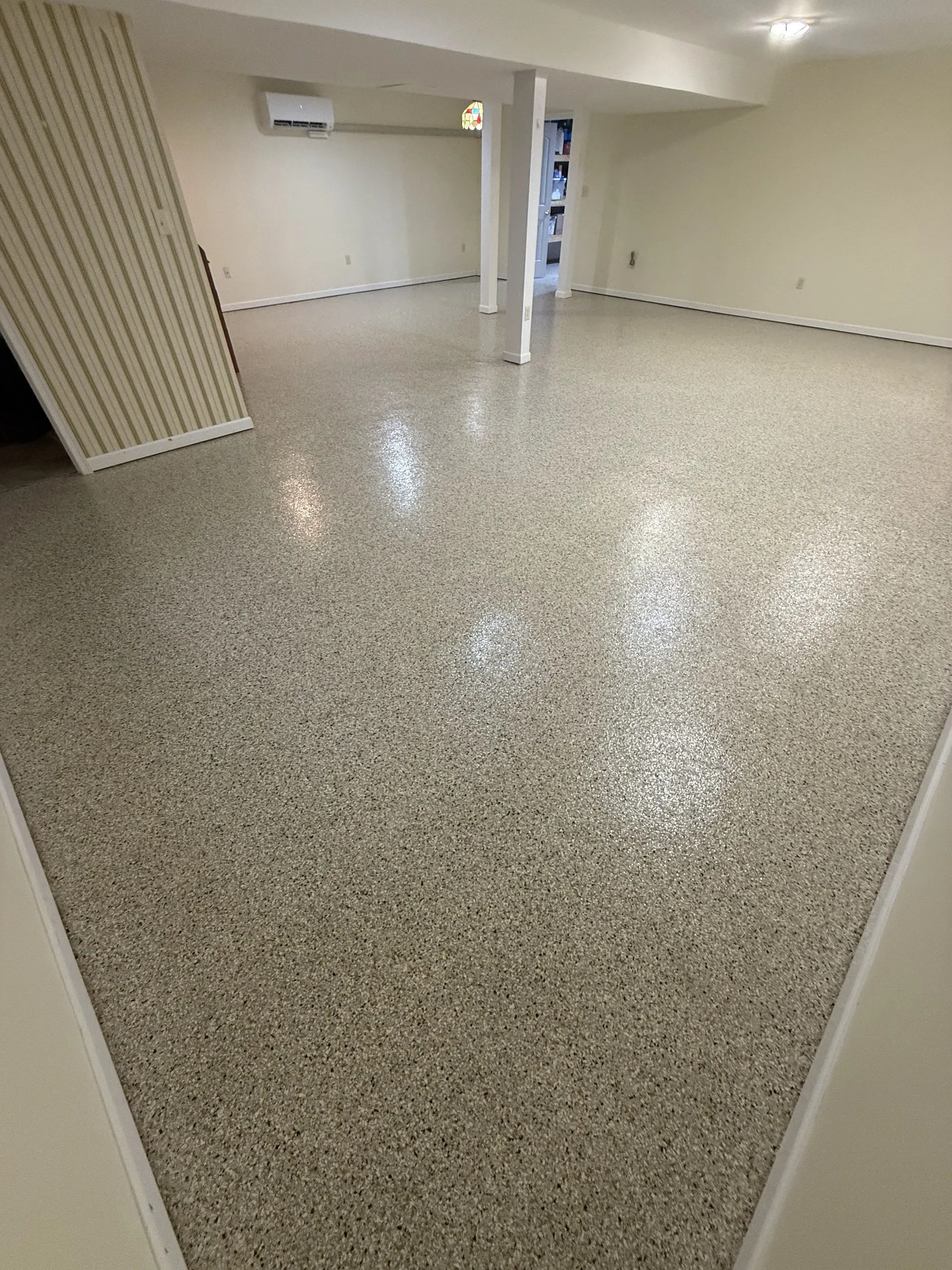
Diamond grinding, crack and joint repair, base coat, flake broadcast to rejection, two clear polyaspartic topcoats — in one day.
See the blends side by side and how each one hides dust, tire marks and the odd dropped wrench.
We measure the slab, check moisture and control joints, and give you a firm number at the estimate.
Tell us the room, roughly how big it is and when you want it done. We will measure, look at the slab and give you a price that does not move.
Polyaspartic concrete floor coatings installed in a single day across central Pennsylvania. Every slab diamond ground, never acid etched.
© 2026 Spartic Coatings. All rights reserved.
Serving Lancaster, Chester, Berks, Dauphin, York and Lebanon counties, Pennsylvania.