Sweep or blow the grit off, then mop with a pH-neutral cleaner and warm water. That is the entire routine. Never wax a polyaspartic floor, never use it with a wax-based or oil-based cleaner, and never reseal it — the clear topcoat is the wear layer and there is nothing to top up. The things that actually damage these floors are dragged metal, dropped tools, rubber mats left in one place for months, and aggressive chemicals allowed to sit.
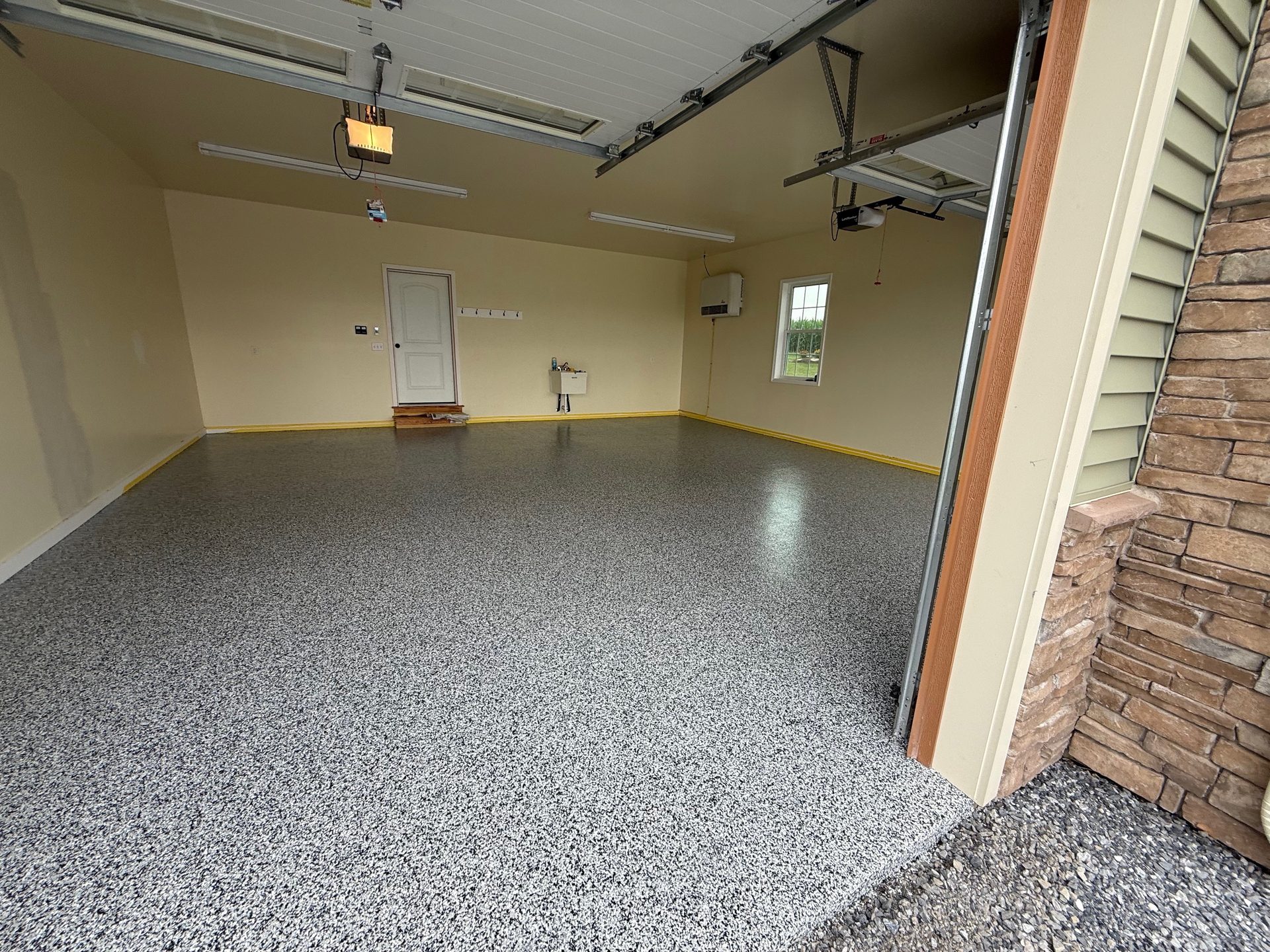
A coated concrete floor is the lowest-maintenance floor in your house, and most of what people do to look after it is unnecessary or actively harmful. The whole routine is: get the grit off, mop with a neutral cleaner, wipe spills when they happen. Nothing to wax, nothing to reseal, nothing to buff.
Grit is the only real enemy of the finish, because grit under a shoe or a tire is sandpaper. Get it off and the gloss lasts.
No. This is the most common misunderstanding, usually carried over from sealed or stained concrete, which does need periodic resealing. A polyaspartic system is different: the two clear topcoats are the wear layer, and they are a cured, cross-linked film, not a sacrificial sealer sitting on top. There is no annual product to apply. If years of heavy use eventually dull the gloss in a traffic lane, the answer is a professional scuff and a fresh clear coat, not something out of a bottle.
This is the Pennsylvania question. Winter brine and rock salt get carried in on tires and drip off the car onto the floor. The coating itself is not damaged by salt, but there are two things worth doing.
First, rinse or mop the floor when the puddles dry to a white crust. Salt crust is abrasive, it looks bad, and if it sits in a control joint or at the apron edge it can work at the concrete underneath the coating rather than the coating itself.
Second, pay attention to the apron — the strip where your floor meets the driveway. It takes the most salt and the most freeze-thaw. A coated apron handles it, but it is the first place to rinse and the first place to inspect each spring.
Winter is also when an uncoated slab shows what salt really does: spalling, pitting and a surface that dusts continuously. The coating is what prevents that, which is part of why we cover it on the garage floor coating page.
You can work on a car on a coated floor, which is the whole point of having one. A few practicalities:
Ranked by how often we see it:
Almost everything comes off with warm water, a neutral cleaner and a white nylon pad or a soft deck brush. For a stubborn tire mark or a scuff, a little more cleaner and a nylon pad, working in small circles, then rinse. Do not reach for a green or black abrasive pad, a wire brush, or a steel scraper — those will dull the clear coat faster than the stain ever would.
Yes, in two ways. Visually, a flake blend breaks up the surface so dust, small debris and tire marks do not read as obviously as they do on a solid color — there is more on that in the best garage floor colors for hiding dirt and tire marks. Practically, the light texture flake creates gives you grip when the floor is wet without making it hard to mop. You can see the difference between blends on colors and finishes.
That is the whole maintenance program. A broom, a bucket of warm water, a neutral cleaner, and a little judgment about what you set down on it.
Three pages that answer the questions this article usually raises.
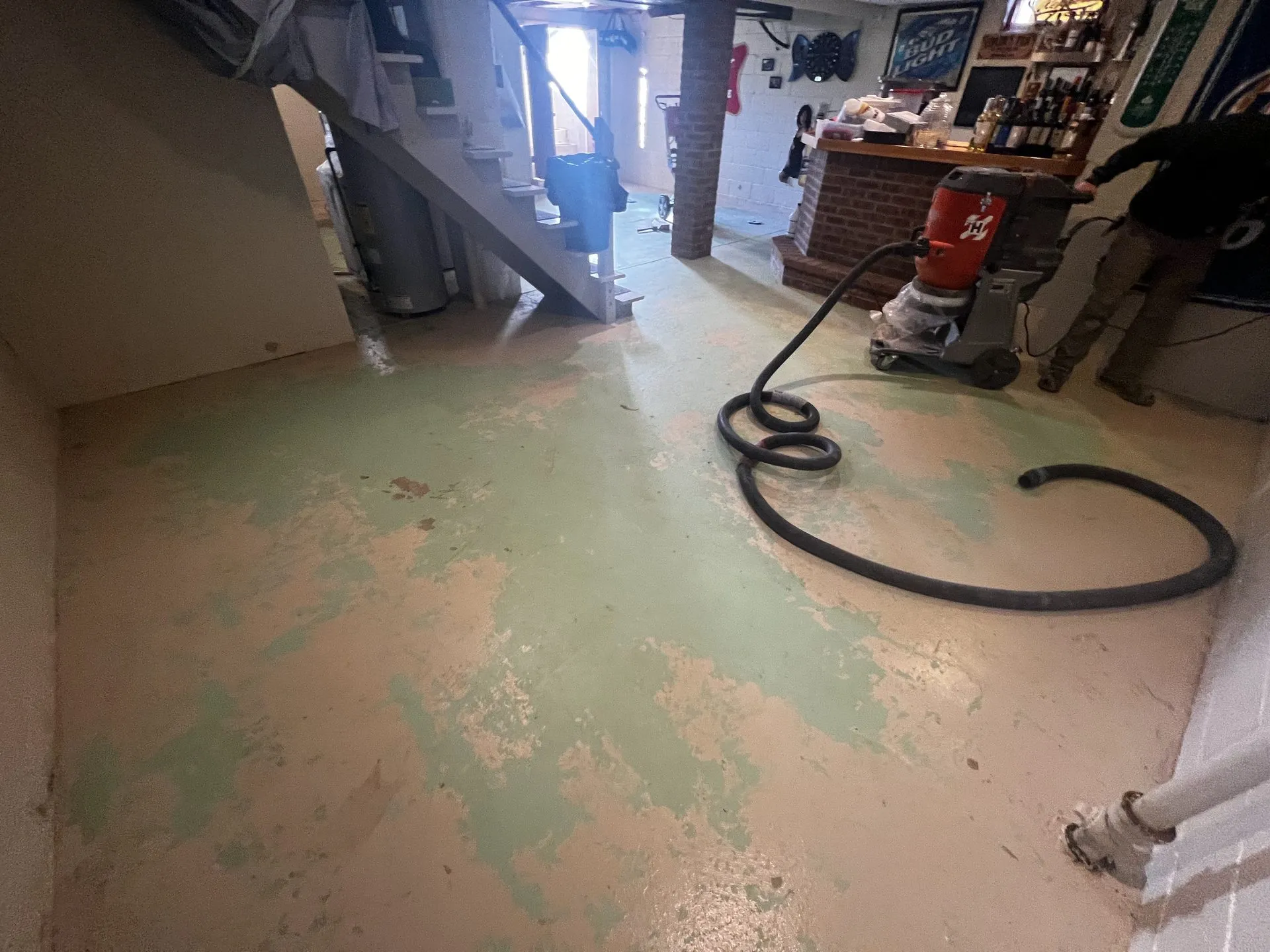
Diamond grinding, crack and joint repair, base coat, flake broadcast to rejection, two clear polyaspartic topcoats — in one day.
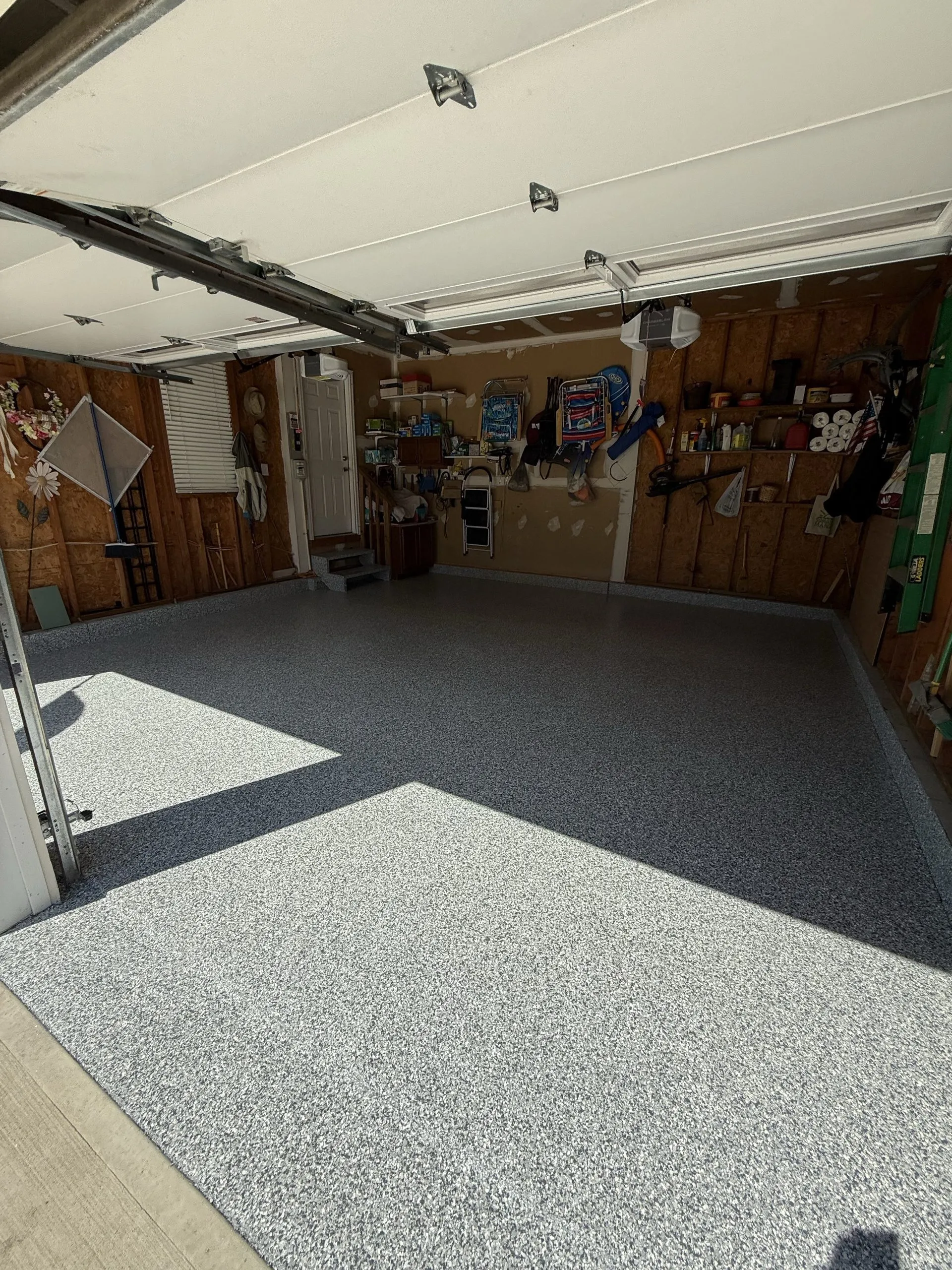
See the blends side by side and how each one hides dust, tire marks and the odd dropped wrench.
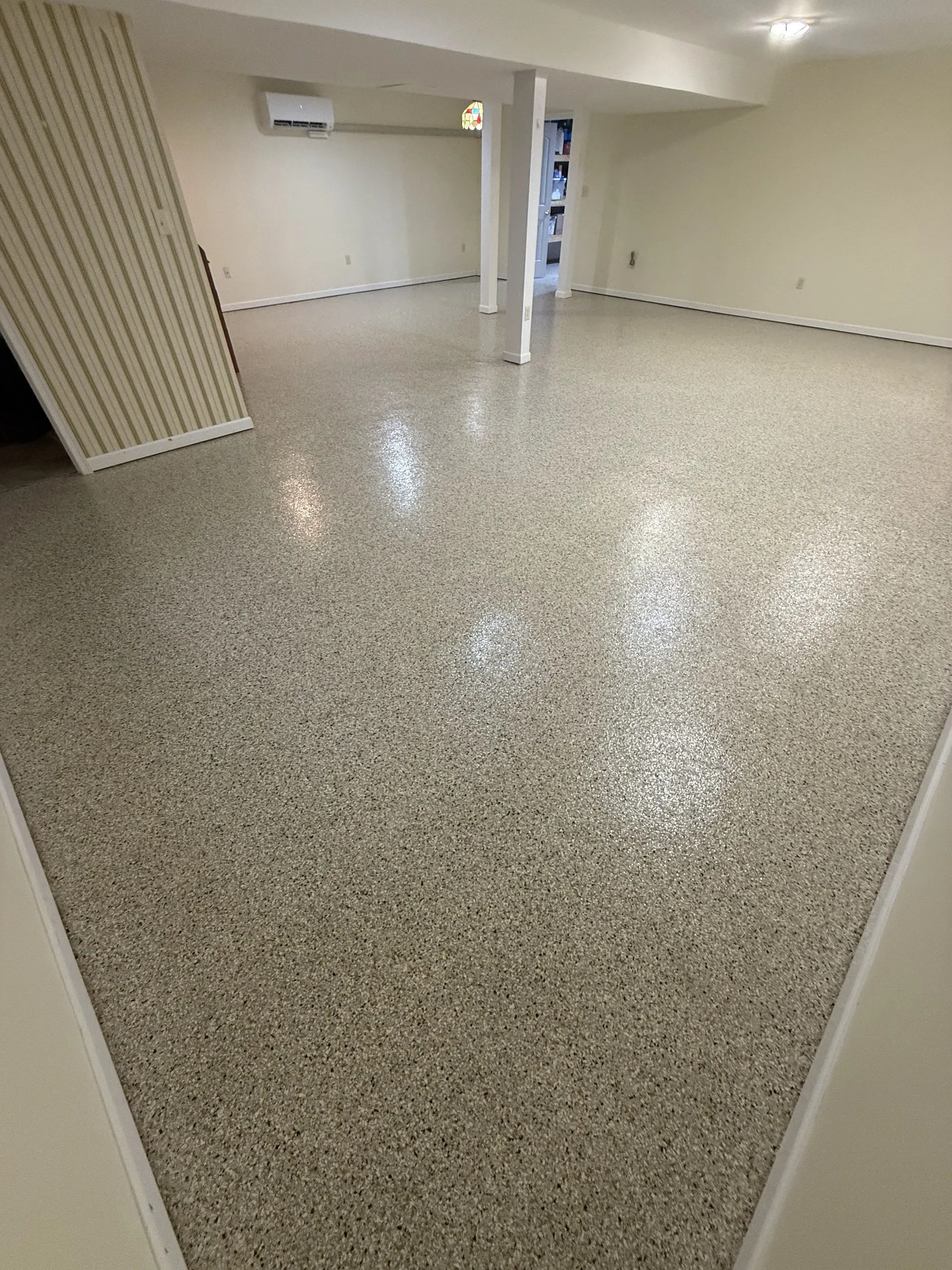
We measure the slab, check moisture and control joints, and give you a firm number at the estimate.
Tell us the room, roughly how big it is and when you want it done. We will measure, look at the slab and give you a price that does not move.
Polyaspartic concrete floor coatings installed in a single day across central Pennsylvania. Every slab diamond ground, never acid etched.
© 2026 Spartic Coatings. All rights reserved.
Serving Lancaster, Chester, Berks, Dauphin, York and Lebanon counties, Pennsylvania.