A coated pool deck in a light or mid-tone color runs about as warm underfoot as the bare concrete it replaced; a dark color runs hotter. Color drives surface temperature far more than the coating does. Slip resistance is a specification rather than a hope: an anti-slip aggregate is broadcast into the final clear coat so the finished surface has texture that works when it is wet, and a deck built that way is grippier than a smooth troweled slab.
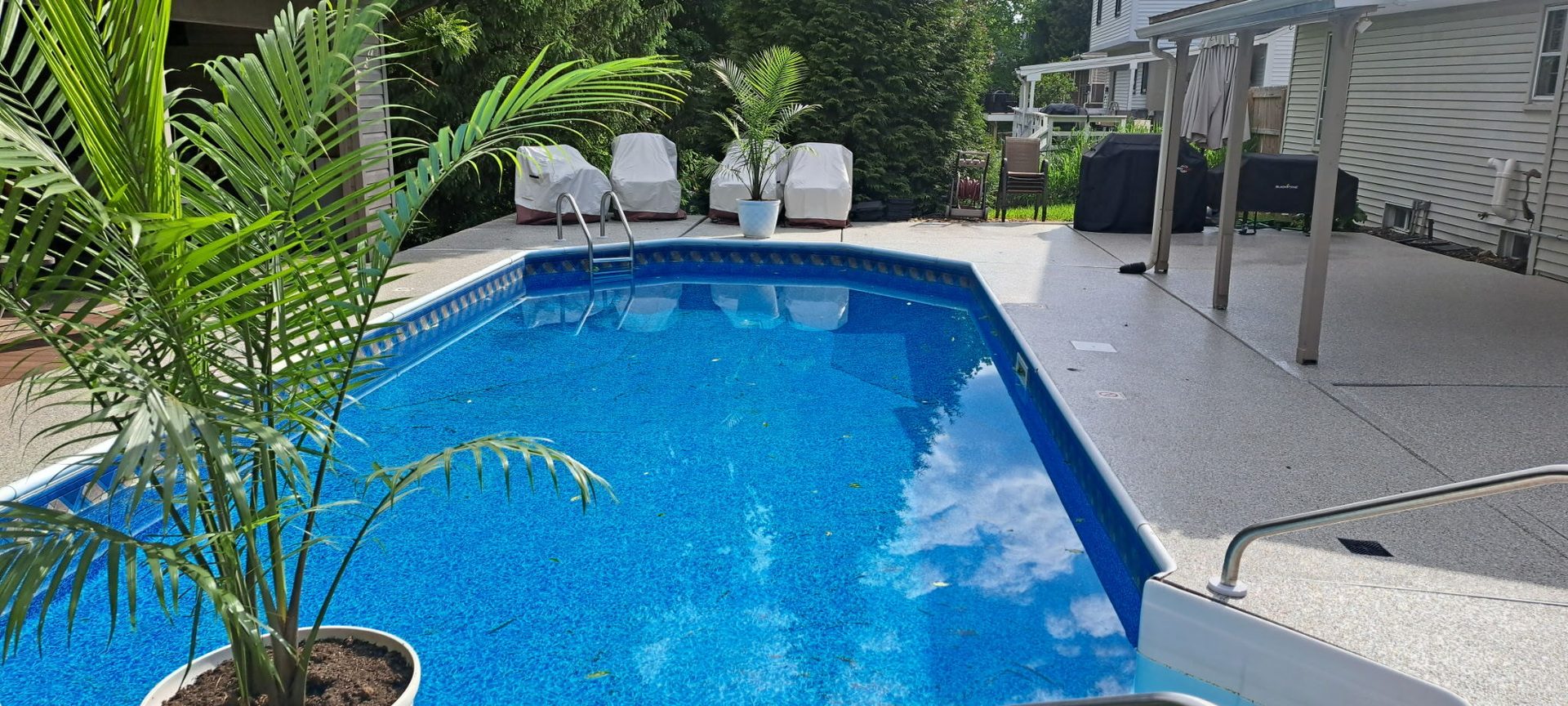
Two questions come up on every pool deck estimate, and they deserve straight answers. Heat is a color question, not a coating question — a light or mid-tone deck will feel much like the concrete it replaced, and a dark one will feel hotter, exactly as a dark driveway does. Slip is a specification question. We broadcast an anti-slip aggregate into the final clear coat, which gives you texture underfoot that does not wash off, wear off in a season or depend on the deck being dry.
Surface temperature outdoors is driven overwhelmingly by how much sunlight the surface absorbs rather than reflects. That is a function of color and, to a lesser degree, gloss. A pale sandstone or light grey blend reflects most of what hits it. A charcoal or near-black deck absorbs it and holds it.
So the honest guidance is simple. If the deck is in full sun and people will be on it barefoot in July, pick light. A light flake blend with a broadcast aggregate is not measurably hotter than the bare concrete around it, and it is cooler than dark pavers or a stamped and stained deck in the same position. Choose a dark color for a shaded courtyard or a covered patio and it is a non-issue. Choose a dark color for a south-facing pool surround and you will notice it every afternoon.
The texture itself helps a little, because a broadcast surface has more relief than a troweled one, which means less flat surface area in contact with the bottom of a foot at any one moment. It is a small effect. Color is the big lever, and it is worth spending time on — see colors and finishes and look at the samples outdoors in daylight rather than under a shop light.
Three separate things, and people tend to blame the wrong one.
A clear coating with no aggregate in it makes the first two worse, which is why a glossy uncoated sealer on a pool deck is a bad idea and why some people arrive at us having already had one. Aggregate is what fixes it.
The anti-slip aggregate — a fine, hard, graded particle, commonly aluminum oxide or a polymer grit — is broadcast into the clear polyaspartic while it is still wet, and then a second clear coat locks it in. Two details matter and they are both worth asking any contractor about.
First, the aggregate has to be in the coating, not sprinkled on top of a cured floor. Encapsulated aggregate stays for the life of the finish. Anything applied to a cured surface sweeps off in a season.
Second, the grade of the aggregate is a choice, and it is a genuine trade-off. A coarser grit gives more grip and is harder on bare feet and on a mop. A finer grit is comfortable and gives less bite. On a pool deck we normally go finer than we would on a commercial ramp, because the surface is used barefoot and you want grip without abrasion. Ask to feel a sample of the actual grade before it goes down. If a contractor cannot produce one, that tells you something.
Slightly, and not enough to matter. A textured exterior deck gets a blower or a hose rather than a dust mop, which is what you would do with a pool deck anyway. The routine for coated concrete is on how to clean and maintain a coated concrete floor, and the exterior version is the same idea with a hose in place of a mop: keep grit and organic debris off it, and do not use a wax or an oil-based product on it.
The thing to stay on top of outdoors is organic growth in the shaded corners, under furniture, and along a wall where the deck stays damp. Rinse it before it establishes. That is the difference between a deck that grips and a deck with a slick green film on the north side of it.
Pool chemistry is the easy part. Chlorinated water, salt-system water and normal pool chemicals splashed and rinsed are well within what a polyaspartic system handles. What you avoid is a puddle of concentrated chemical sitting on the surface for days — if you spill shock or a concentrated acid, rinse it rather than leaving it.
Sun is the interesting one. Polyaspartic is aliphatic, which means it is UV-stable and does not amber the way a clear epoxy does. That matters more on a pool deck than anywhere else on a property, because the deck is in direct sun all day every summer. A clear epoxy topcoat outdoors will yellow, and once it yellows there is nothing to do about it but grind it off. The chemistry behind that difference is set out on polyaspartic vs epoxy.
Naming the failure modes is more useful than listing the benefits.
Most are. The deck needs to be sound, draining the right way, and old enough to have cured. If it is cracked in a few places, that is repair work rather than a disqualification. If it is heaving, sinking at one corner, or crumbling across large areas, coating it would be putting a finish over a structural problem, and we will say so rather than quote it.
Details on the system and what it looks like finished are on patio and pool deck coating. If you want someone to look at your deck and tell you plainly whether it should be coated, get in touch.
Three pages that answer the questions this article usually raises.
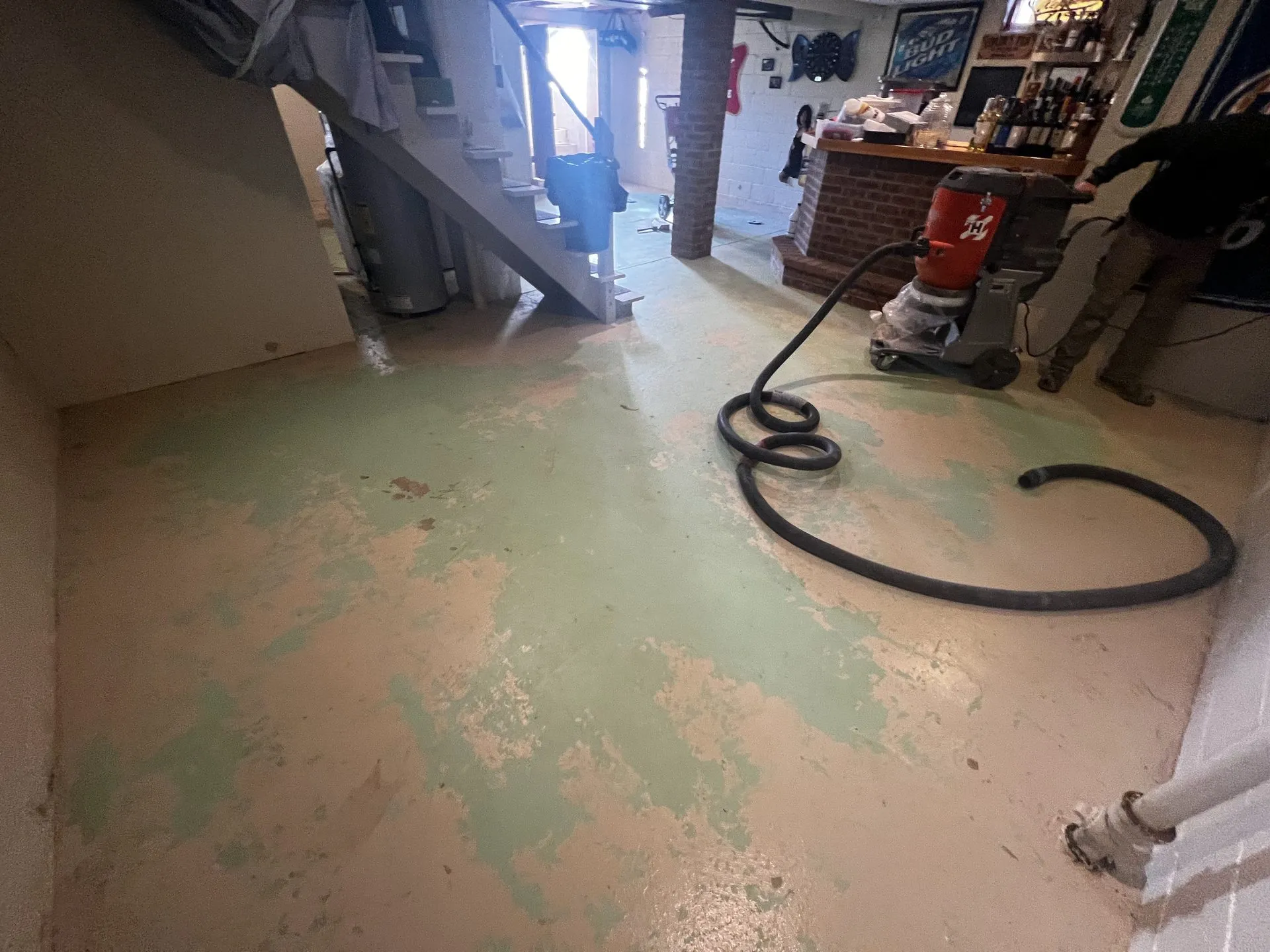
Diamond grinding, crack and joint repair, base coat, flake broadcast to rejection, two clear polyaspartic topcoats — in one day.
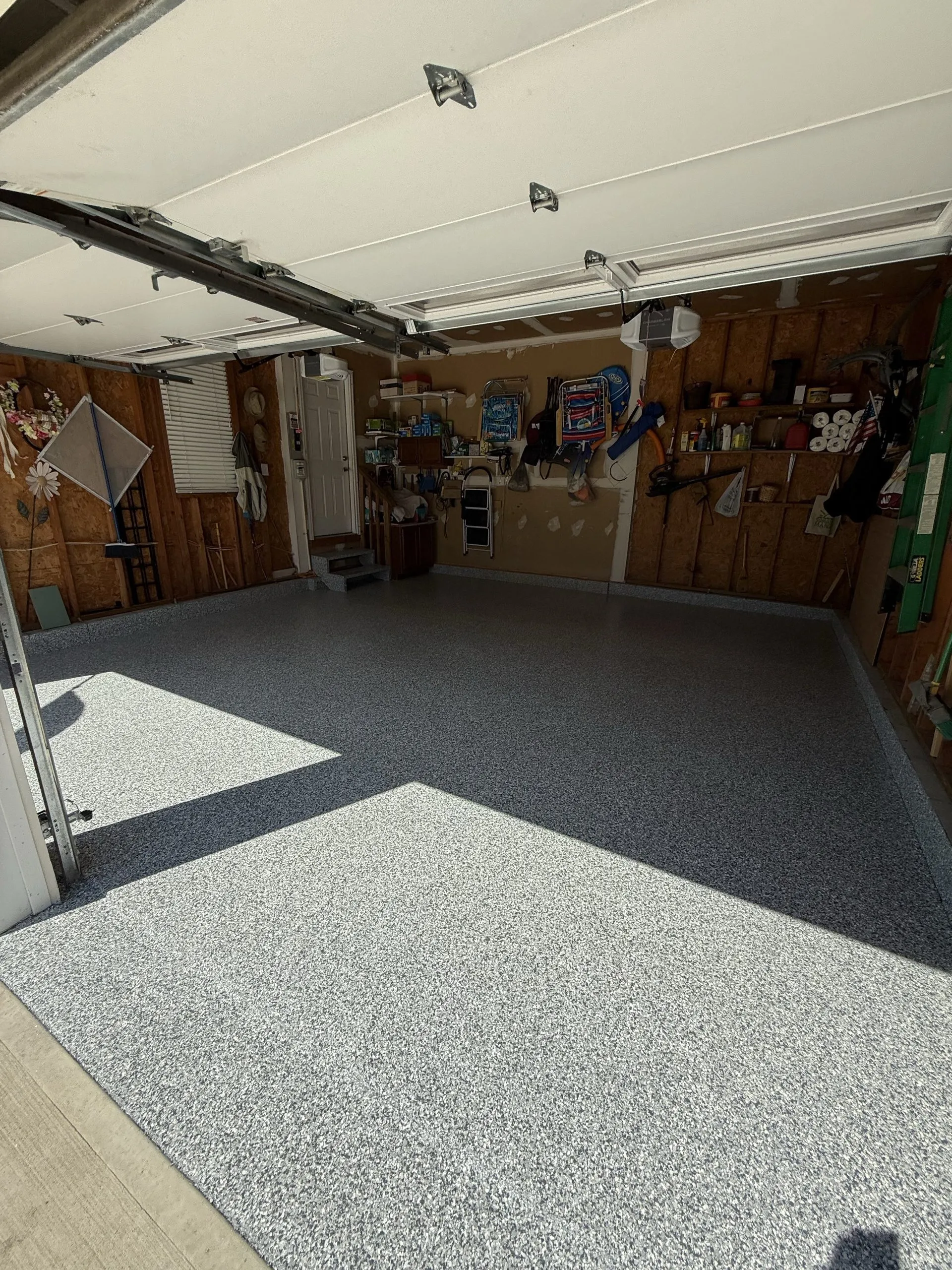
See the blends side by side and how each one hides dust, tire marks and the odd dropped wrench.
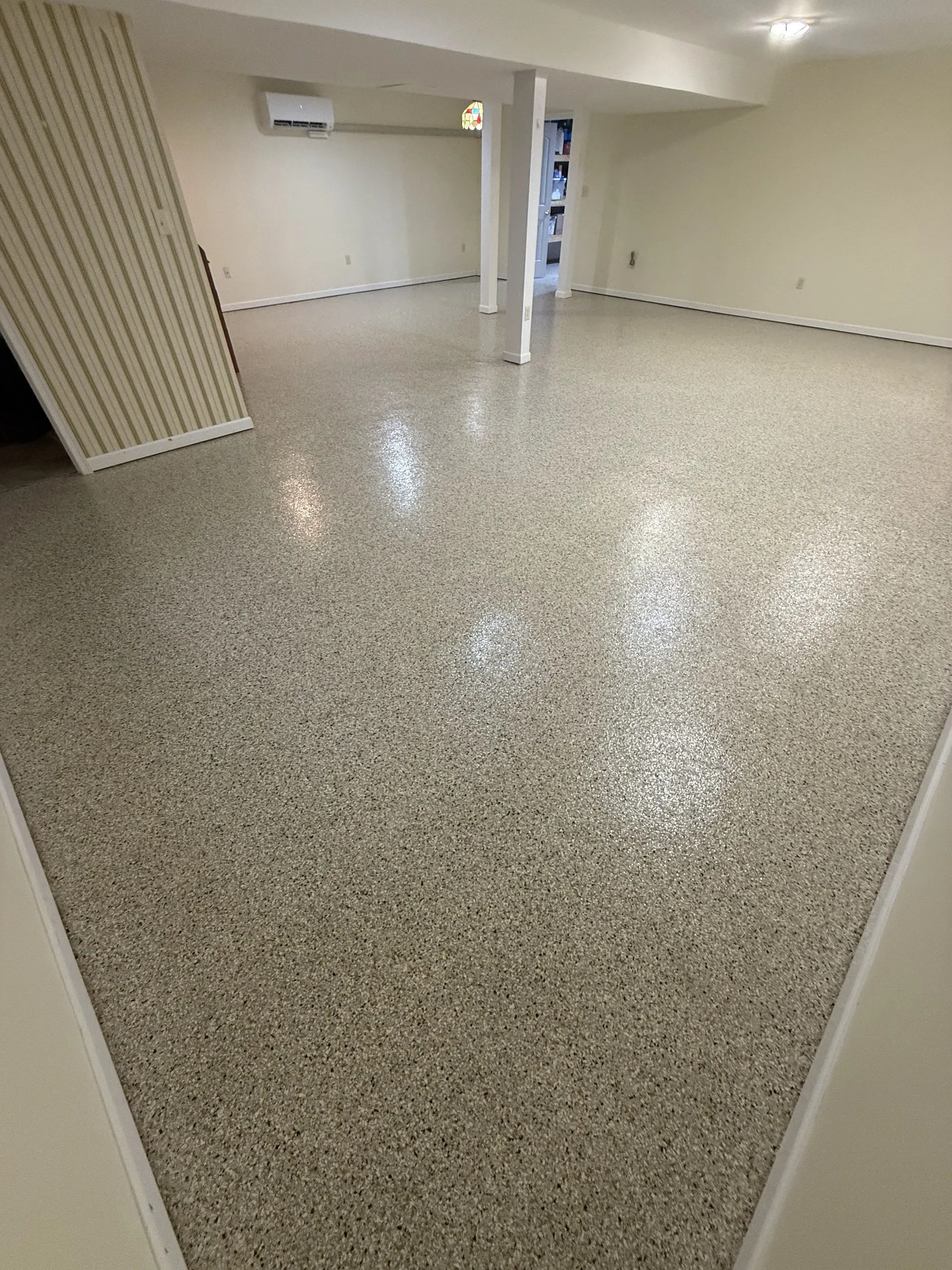
We measure the slab, check moisture and control joints, and give you a firm number at the estimate.
Tell us the room, roughly how big it is and when you want it done. We will measure, look at the slab and give you a price that does not move.
Polyaspartic concrete floor coatings installed in a single day across central Pennsylvania. Every slab diamond ground, never acid etched.
© 2026 Spartic Coatings. All rights reserved.
Serving Lancaster, Chester, Berks, Dauphin, York and Lebanon counties, Pennsylvania.