Mid-tone, multi-color flake blends hide dirt best. A grey or sandstone blend carrying black, white and tan chips breaks the surface up visually, so dust, grit and leaf litter never read as a single obvious mark the way they do on a solid color. Very dark floors show dust and salt, very light floors show oil and scuff, and solid colors show everything. Tire marks are a different question entirely: a properly bonded polyaspartic topcoat does not pick up hot tires, and the dark smudge people call a tire mark is transferred rubber that mops off.
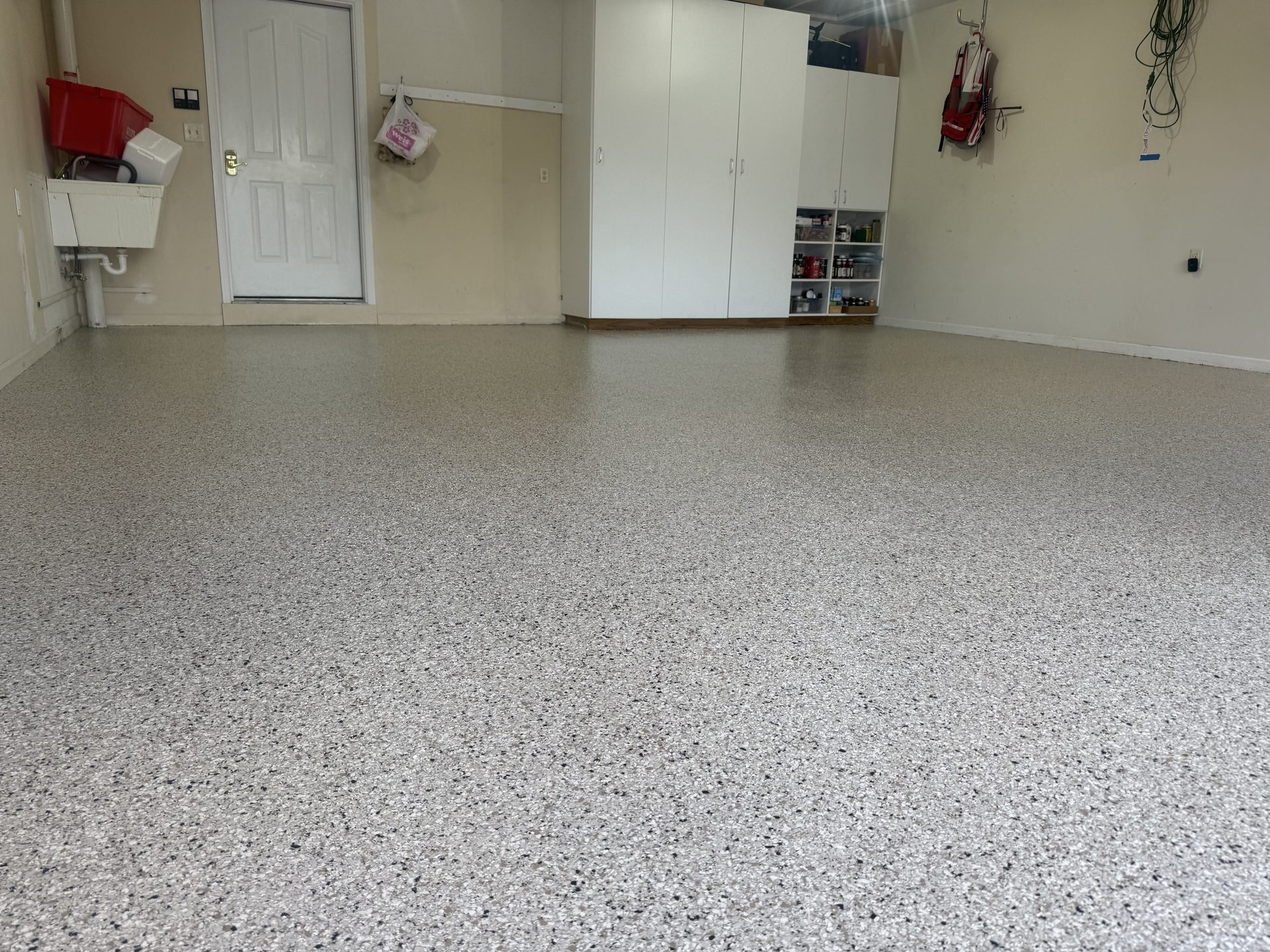
If the goal is a floor that still looks clean a month after it goes down, the answer is a mid-tone, multi-color flake blend. Not a solid color, not black, not white. The reason is visual rather than chemical: a blend with several chip colors in it gives your eye so much variation that a scatter of dust or a few leaves does not register as dirt. On a solid floor, every speck reads against a flat background.
Ranked by how forgiving they are day to day:
Visual noise. A flake floor is thousands of small chips in several colors and sizes, broadcast by hand into the wet base coat until the surface will not accept any more. The result is a surface with constant small variation in tone across it. Your eye reads that as texture, and a few particles of dirt sitting on it are just more variation.
A solid-color floor has no variation at all. Every mark on it is the only thing breaking a flat field, so every mark is visible from the doorway. This is the same reason a plain carpet shows traffic paths and a patterned one does not.
There is a second effect, which is that the flake layer plus two clear topcoats gives a subtle relief to the surface. Light scatters off it slightly rather than bouncing back as a sheet, which softens reflections and, incidentally, makes the floor less slippery than a mirror-smooth one.
No, and this is the most common confusion in the whole conversation. There are two completely different things people call tire marks.
Hot-tire pickup is a coating failure. Tires come off the road warm, the warmth softens a coating that was never properly bonded, and when the car moves the tire lifts patches of the coating off the slab. That is not staining. That is the floor coming up, and no color choice affects it. It is caused by bad preparation — an acid-etched or lightly scuffed slab instead of a diamond-ground one, or a coating that went over an existing sealer. A polyaspartic floor over a properly ground profile does not do it. The mechanism is covered in why do garage floor coatings peel.
Rubber transfer is the other thing, and it is cosmetic. Rubber leaves a dark smudge on a hard surface where a tire turns while stationary, the way it does on a showroom floor or a gym floor. It sits on top of the clear coat. It mops off with a neutral cleaner and a bit of effort. It is more visible on a light floor than a dark one, so if you are choosing for this specifically, mid-tone or darker is easier.
Not a mistake, just a different maintenance profile, and one worth knowing before you choose rather than after. A charcoal or near-black floor looks excellent the day it is finished and excellent again every time you sweep it. In between, it shows light dust, pollen, and the white haze from road salt in winter. In Pennsylvania that salt haze is a real part of December through March.
Dark floors also make a garage feel smaller and darker, which matters more than people expect in a space with one small window and a couple of fixtures. If you want dark, plan on adding light. If your garage already has good overhead lighting and light-colored walls, a dark floor can be the right call.
A light floor makes the space feel much bigger and brighter, and it does an enormous amount for a garage with dark walls or no window. The trade-off is that oil drips, brake dust, and rubber transfer all show clearly against it. Nothing will damage it — it wipes up — but you will see it in the meantime.
A good compromise is a light blend with meaningful dark chips in it rather than a pale monochrome. You keep most of the brightness and get back most of the forgiveness.
Significantly, and this is the single most useful practical tip here. Flake blends look different under cool white LED shop lights than they do under warm incandescent, and different again in daylight with the overhead door open. A grey blend that reads cool and industrial under 5000K shop lights can read almost blue in daylight.
So look at samples in the actual garage, with the actual lights on, and then again with the door up. Put the sample flat on the floor rather than holding it at eye level, because a floor is always viewed from above at an angle. Photographs on a screen are the worst way to choose, ours included. The full range is on colors and finishes and we will bring physical samples to the estimate.
Work through it in this order and the decision gets easy:
Whatever color you land on, the thing that keeps it looking right is not the color, it is the prep and the topcoat — and then a broom. The routine is on how to clean and maintain a coated concrete floor, and what goes into the floor itself is on garage floor coating. If you want samples in your garage under your lights, get in touch.
Three pages that answer the questions this article usually raises.
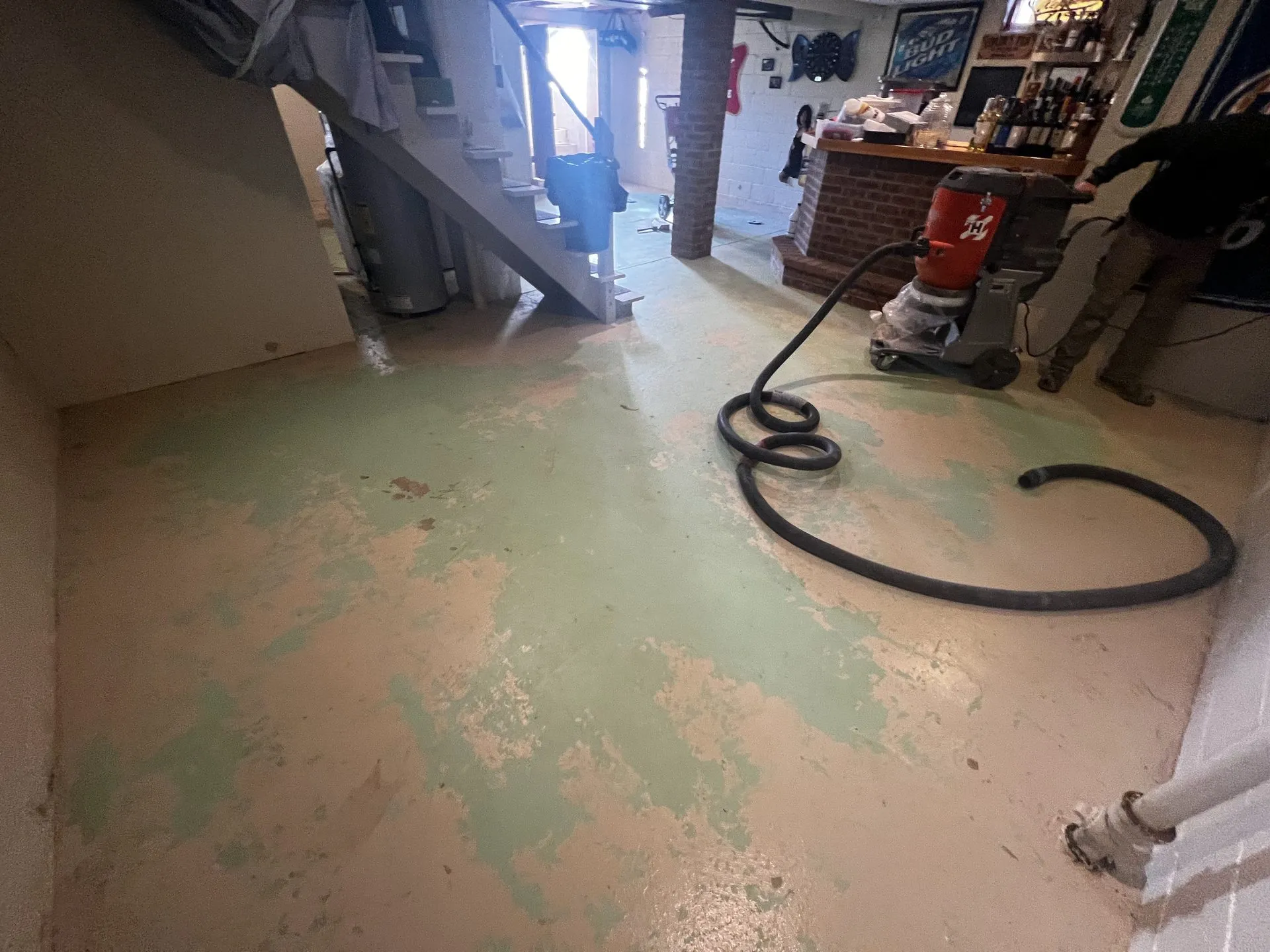
Diamond grinding, crack and joint repair, base coat, flake broadcast to rejection, two clear polyaspartic topcoats — in one day.
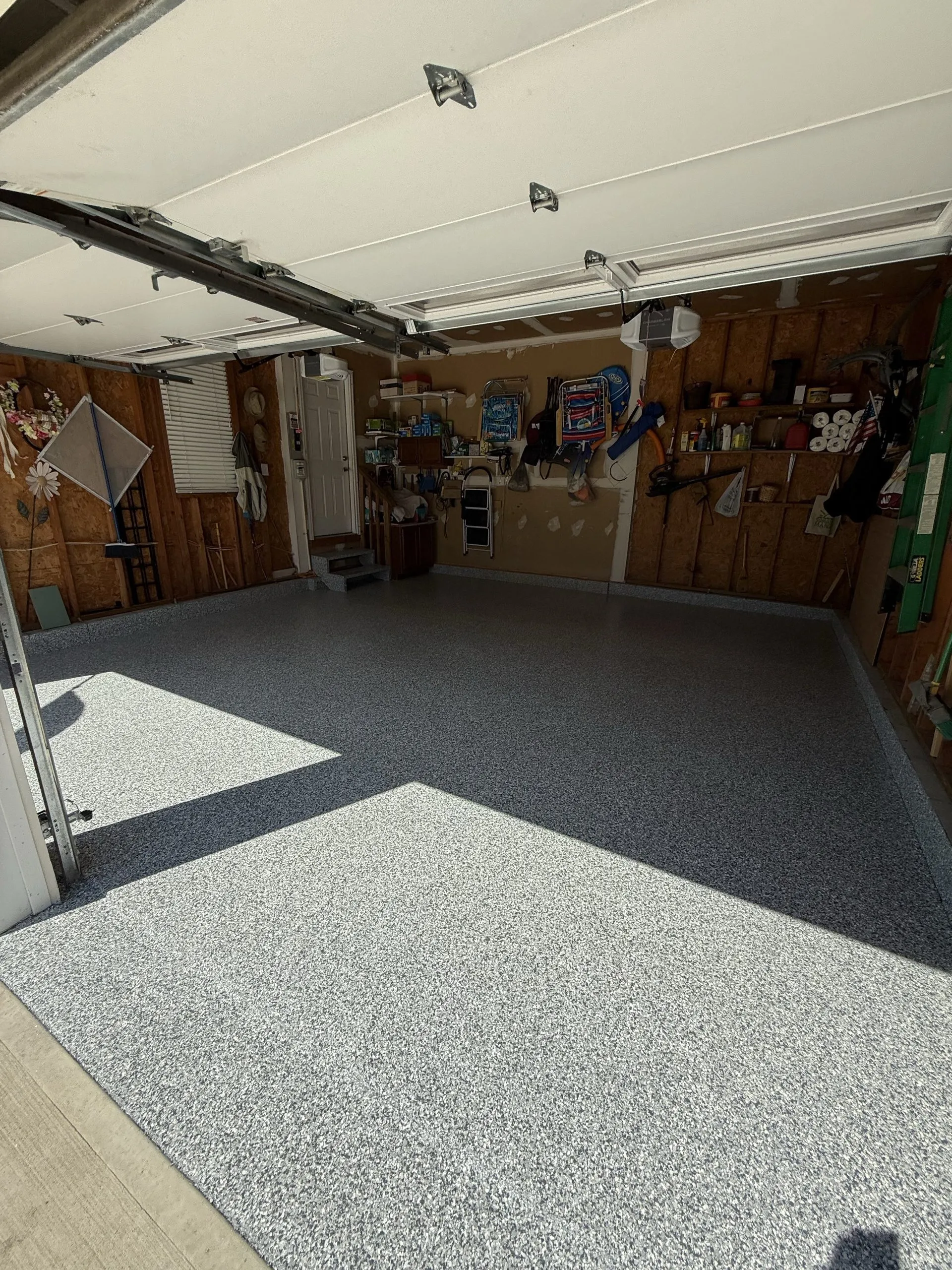
See the blends side by side and how each one hides dust, tire marks and the odd dropped wrench.
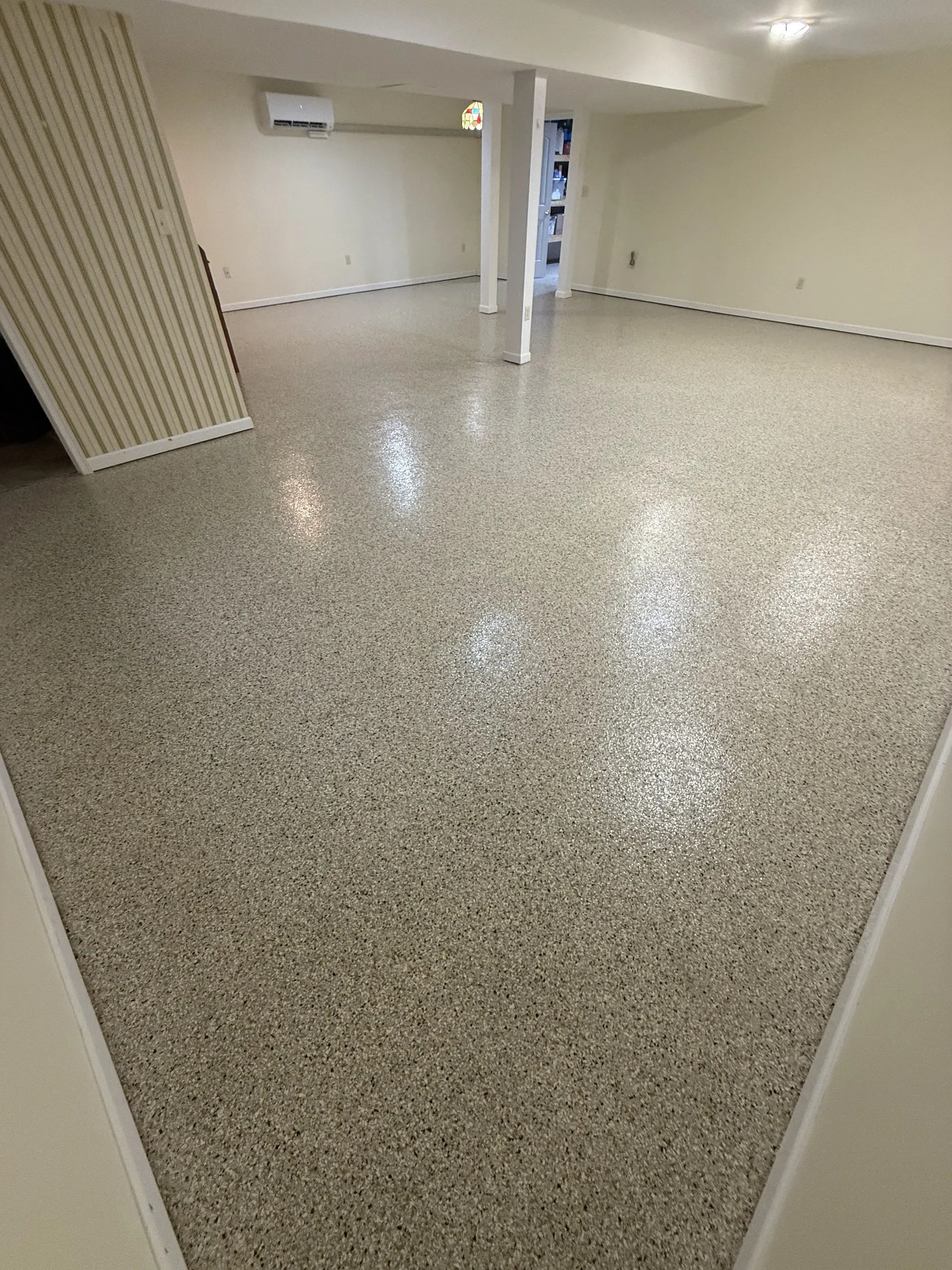
We measure the slab, check moisture and control joints, and give you a firm number at the estimate.
Tell us the room, roughly how big it is and when you want it done. We will measure, look at the slab and give you a price that does not move.

Polyaspartic concrete floor coatings installed in a single day across central Pennsylvania. Every slab diamond ground, never acid etched.
© 2026 Spartic Coatings. All rights reserved.
Serving Lancaster, Chester, Berks, Dauphin, York and Lebanon counties, Pennsylvania.