Coated concrete taken out of the garage and into the living areas of the house, in a kitchen and a bathroom. The appeal indoors is that the floor is a bonded, seamless surface with no grout lines, no plank joints and nothing underneath it for water to get into. This is a finish study of real floors we photographed, not a record of a specific job.

Before — bare slab
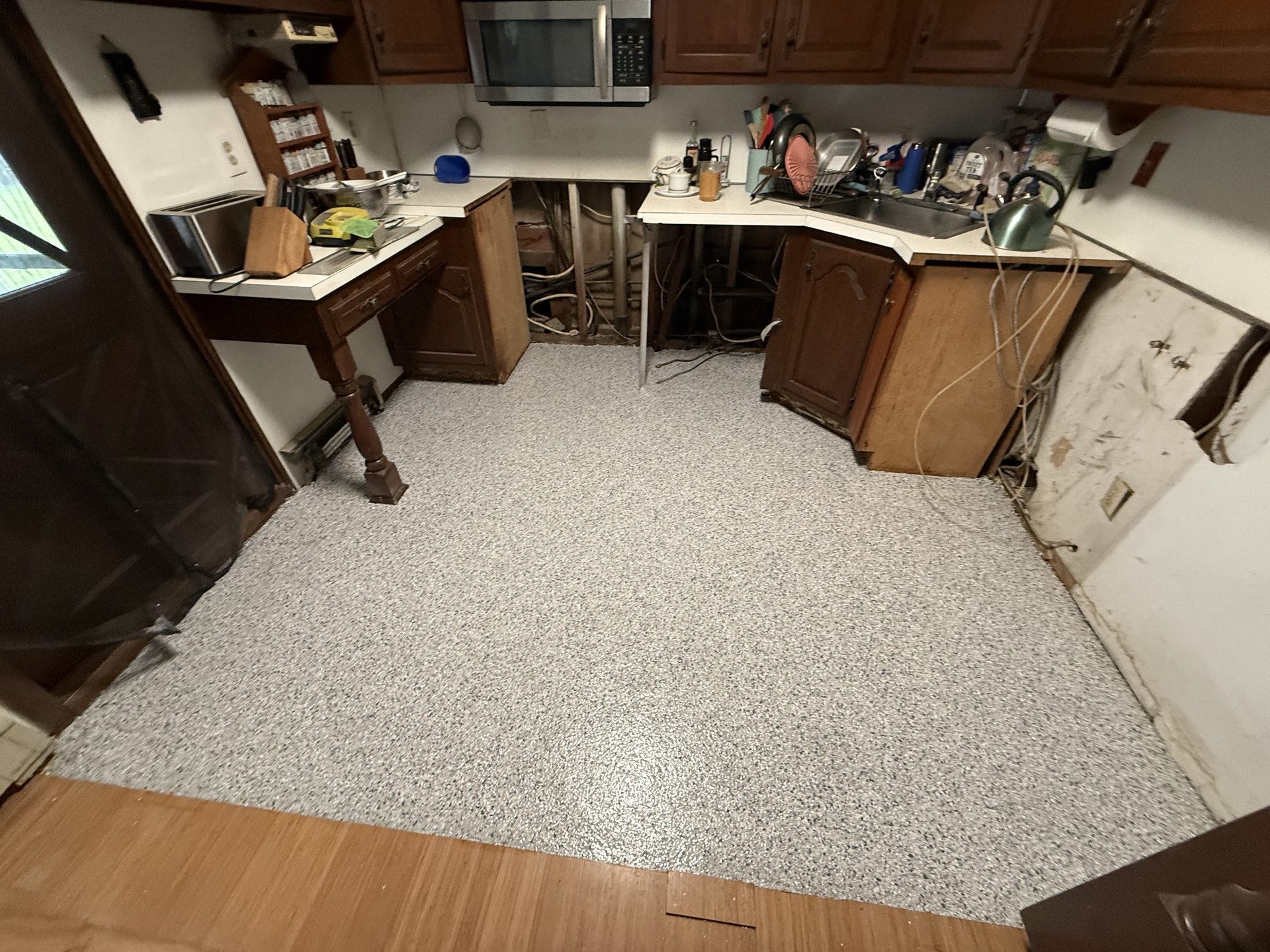
After — coated and flaked
Most people meet these coatings in a garage and are surprised to learn the same system goes into a kitchen or a bathroom. It does, and the reasons it works indoors are different from the reasons it works in a garage.
A kitchen floor and a bathroom floor, both on slab, both finished in a light blend that keeps the rooms bright.
Indoors the argument is about seams. Tile has grout lines, which stain, harbor grime and eventually need regrouting. Vinyl plank and laminate have joints, and they sit on top of the slab rather than bonding to it, so water that gets past the surface has somewhere to go and something to sit against. A coated floor is bonded into the concrete itself and is continuous from wall to wall. In a bathroom, in particular, there is no joint for water to find.
It is also warmer underfoot than tile and considerably easier to clean than either: a dust mop and a pH-neutral cleaner, nothing to wax, nothing to reseal.
The trade-off, stated plainly: it is a hard floor. It has the acoustics and the underfoot feel of concrete, because it is concrete. Dropped glassware breaks. Some people want a rug in a kitchen regardless, and that is fine.
Interior work is finish work. Look at the wall junctions and around the fixtures — the tight areas around a vanity, a toilet flange or the toe kick of a cabinet all have to be hand ground to the same profile as the open floor, and that hand work is slower than the machine passes. Interior grinding is also dust-shrouded and vacuumed at the head, because this is a lived-in room rather than an empty garage.
The slab has to be dry, the same as anywhere else, and the test comes first. Think about whether you want the room brighter, because a light blend indoors does a great deal for a space with limited natural light. And be honest with yourself about hardness underfoot before you commit a kitchen to it.
The process is the same one described on how it works, the care routine is in how to clean and maintain a coated concrete floor, and if you want to talk through an interior room, get in touch.
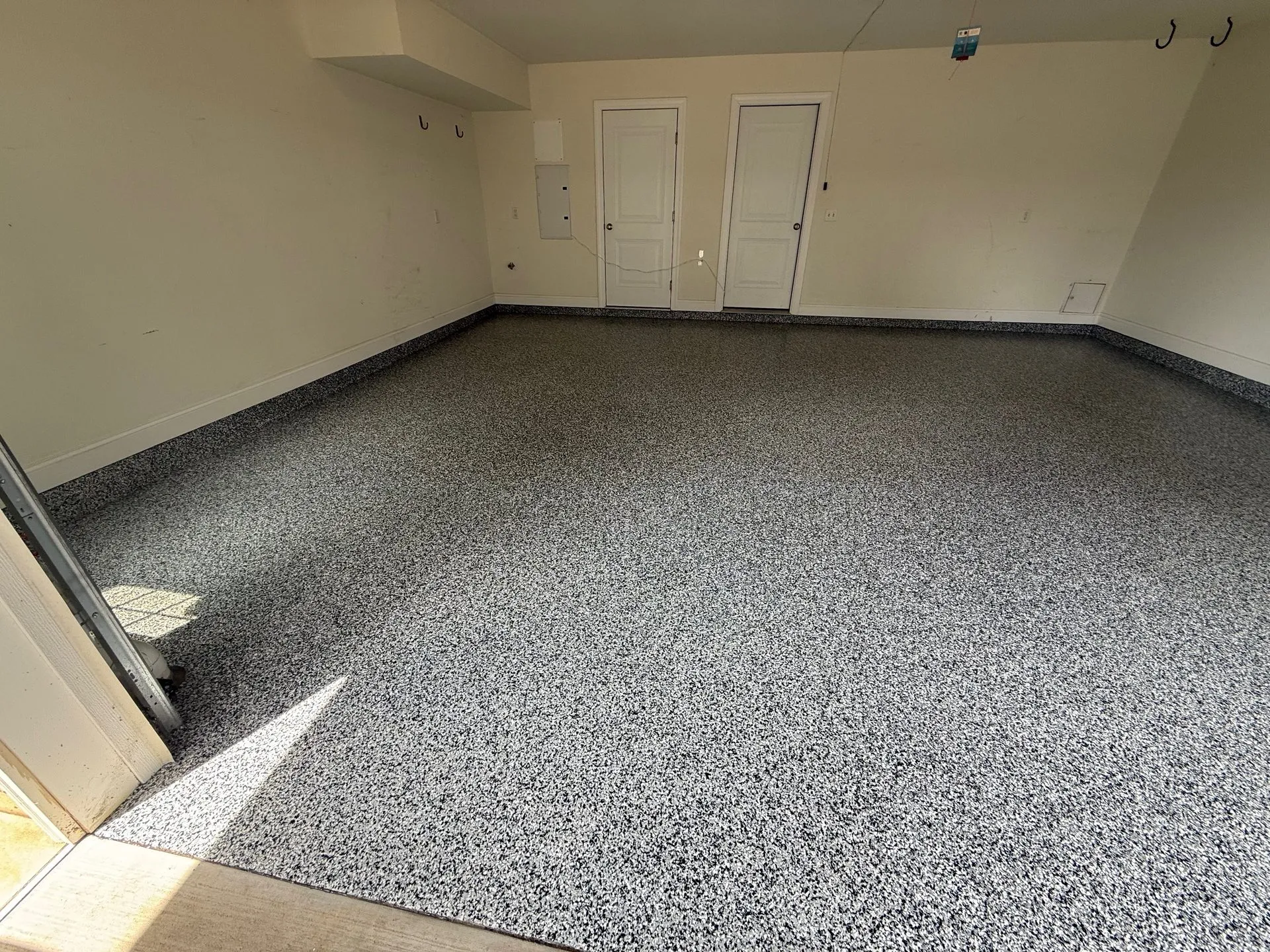
One day on site, vehicles back on the floor in about 24 hours, and a lifetime warranty on the coating.
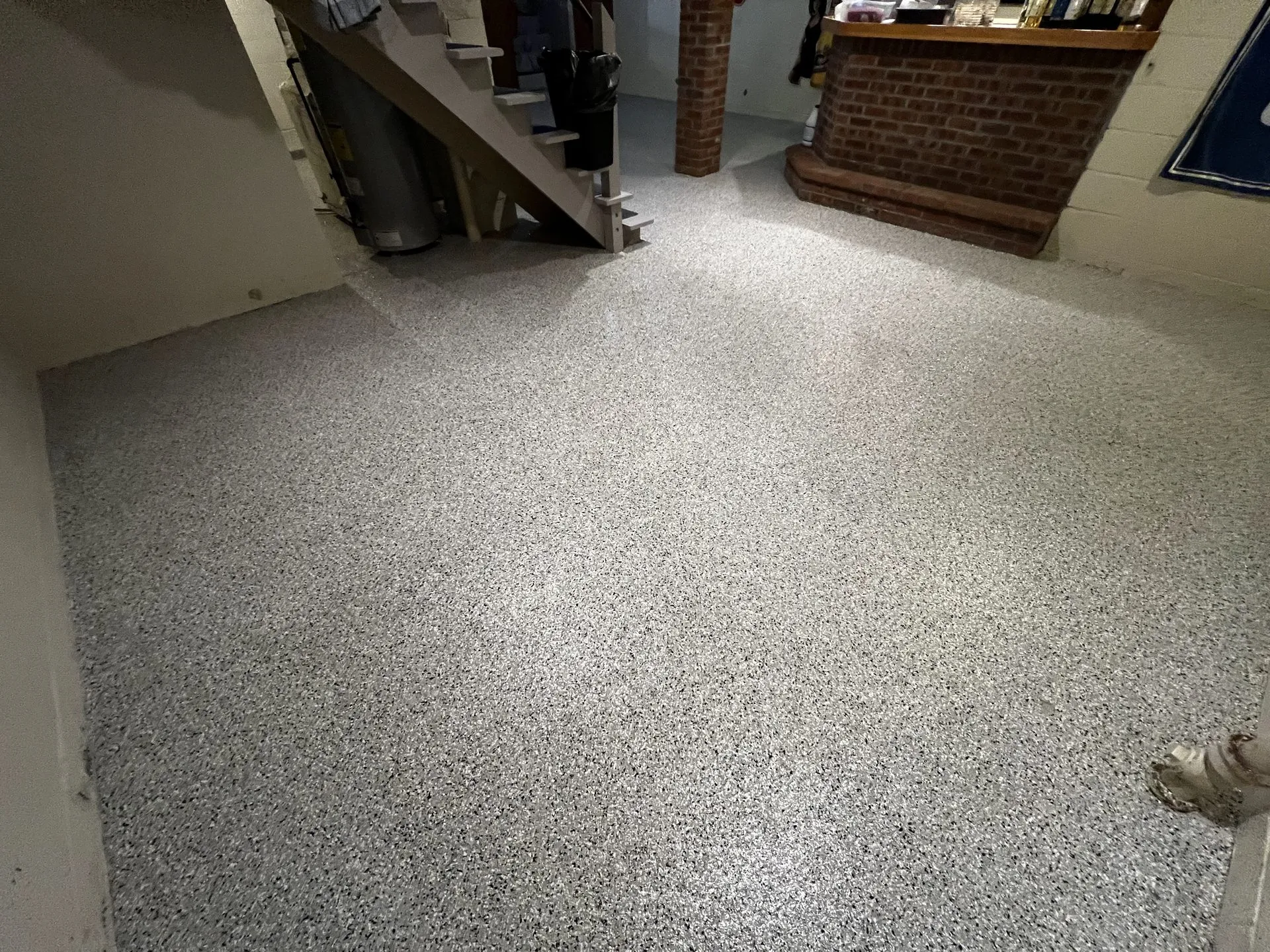
Every step, in order, including why we diamond grind instead of acid etching the slab.
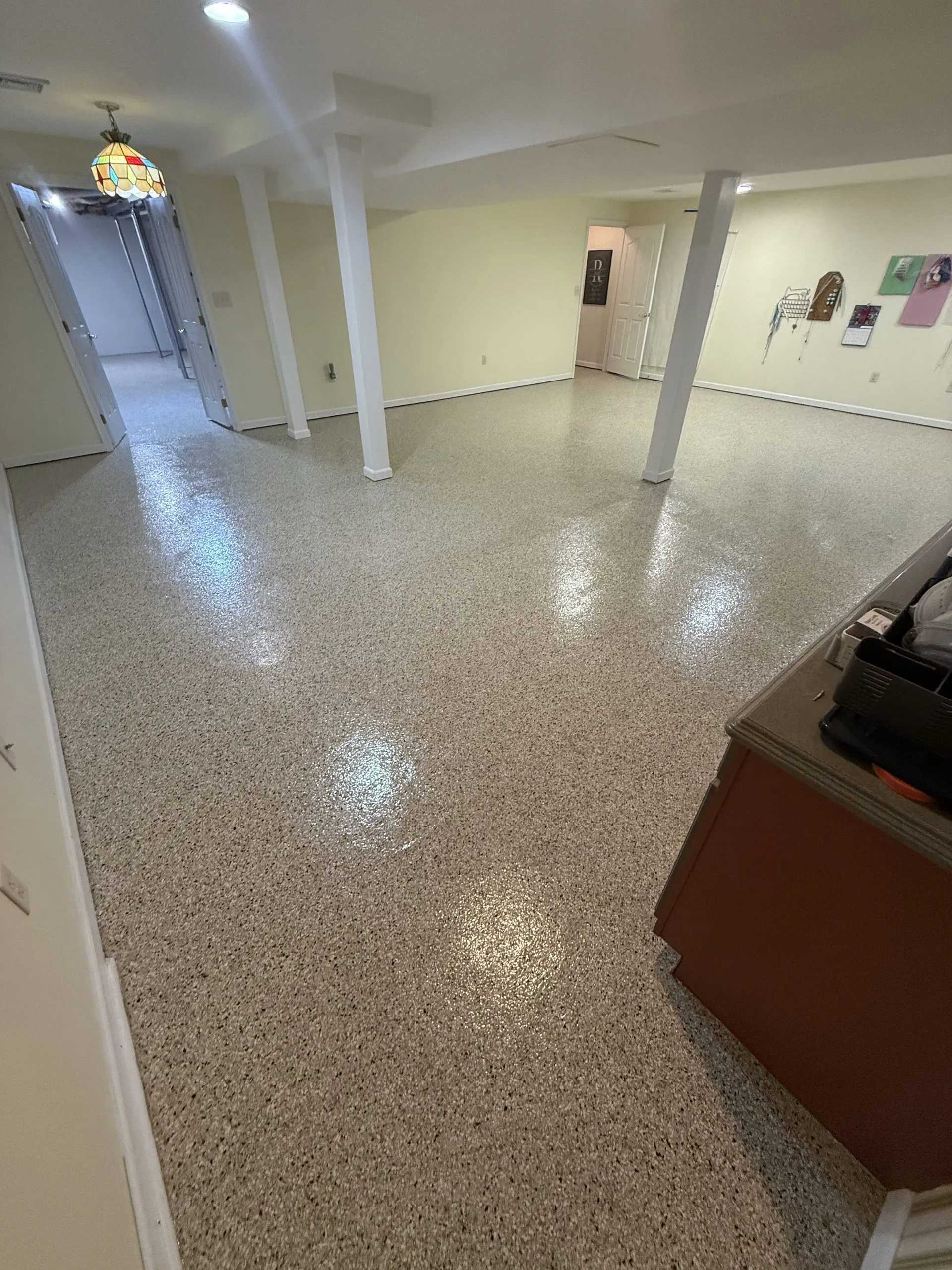
We look at the slab, the joints and the moisture, then give you a firm number at the estimate.
Tell us the room, roughly how big it is and when you want it done. We will measure, look at the slab and give you a price that does not move.

Polyaspartic concrete floor coatings installed in a single day across central Pennsylvania. Every slab diamond ground, never acid etched.
© 2026 Spartic Coatings. All rights reserved.
Serving Lancaster, Chester, Berks, Dauphin, York and Lebanon counties, Pennsylvania.